


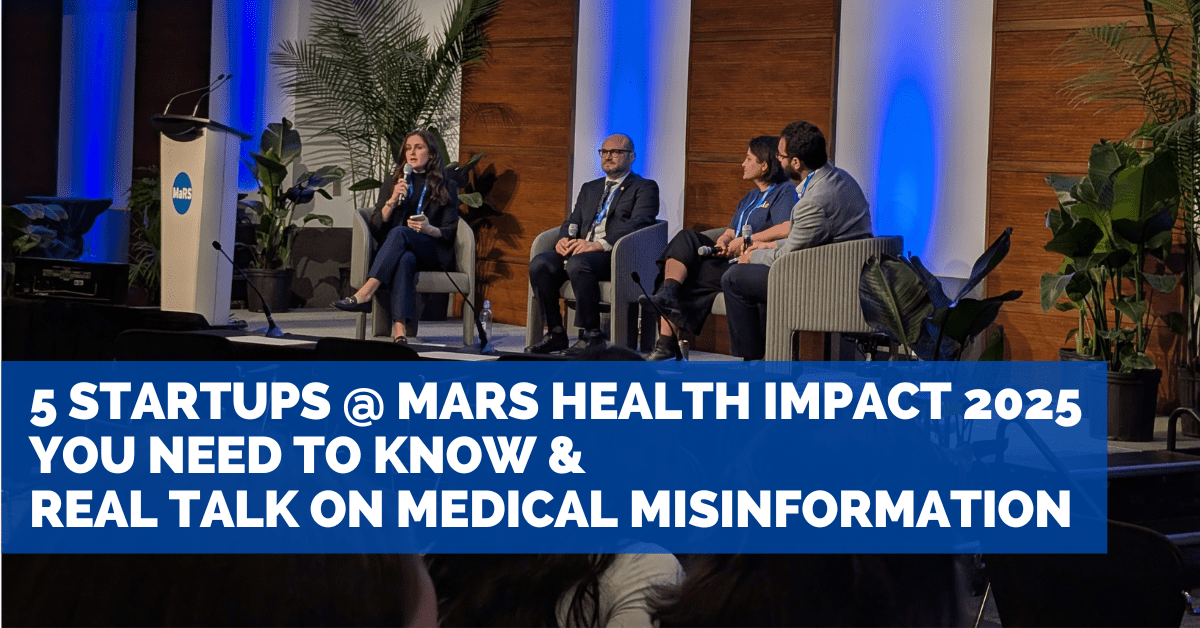
MaRS Health Impact 2025: A Showcase of Innovation and a Call to Action Against Medical Misinformation
The 2025 MaRS Health Impact event served as a dynamic platform for innovation in the healthcare sector, showcasing a range of groundbreaking solutions from early-stage concepts to market-ready products. While the event highlighted numerous advancements across life sciences and biotech, the presentations from medical device and digital health companies were particularly compelling, demonstrating the transformative potential of technology in patient care. Beyond the individual pitches, however, a critical discussion on medical misinformation emerged as a key theme, urging healthcare professionals and innovators to bridge the growing trust gap between science and the public.
Five companies stood out in the medical device and digital health space, each addressing a critical area of patient need. Able Innovations presented their innovative patient transfer system designed to enhance both patient and staff safety while optimizing efficiency. Aufero Medical showcased a solution for improving EP catheter contact stability, promising better outcomes for atrial fibrillation treatment. Qidni Labs introduced a revolutionary waterless dialysis system with the potential to transform care in infrastructure-limited settings, including home dialysis and treatment in developing countries. Ciba Health demonstrated the power of wearable technology in managing chronic conditions on a global scale, while HeadFirst presented a saliva-based concussion assessment tool offering a more objective and user-friendly approach to concussion diagnosis. These presentations collectively highlighted the potential of technology to revolutionize healthcare delivery and improve patient outcomes.
Beyond the individual company pitches, a panel discussion on medical misinformation provided a sobering reminder of the challenges facing the healthcare industry. The panel, featuring experts in the field, delved into the complexities of misinformation dissemination, its impact on various populations, and the underlying reasons for its persistence. A key takeaway from the discussion was the identification of overconfidence, rather than lack of education, as a major contributor to the spread of misinformation. This insight underscores the need for more nuanced approaches to public health communication, moving beyond simply providing information and focusing on building trust and fostering critical thinking skills.
The panel also highlighted the evolving nature of trust in the digital age, emphasizing that credibility is no longer solely reliant on credentials but increasingly depends on the ability to connect with audiences on a personal level. This observation serves as a crucial call to action for scientists, researchers, clinicians, and healthcare marketers to adopt more engaging and relatable communication strategies when sharing scientific information. The panel stressed the importance of narrativizing scientific discovery, leveraging the inherent elements of mystery, triumph, and overcoming obstacles to create compelling stories that resonate with the public and foster a deeper understanding of complex scientific concepts.
The implications of these discussions for Chief Information Officers (CIOs) and digital health leaders are profound. While staying abreast of emerging technologies remains essential, the panel underscored the paramount importance of addressing the growing trust gap between science and the public. Even the most advanced technologies will fail to achieve their full potential if they are not embraced by the individuals they are intended to serve. Building trust requires a shift in focus from simply presenting credentials to fostering genuine connections with target audiences, emphasizing transparency, empathy, and responsiveness to public concerns.
The MaRS Health Impact event served as a crucial reminder that innovation in healthcare must extend beyond technological advancements to encompass effective communication and trust-building strategies. By acknowledging the complexities of medical misinformation and embracing more engaging approaches to scientific communication, the healthcare industry can better equip individuals to navigate the information landscape, make informed decisions about their health, and ultimately, pave the way for wider adoption of life-changing technologies. The event served as a catalyst for critical conversations and underscored the importance of collaboration between innovators, healthcare professionals, and the public in shaping the future of health.
The diverse range of presentations, coupled with the insightful panel discussion on medical misinformation, solidified the MaRS Health Impact event as a significant platform for fostering innovation and addressing critical challenges facing the healthcare industry. The event showcased the transformative potential of technology in improving patient care while simultaneously highlighting the crucial role of communication and trust-building in ensuring the successful implementation of these advancements. The emphasis on narrativizing scientific discovery and fostering genuine connections with the public offers a promising pathway towards bridging the trust gap and maximizing the impact of healthcare innovation. This event served as a powerful call to action for all stakeholders to collaborate in building a future where scientific advancements are embraced and trusted by the individuals they are designed to benefit.