


Federal Government Invests $22.7 Million in BC EV Charging Infrastructure Amidst Industry Pushback and Public Skepticism
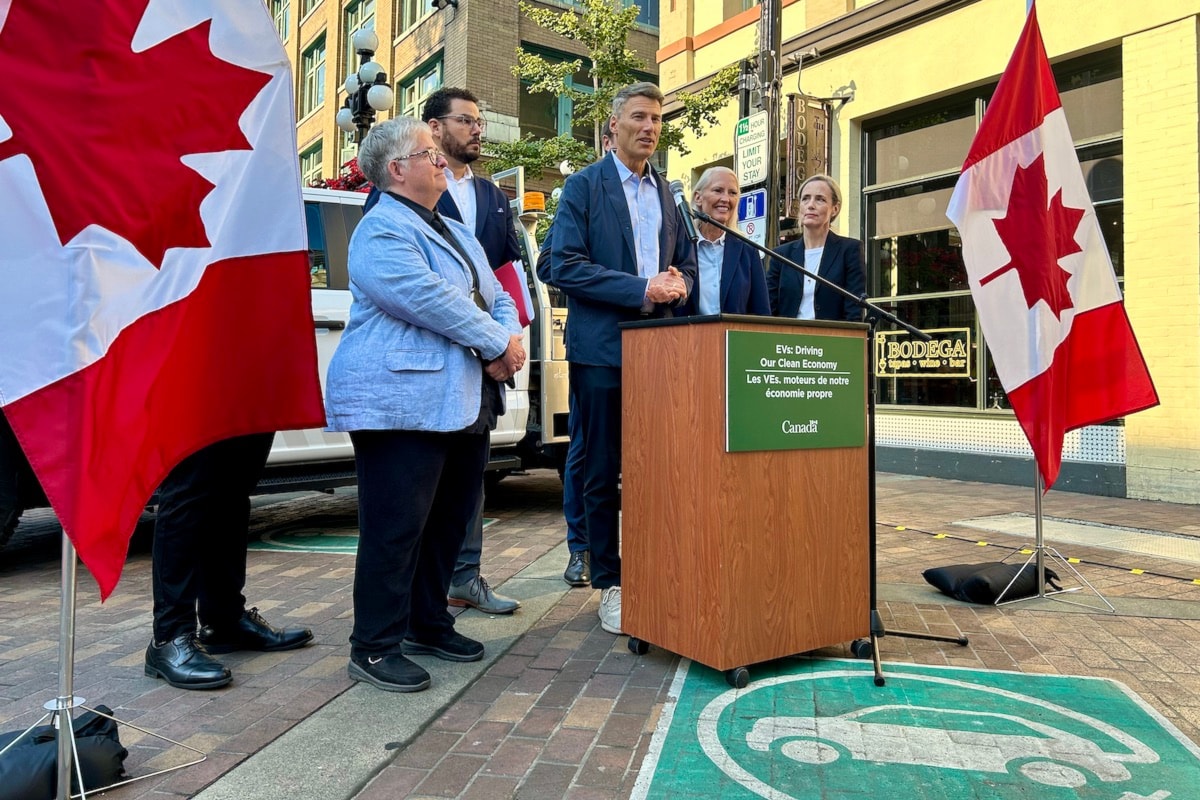
VICTORIA, BC – Amidst growing public skepticism and alleged industry misinformation campaigns, the federal government has announced a $22.7 million investment to bolster British Columbia’s electric vehicle (EV) charging infrastructure. Federal Housing and Infrastructure Minister Gregor Robertson unveiled the funding, earmarked for the installation of 480 new EV charging stations across the province, during a visit to Victoria on Wednesday. This investment comes as the federal government pushes for wider EV adoption to combat climate change and address affordability concerns, despite facing opposition from certain sectors and a seemingly wavering public.
Robertson directly accused the auto and oil industries of orchestrating a “regrettable and immoral” disinformation campaign aimed at undermining public confidence in EVs and slowing down the transition. He suggested these industries are acting out of self-preservation, prioritizing their own interests over the urgent need to address climate change and provide affordable transportation options. This pointed accusation comes as a recent Ipsos/Energy Futures Institute poll reveals declining public support for provincial and federal EV mandates, which require a certain percentage of new vehicle sales to be fully electric.
The federal government’s mandated targets stipulate that 20% of new vehicle sales must be electric by 2026, rising to 60% by 2030 and reaching 100% by 2035. British Columbia has set even more ambitious targets, aiming for 26% EV sales by 2026, 90% by 2030, and 100% by 2035. However, leaked documents from the BC Ministry of Energy and Climate Solutions suggest the provincial government may consider easing these mandates due to stagnating EV sales and the acknowledged “challenges” in achieving these goals. The lack of clarity from the ministry regarding the future of these mandates fuels further uncertainty surrounding the province’s EV adoption strategy.
Critics of the mandates, such as Barry Penner, chair of the Energy Futures Institute and former BC Liberal environment minister, argue that the government is prioritizing EV sales over the necessary infrastructure development. Penner estimates BC needs an additional 40,000 charging stations by 2030, a stark contrast to the just over 5,000 currently in place. He expresses concern over potential market flooding with unsold EVs and the penalties imposed on dealers for selling too many non-electric vehicles. Dealers currently face a $20,000 penalty per vehicle sold above the mandated ratio or must purchase credits from other automakers, a system that critics say disproportionately benefits companies like Tesla, a major credit supplier.
BC Conservative Transportation critic Harman Bhangu echoes Penner’s concerns, questioning the feasibility of the mandates given the current charging infrastructure deficit and the high cost of EVs, putting them out of reach for many British Columbians. The affordability factor represents a significant hurdle in achieving wider EV adoption, particularly for lower and middle-income families. The debate surrounding affordability underscores the need for comprehensive strategies to address both the supply and demand sides of the EV market.
Despite the criticisms and challenges, proponents of EV adoption maintain a more optimistic outlook. Glenn Garry, president of the Victoria Electric Vehicle Association, supports Robertson’s claim of industry misinformation, emphasizing the various cost-mitigation options available to dealers, including investments in charging infrastructure. He points out that automakers initially agreed to the mandates and attributes the shift in industry stance to the influence of former U.S. President Donald Trump’s anti-EV rhetoric. Garry downplays concerns about charging infrastructure scarcity, emphasizing that most EV charging occurs at home, although acknowledging the need for more public charging options, especially for longer trips and those without home charging capabilities.
Robertson acknowledges the need for further infrastructure investment and promises more announcements of similar projects across the country. He emphasizes the government’s commitment to supporting Canadian jobs in the auto and battery sectors as the country transitions to EVs. The minister remains confident in the growth and scalability of the EV market, despite acknowledging the existence of misinformation. The challenge for the government is to effectively address public concerns, manage industry resistance, and ensure a smooth and equitable transition to a future dominated by electric vehicles. The $22.7 million investment in BC represents a step towards building the necessary infrastructure, but much more needs to be done to achieve the ambitious targets and realize the envisioned benefits of widespread EV adoption.