


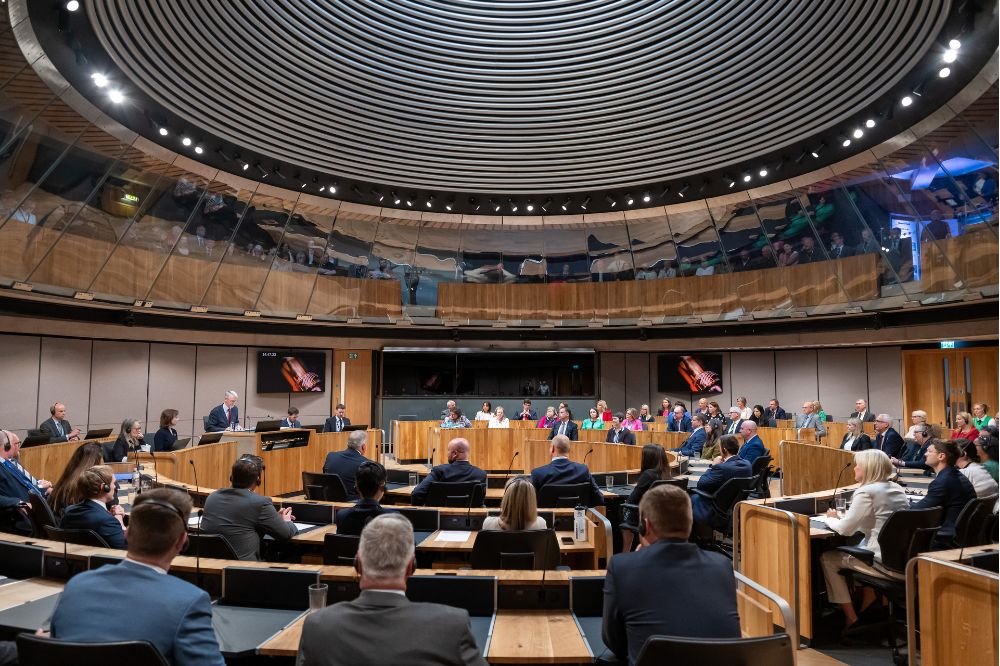
Record turnout and high public confidence marked Wales’ first election to an expanded 96-member Senedd, but a new report from the Electoral Commission has warned that candidate abuse, misinformation and gaps in democratic education risk undermining future elections. Official figures released by the independent elections watchdog on Monday, September 14, showed that turnout reached 51.7% at the polls on May 7 — the highest recorded at any Senedd election since devolution and the first time participation in a Welsh Parliament election has exceeded 50%. The result came in a watershed contest that saw Wales move to a radically overhauled electoral system, with voters for the first time electing 96 Members of the Senedd from 16 newly created “super-constituencies”, each returning six MSs. The Electoral Commission’s post-election report, based on a YouGov survey of 1,771 adults in Wales carried out between May 8 and June 1, 2026, as well as on its own May survey of Senedd election candidates, painted a broadly positive picture of how the historic vote was administered. Public confidence in the electoral process remained high: 94% of voters in Wales said they were satisfied with the process of voting, 86% were confident the election was run well, 99% said it was easy to complete the ballot paper, and 97% were aware that a Senedd election was taking place. Electoral administrators, Returning Officers and partner organisations were praised for their extensive work in delivering the new system and helping voters navigate it.
The 2026 Senedd election represented a fundamental shift in how Members are chosen in Wales. Under the previous electoral arrangements, voters used a two-vote ballot paper: one for a constituency Member and one for a regional list. That system was replaced by a single vote for a political party or independent candidate, with parties having already ranked their preferred candidates on fixed, closed lists. Voters no longer directly selected an individual to represent their local area; instead, they chose a party, and seats were allocated according to the total share of the vote each party received. The redrawing of boundaries also transformed the electoral map, dividing Wales into 16 much larger “super-constituencies”. In each of these, six Members were elected through the D’Hondt formula, a method of proportional representation designed to distribute seats more accurately in line with vote share. The Electoral Commission said it had worked closely with stakeholders across Wales to run an integrated programme of public awareness, education and partnership work to draw attention to the changes and to encourage participation. According to the watchdog, that co-ordinated effort contributed to the increased turnout and the high levels of voter satisfaction recorded in its research, with the public clearly able to take part in what was a dramatically different electoral process.
However, the Commission’s report also sounded a serious note of caution about the health of Welsh democracy beyond the administrative success of election day. More than half of Senedd election candidates — 54% — said they had experienced harassment, intimidation or threats during the campaign, with women more likely to report abuse. That finding, drawn from the Commission’s May 2026 survey of candidates, has raised concerns that the toxic atmosphere facing public representatives could deter people from standing for election in the future. Rhydian Thomas, Head of the Electoral Commission Wales, warned that rising levels of candidate abuse and misinformation are particularly worrying. “Despite increased turnout, rising levels of candidate abuse and misinformation remain concerning,” he said. “Without improvements to candidate safety, there is a significant risk that people will be put off standing in future elections.” The report calls on political parties to promote respectful campaigning, and on the Welsh Government, the UK Government and social media platforms to take action to protect voters from misinformation and to remove abusive content swiftly. The threat is not confined to direct hostility towards candidates; the wider information environment also caused concern.
The Commission’s research found that misinformation was widespread in the run-up to the 2026 election. More than half of respondents said they had seen misinformation during the campaign, while 12% said they had encountered deepfake material — digitally manipulated images, audio or video designed to deceive. The presence of deepfakes represents a new and rapidly evolving challenge for election administrators, parties and voters alike. Alongside the spread of false information, the report also found evidence that a significant minority of voters remained confused about the new electoral system introduced this year. Despite the public awareness campaign, 31% of voters said they were not confident they understood how the new system worked, and 17% were unaware that the voting system had changed at all. For a franchise that had just undergone such a major constitutional shift, these findings indicate that more work may be needed to explain how seats are allocated and how voters can meaningfully participate. The Commission said that in future elections, public information campaigns and democratic engagement efforts will need to be sustained, particularly if Wales is to avoid a gap between the legitimacy of the system and voters’ understanding of it.
Another area of concern highlighted in the report is the state of democratic education among young people. Only 35% of 16- and 17-year-olds said they had learned anything in school or college ahead of the election about voting or about how Wales’ democracy works. That is a particularly significant finding because 16-year-olds are entitled to vote in Senedd elections, making Wales one of the few parts of the UK where people can cast a ballot before they reach the age of 18. The Commission warned that without high-quality, impartial democratic education, young voters are likely to be more vulnerable to misinformation and less likely to participate as they get older. Thomas said young people themselves were asking for more support. “Young people continue to tell us they want more democratic education in school so they can navigate a changing electoral landscape and participate effectively in our democracy,” he said. The report calls on the Welsh Government and its partners to ensure that all young people in Wales have access to robust political literacy education, covering not just the mechanics of voting but also how to critically assess information and spot mis- and disinformation.
The Electoral Commission’s overall verdict on the 2026 Senedd election is therefore mixed. On one hand, the record turnout and high levels of satisfaction with the voting process suggest that the major changes to the electoral system were implemented effectively and that voters engaged enthusiastically with their new franchise. On the other hand, the findings on candidate safety and misinformation show that the quality of Welsh democracy, particularly in the digital age, remains fragile. The Commission acknowledged that delivering the election was a collective effort involving Returning Officers, electoral administrators, candidates, police forces, charities and civil society organisations across Wales. Thomas said the “continuing trend of high voter satisfaction in how elections are run, and increased turnout, are encouraging signs” and praised partners for working closely to ensure the polls were delivered successfully. But he was also clear about the need for action. “Our report calls on parties to promote respectful campaigning, and on the Welsh and UK governments and social media platforms to take action to protect voters from misinformation and remove abusive content,” he said. With the next Senedd election already on the horizon, the Commission said it is committed to working with the Welsh Government and others to improve democratic education, protect candidates and safeguard the integrity of elections. The challenge, it said, is to build on the success of May’s historic vote while addressing the deeper threats to democratic participation that the report has exposed.