


Federal Minister Accuses Auto and Oil Industries of “Immoral” EV Disinformation Campaign Amidst Growing Public Skepticism and Infrastructure Concerns
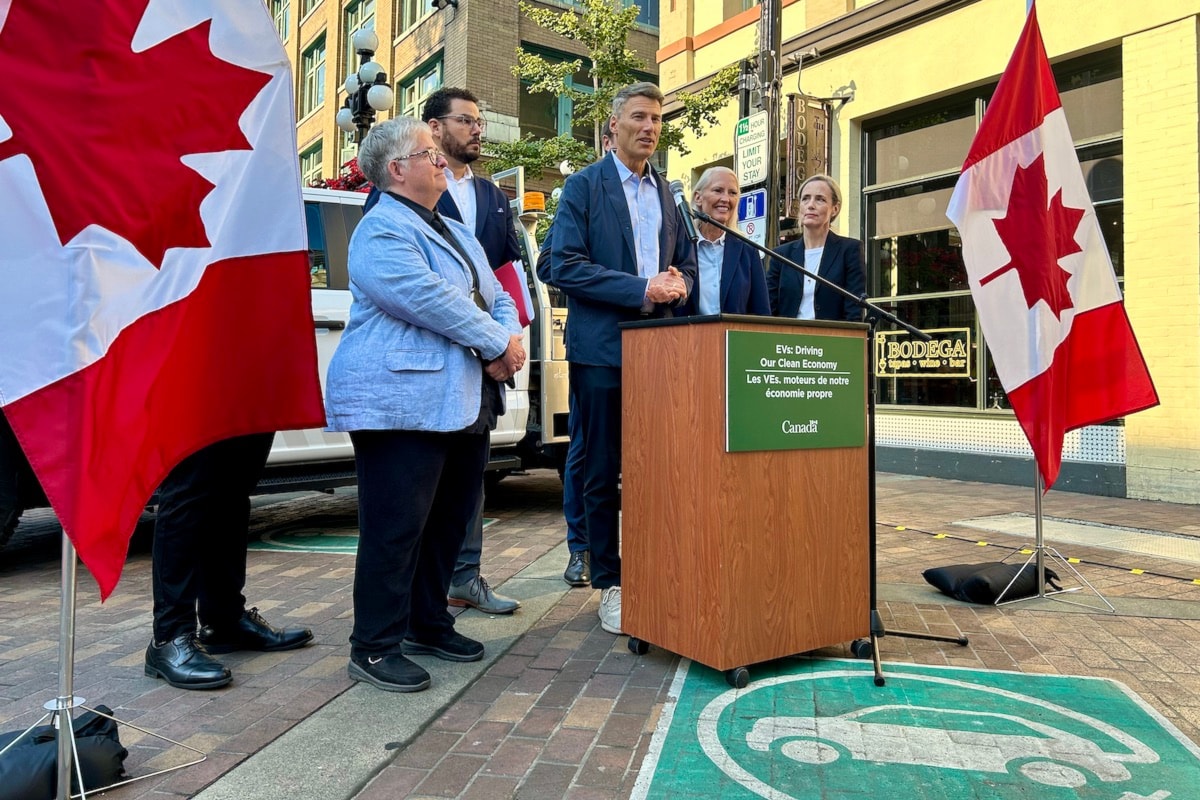
Victoria, BC – Federal Housing and Infrastructure Minister Gregor Robertson launched a scathing attack on the auto and oil industries, accusing them of orchestrating a “regrettable and immoral” disinformation campaign against electric vehicles (EVs). Robertson’s comments come amidst growing public resistance to EV mandates and concerns about the adequacy of charging infrastructure, issues highlighted by a recent Ipsos/Energy Futures Institute poll and internal government documents. The Minister’s visit to Victoria coincided with a $22.7 million federal investment to install 480 new EV charging stations in British Columbia, a move touted as a step towards addressing the province’s infrastructure deficit.
Robertson’s pointed remarks directly implicated the auto and oil and gas sectors in spreading misinformation to protect their vested interests and impede the transition to electric mobility. He argued that these industries are attempting to slow down the adoption of EVs, a shift he deems crucial for tackling both climate change and affordability challenges. The Minister’s strong condemnation comes as public opinion appears to be shifting against mandatory EV sales targets, both federally and provincially.
The federal government mandates that 20% of new vehicles sold be electric by 2026, rising to 60% by 2030 and 100% by 2035. British Columbia has adopted even more ambitious targets: 26% by 2026, 90% by 2030, and 100% by 2035. However, leaked documents from the B.C. Ministry of Energy and Climate Solutions reveal internal concerns about the feasibility of meeting these goals, citing stagnant EV sales as a significant hurdle. The provincial government is reportedly considering easing these mandates, though official confirmation remains pending.
Critics of the mandates, such as Barry Penner, chair of the Energy Futures Institute and former B.C. Liberal environment minister, argue that the government is prioritizing EV adoption over the necessary infrastructure development. Penner estimates that British Columbia requires an additional 40,000 charging stations by 2030, a stark contrast to the just over 5,000 currently available. He contends that forcing EV purchases without sufficient charging infrastructure is a misguided approach. Furthermore, Penner raises concerns about the potential consequences of flooding the market with unsold EVs, which could penalize dealerships already grappling with the challenges of transitioning to electric vehicle sales. He warns that the current penalty system, which requires dealers to pay $20,000 for each vehicle sold above the mandated ratio or purchase credits from other automakers, could disproportionately benefit companies like Tesla, a major credit supplier due to its exclusively electric vehicle lineup.
B.C. Conservative Transportation critic Harman Bhangu echoes Penner’s skepticism, expressing doubts about the province’s ability to meet the EV mandates given the infrastructure deficit and the high cost of EVs. He emphasizes the affordability barrier, pointing out that even on an MLA salary, purchasing an EV is financially out of reach for many British Columbians.
Conversely, proponents of EV adoption, like Glenn Garry, president of the Victoria Electric Vehicle Association, agree with Robertson’s assessment of industry misinformation. Garry argues that auto dealers have various avenues to mitigate costs associated with mandate compliance, including investing in charging infrastructure. He points to the initial willingness of car companies to participate in the mandate program, suggesting that the shift in industry sentiment coincided with the Trump administration’s attacks on EV mandates in the United States. Garry downplays concerns about the lack of charging infrastructure, emphasizing that most EV charging occurs at home, thereby reducing reliance on public charging stations.
Minister Robertson acknowledges the need for increased investment in charging infrastructure, emphasizing the government’s commitment to expanding EV charging networks across the country. He frames the current investment as a crucial step in supporting Canadian jobs in the auto and battery sectors while facilitating the aggressive transition to electric mobility. Despite the ongoing debate and public skepticism, Robertson remains steadfast in his commitment to EV adoption, emphasizing the importance of infrastructure development in enabling this transition and countering the alleged misinformation campaign he attributes to the auto and oil industries. The federal government’s commitment to supporting the EV transition, despite the challenges, underscores the complex interplay of economic, environmental, and political factors shaping the future of transportation in Canada. The coming years will be crucial in determining whether the government’s ambitious targets can be achieved and whether public opinion can be swayed in favor of widespread EV adoption.