


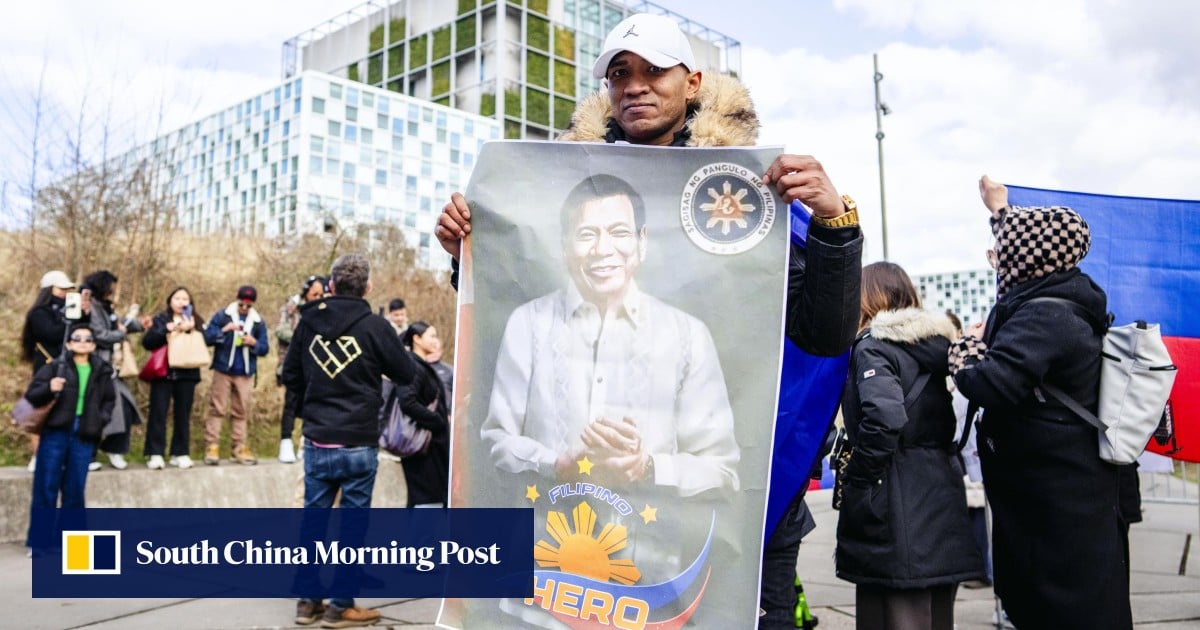
Duterte’s ICC Arrest Fuels Wave of Online Falsehoods, Potentially Undermining His Case
Former Philippine president Rodrigo Duterte’s arrest by the International Criminal Court (ICC) on charges of crimes against humanity has ignited a firestorm of online misinformation, orchestrated by his fervent supporters. The disinformation campaign, analysts warn, is unlikely to sway the ICC’s judgment on the merits of the case and could even backfire by jeopardizing Duterte’s chances of securing interim release. The false narratives range from outlandish claims of international political intervention to malicious fabrications about domestic legal proceedings, demonstrating a concerted effort to distort the reality of Duterte’s situation and undermine the authority of the ICC.
Duterte was apprehended at Manila airport on March 11 upon returning from Hong Kong and subsequently transferred to The Hague, the seat of the ICC. He stands accused of crimes against humanity related to the thousands of extrajudicial killings carried out during his administration’s controversial war on drugs. The arrest marks a significant moment in the international pursuit of accountability for human rights abuses, and the subsequent misinformation campaign highlights the challenges faced by institutions like the ICC in navigating the complexities of political polarization and information warfare.
Even before Duterte’s departure from Manila, his loyalists embarked on a campaign of misinformation, disseminating false reports that the Philippine Supreme Court had issued a temporary restraining order to prevent his transfer. This initial wave of falsehoods set the stage for a more elaborate campaign of disinformation following Duterte’s initial appearance before the ICC judges on March 14. Supporters falsely declared the case dismissed, despite the judges promptly scheduling the first hearing for September.
These fabrications have escalated in both scale and audacity, extending beyond the domestic legal sphere to encompass international politics. One particularly outlandish claim suggested that Russian President Vladimir Putin had conditioned peace talks with Ukraine on Duterte’s release by the ICC. Another rumor asserted that the Supreme Court had accepted a petition with 16 million signatures demanding the resignation of President Ferdinand Marcos Jr. and was poised to rule on it. These false narratives demonstrate a willingness to exploit geopolitical tensions and domestic political dynamics to further the pro-Duterte propaganda.
Legal experts, including Joel Butuyan, one of only five Filipino lawyers accredited to the ICC and president of the Centre for International Law, express concern that while the misinformation campaign is unlikely to influence the ICC’s ultimate judgment on the charges against Duterte, it could potentially affect his applications for interim release. The dissemination of false information about the proceedings could create a distorted perception of the case among the judges, ultimately influencing their decisions regarding Duterte’s pre-trial detention. This underscores the potential impact of disinformation on judicial processes, even at the international level.
The wave of online falsehoods surrounding Duterte’s arrest and ICC proceedings illustrates the increasing challenges posed by misinformation in the digital age. The speed and reach of online platforms allow for the rapid dissemination of false narratives, often outpacing efforts to debunk them. This poses a significant threat to the integrity of legal proceedings, the proper functioning of democratic institutions, and the ability of the public to access accurate information. The Duterte case serves as a stark reminder of the need for strengthened measures to combat misinformation and promote media literacy, both within the Philippines and globally. The international community must remain vigilant in countering these narratives and upholding the principles of justice and accountability.