


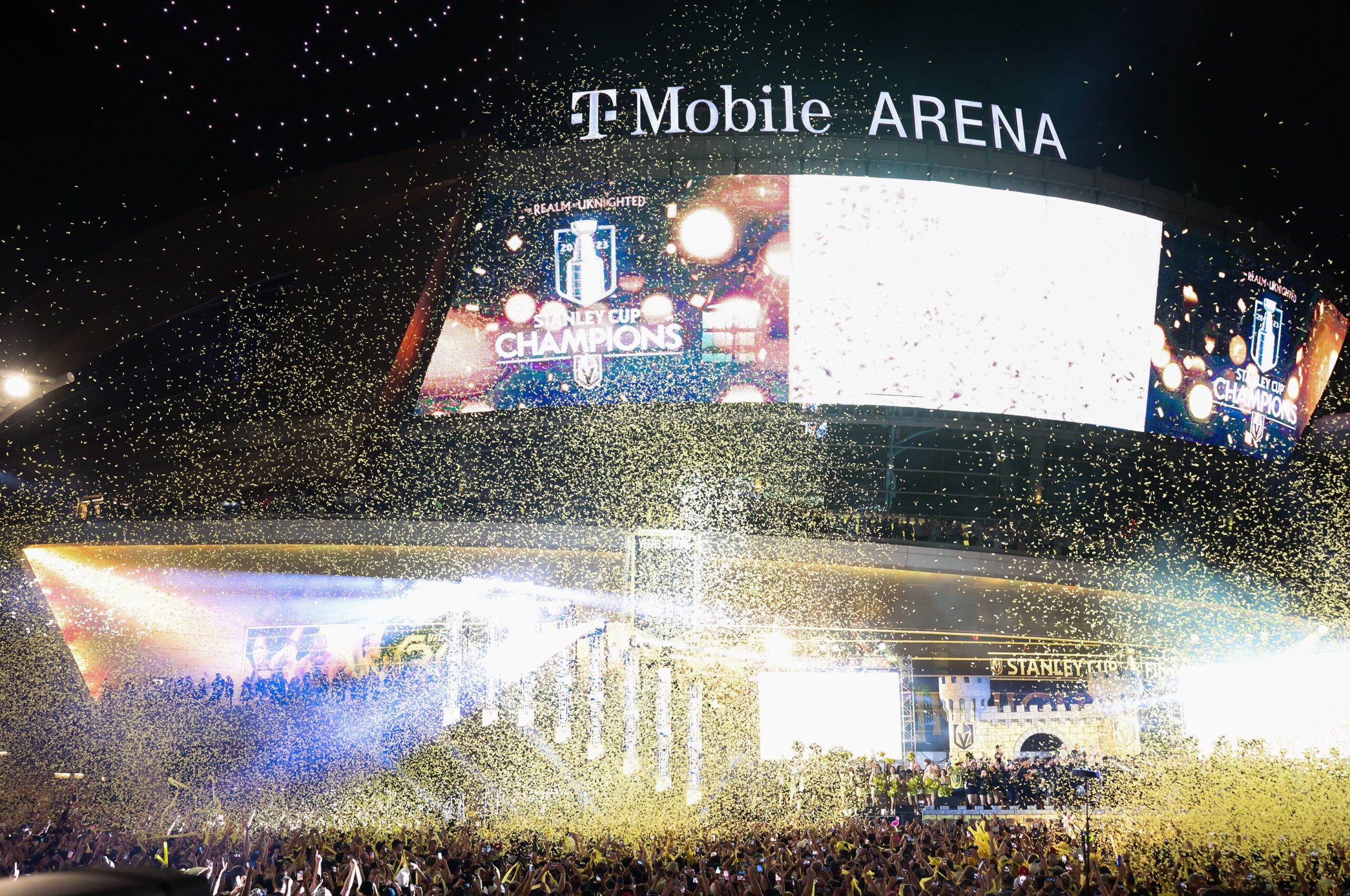
Las Vegas has emerged as the overwhelming front-runner to receive the next NBA expansion franchise, with league insiders and local stakeholders aligning on the city’s readiness for professional basketball’s highest level. At the heart of the conversation stands T-Mobile Arena, the 20,000-seat venue on the south Strip that currently hosts the NHL’s Vegas Golden Knights. The arena has met much of the league’s basic criteria, but both NBA officials and MGM Resorts International, which operates the venue and owns half of it, concede that significant upgrades would be necessary before it could host an NBA regular-season schedule. Bill Foley, the Golden Knights owner who also holds a stake in T-Mobile Arena, has positioned himself as the leading figure in the ownership sweepstakes, which could command a franchise fee approaching $10 billion. Foley has stated his willingness to invest between $300 million and $400 million in renovations to bring the facility to NBA standards, a commitment that signals the seriousness of Las Vegas’s pursuit and the financial firepower backing it.
MGM Resorts CEO Bill Hornbuckle has remained cautiously optimistic about T-Mobile’s role, though he noted in an April earnings call that nondisclosure agreements prevent him from commenting directly on discussions. He acknowledged the league’s clear interest, stating that “all roads lead to it for now” with the NBA eyeing a potential team as early as 2028. However, the venue question is far from settled. While T-Mobile sits as the default choice, sources close to the expansion talks reveal that two north Strip sites have emerged as viable competitors: more than 40 acres of undeveloped land adjacent to Resorts World Las Vegas and a vacant 38-acre parcel across from Wynn Las Vegas. Proponents of these locations argue that a new arena would provide a much-needed economic catalyst for a corridor that stretches roughly two miles from Wynn to Sahara Avenue. The north Strip has seen substantial new development, including the 4,000-room Fontainebleau Las Vegas, but lacks a major entertainment venue to drive event-driven visitation. South Strip resort operators have long benefited from T-Mobile’s event calendar, anecdotally reporting significant lifts in customer traffic and revenue before and after games and concerts, and the north Strip wants its share of that economic pie.
Jim Murren, the former MGM Resorts CEO who led T-Mobile’s development and now advises Resorts World on the NBA process, has been vocal in his preference for a north Strip location. He describes the south Strip as congested and points to the unique opportunity for the NBA to establish its own neighborhood at Resorts World, with the ability to create a “village atmosphere” complete with restaurants, bars, and entertainment options similar to the outdoor amenities adjacent to Park MGM. Murren also emphasizes the easy access for local fans via entrances along Sammy Davis Jr. Drive. The south Strip’s existing sports infrastructure is considerable: in addition to T-Mobile, the 60,000-seat Allegiant Stadium draws over 1.7 million visitors annually, and the WNBA’s Las Vegas Aces play at the 12,000-seat Michelob Ultra Arena inside Mandalay Bay. The Athletics’ $2 billion, 33,000-capacity baseball stadium will open in 2028, creating a dense sports cluster. Gaming industry consultant Brendan Bussmann argues that the 2021 opening of the Las Vegas Convention and Visitors Authority’s $1 billion West Hall expansion has pushed more visitors toward the north Strip, making it a logical location to expand the city’s sports footprint beyond the existing southern triangle. He points to the West Hall’s ability to host massive trade shows like CES and SEMA as complementary drivers for a new arena’s year-round viability.
NBA Commissioner Adam Silver acknowledged in September that Las Vegas is a prime candidate for expansion, with Seattle also in contention to replace the Supersonics franchise that relocated to Oklahoma City in 2008. Silver commented that he could envision “several different locations” for an NBA team in Las Vegas, and while T-Mobile is presently the preferred site, he cautioned that it’s “premature to start locking in a site.” He noted that the two primary components—ownership and arena location—might not be finalized until the end of the year. Silver has praised the Los Angeles Clippers’ $2 billion Intuit Dome as a model for modern NBA venues, with its high-tech fan experience and innovative leaderboard, and he acknowledged that T-Mobile requires “significant improvements” to meet current expectations. Las Vegas Convention and Visitors Authority CEO Steve Hill observed that NBA expansion differs fundamentally from the relocation of the Raiders, A’s, Aces, or the Golden Knights’ expansion, where ownership groups and venues were never in question. Hill said he has been involved in conversations about a north Strip arena and understands that some market participants worry about venue saturation, but he emphasized the league’s fit with Las Vegas as “a tremendous opportunity.” Silver himself characterized Las Vegas as “a unique market” where a modern entertainment palace could see essentially 365-days-a-year activity, comments that have only heightened anticipation among north Strip operators.
Several specific north Strip proposals have taken shape. Resorts World Las Vegas, built by Malaysia-based Genting Berhad on half of its 87-acre site, has met with potential NBA bidders and issued statements supporting the north Strip as “the right place for an NBA arena.” The property’s president, Carlos Castro, touted the creation of “a significant luxury resort and entertainment corridor.” Meanwhile, a Wynn Resorts spokesman declined to comment on plans for its vacant 38-acre parcel, which has sat empty since the Frontier Hotel-Casino was demolished in 2007. Andrew Diss of Meruelo Gaming, which owns Sahara Las Vegas, echoed the sentiment that billions in investment from new resorts justify an arena in the area, agreeing with Murren on superior fan access. Additional possibilities include a VICI Properties and Caesars Entertainment proposal for 50 acres behind Horseshoe Las Vegas, Paris Las Vegas, and Planet Hollywood, as well as Chetak Development’s announced Diamond Arena, a 21,200-seat venue planned across from Mandalay Bay, which spokesman Tom Letizia called “a global stage for the NBA” that would be “development ready” for a future franchise. The south Strip’s existing operators are confident in their position, but the emergence of these alternatives suggests the final decision will involve considerable negotiation.
The ownership race for a Las Vegas team has attracted a remarkable array of high-profile figures, reflecting the lucrative potential of the market. Former Disney CEO Bob Iger and venture capitalist Josh Kushner were both in the mix before agreeing to acquire the Los Angeles Lakers for $12.5 billion, a move that removed two major players from contention. Other names prominently mentioned include billionaire Walmart heiress Nancy Walton Laurie and her husband Bill Laurie, former Phoenix Suns owner Jerry Colangelo, and Basketball Hall of Famer Magic Johnson, who already holds stakes in the Los Angeles Dodgers and Washington Commanders. Bill Foley remains at the forefront, leveraging his existing relationship with T-Mobile Arena and his NHL experience. As the league weighs its options, the pairing of a strong ownership group with the right venue—whether an upgraded T-Mobile on the south Strip or a newly constructed arena on the north—will define the future of professional basketball in Las Vegas. With Silver indicating that decisions on ownership and location could come by year’s end, the city’s decades-long wait for an NBA team appears closer than ever to its conclusion, promising to reshape both the league’s landscape and the entertainment corridor of one of the world’s most dynamic tourism markets.