


Meta’s Potential End to Third-Party Fact-Checking: A Return to the Pre-2016 Era?
Meta Platforms, the parent company of Facebook, Instagram, and Threads, is reportedly poised to terminate its global third-party fact-checking program. This move, hinted at by Meta’s second-in-command, Joel Kaplan, and seemingly confirmed by CEO Mark Zuckerberg, marks a significant shift in the company’s approach to combating misinformation and disinformation on its platforms. Zuckerberg’s justification, citing alleged political bias among fact-checkers and a claim that they erode trust, contradicts both Meta’s previous endorsements of the program and independent analyses of its effectiveness. The potential discontinuation raises concerns about a regression to the pre-2016 era, a period marked by rampant misinformation and the manipulation of social media platforms for political gain.
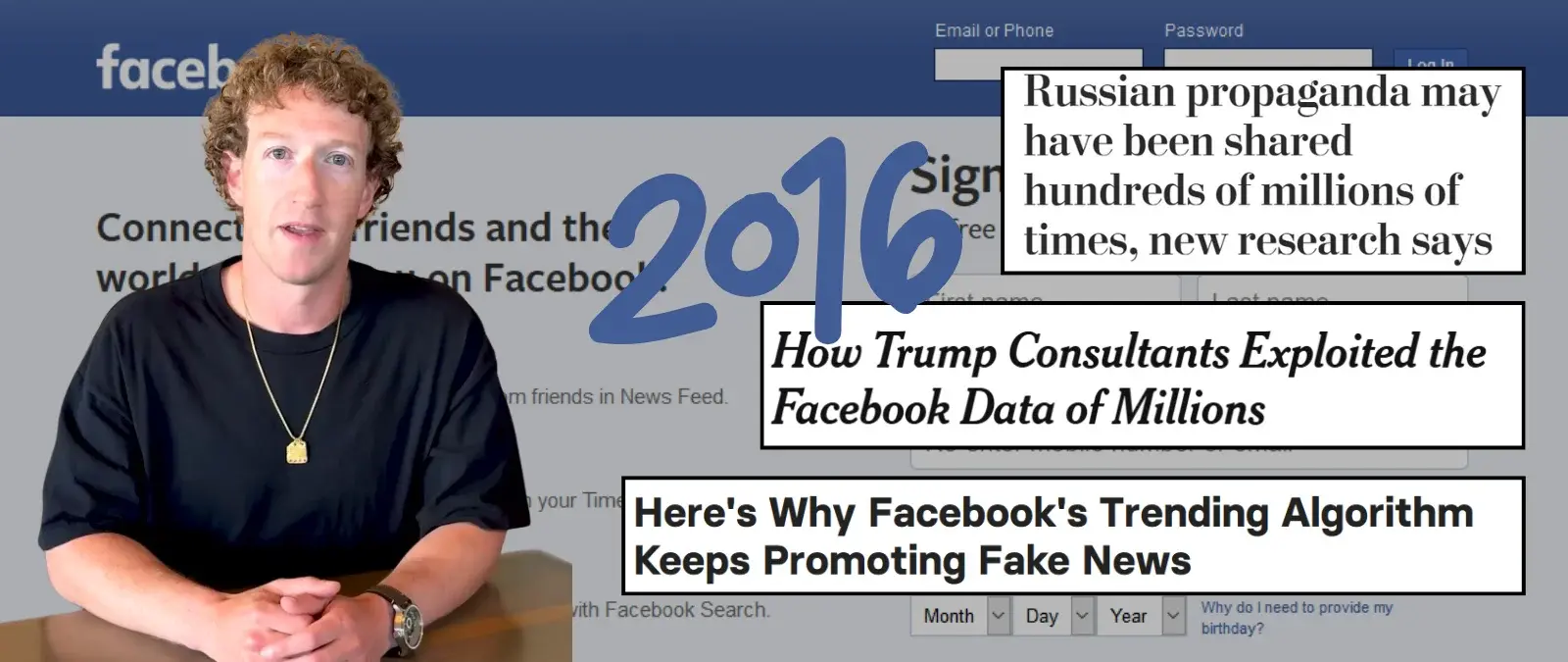
The genesis of Meta’s fact-checking program can be traced back to the tumultuous 2016 US presidential election. The proliferation of fake news and the documented influence of foreign interference exposed the vulnerability of social media platforms to manipulation. Studies revealed the alarming reach of disinformation on Facebook, with fabricated stories often outperforming legitimate news outlets in engagement. The platform also served as a conduit for Russian interference, with targeted advertisements reaching millions of users. Furthermore, the Cambridge Analytica scandal underscored how user data could be exploited for political advertising, microtargeting susceptible individuals with propaganda and misinformation. These events, collectively, forced Facebook to confront its role in the spread of misinformation and prompted the company to seek collaborative solutions.
In response to mounting pressure and the growing recognition of the threat posed by online disinformation, Facebook began collaborating with independent fact-checkers in late 2016. This initiative, spearheaded by the International Fact-Checking Network (IFCN), aimed to provide users with context and verifiable information about potentially false or misleading content. The program, which eventually expanded to over 100 countries, involved fact-checkers reviewing and labeling content based on its veracity. Contrary to some misconceptions, fact-checkers did not have the power to remove content. Rather, their role was to provide users with additional information, empowering them to make informed decisions about the content they encountered.
The impact of Meta’s fact-checking program has been largely positive. Internal data reveals that the program significantly reduced user engagement with labeled content, indicating its effectiveness in curbing the spread of misinformation. However, Zuckerberg’s recent statements contradict these findings, suggesting a disconnect between internal data and the company’s public narrative. The CEO’s assertion that fact-checkers have “destroyed trust” lacks empirical support and stands in contrast to the evidence demonstrating the program’s positive impact. Furthermore, Zuckerberg’s claim that Meta acted in “good faith” to address concerns about disinformation overlooks the significant pressure from researchers, authorities, and the public following the 2016 election and the Cambridge Analytica scandal.
The potential dismantling of the fact-checking program raises concerns about a potential resurgence of misinformation on Meta’s platforms, particularly in the context of upcoming elections. The European Fact-Checking Standards Network (EFCSN) has warned that such a move could embolden foreign actors seeking to interfere in democratic processes. Zuckerberg’s call to "get back to our roots around free expression" evokes the pre-fact-checking era, a period characterized by unchecked misinformation and manipulation. The success or failure of the proposed replacement system, reliant on community notes, will be pivotal in determining whether Meta’s platforms become breeding grounds for disinformation once again.
While some concerns exist regarding the potential for manipulation and bias within community-driven systems, organizations like Maldita.es see value in community notes as a complementary tool to professional fact-checking. However, they emphasize the need for platform safeguards to ensure accuracy, transparency, and accountability. Key recommendations include prioritizing expert knowledge and reliable sources, expediting the review process for viral disinformation, preventing manipulation by organized groups, and implementing consequences for users who repeatedly spread false information. Furthermore, guaranteeing the independence of the community notes system from platform interference and external pressures is crucial for maintaining its integrity. The future of content moderation on Meta’s platforms hinges on the effectiveness of these measures and their ability to prevent a return to the pre-2016 era of rampant misinformation.