


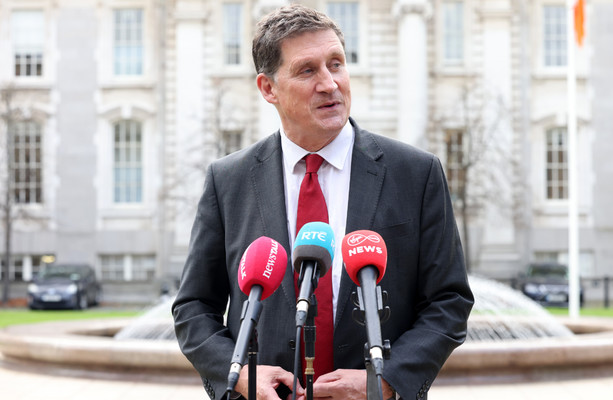
Eamon Ryan Downplays Impact of Online Toxicity, Emphasizing Disconnect from Real-World Interactions
Green Party leader Eamon Ryan has sparked controversy with his recent assertion that the pervasive negativity and toxic debates prevalent on social media platforms have had minimal impact on real-life interactions. Ryan argues that despite the seemingly overwhelming presence of online vitriol, these digital exchanges haven’t significantly influenced the tone and nature of face-to-face conversations and relationships within communities. This perspective has drawn criticism from those who believe the online sphere increasingly bleeds into the offline world, shaping public discourse and influencing individual attitudes.
Ryan’s comments came during a discussion about the challenges politicians and public figures face in navigating the often-hostile environment of social media. He acknowledged the existence of harsh criticism and personal attacks online, but maintained that these experiences haven’t translated into tangible negativity in his everyday interactions. He cited numerous examples of positive and constructive engagements with constituents in person, contrasting these experiences with the frequently polarized and inflammatory nature of online debates. He emphasized the importance of differentiating between the curated and often-distorted reality presented on social media and the more nuanced and complex tapestry of real-world interactions.
Critics of Ryan’s viewpoint argue that his perspective overlooks the significant impact online toxicity can have on individuals and society. They point to the growing body of research documenting the psychological toll of online harassment and abuse, highlighting the potential for these experiences to lead to anxiety, depression, and even self-harm. Furthermore, they contend that the constant exposure to negative and divisive content online can normalize harmful behaviors and contribute to a climate of intolerance and polarization in the broader society. They argue that the online and offline worlds are increasingly intertwined, making it difficult to dismiss the impact of online toxicity as simply a virtual phenomenon.
The debate surrounding Ryan’s comments underscores the complex relationship between online and offline interactions in the digital age. While the internet offers unprecedented opportunities for connection and communication, it also presents new challenges in managing the spread of misinformation and harmful content. The anonymity and reach afforded by social media platforms can embolden individuals to engage in behavior they might not exhibit in face-to-face interactions, contributing to a culture of online disinhibition. This disinhibition can manifest in various forms, from aggressive and abusive language to the spread of conspiracy theories and disinformation.
The question of how to effectively address online toxicity remains a significant challenge for policymakers and tech companies alike. Some advocate for stricter content moderation policies on social media platforms, while others emphasize the importance of promoting media literacy and critical thinking skills to help individuals navigate the complexities of the online world. Finding the right balance between protecting free speech and mitigating the harmful effects of online toxicity is a complex issue with no easy solutions. The ongoing debate highlights the need for continued discussion and collaboration to address the challenges posed by the ever-evolving digital landscape.
Ultimately, Ryan’s comments have ignited a crucial conversation about the extent to which online toxicity spills over into the real world. While he maintains that his personal experiences suggest a disconnect between the two realms, critics argue that his perspective overlooks the broader societal impact of online negativity. This debate highlights the need for further research and analysis to fully understand the complex interplay between online and offline interactions and to develop effective strategies for fostering a more positive and constructive online environment. The challenge lies in finding the equilibrium between fostering open dialogue and mitigating the harmful effects of online toxicity, ensuring that the digital world contributes positively to society rather than exacerbating existing divisions and anxieties.