


Close Menu
DISADISA
  • Home
  • News
  • Social Media
  • Disinformation
  • Fake Information
  • Social Media Impact
Trending Now

Meta’s $16.68 Billion Settlement Establishes a Major Precedent for Accountability Regarding Social Media’s Impact on Minors.

August 27, 2026

Lincoln Families Respond to Meta’s New Restrictions on Adolescent Social Media Use.

August 27, 2026

Judge Expresses Concern Over Misinformation in RealPage Litigation.

August 27, 2026
Facebook X (Twitter) Instagram
Facebook X (Twitter) Instagram YouTube
DISADISA
Newsletter
  • Home
  • News
  • Social Media
  • Disinformation
  • Fake Information
  • Social Media Impact
DISADISA
Home»Fake Information»Disinformation via Fabricated Podcast Clips: Detection Strategies for Social Media Users
Fake Information

Disinformation via Fabricated Podcast Clips: Detection Strategies for Social Media Users

Press RoomBy Press RoomApril 27, 2025No Comments
Facebook Twitter Pinterest LinkedIn Tumblr Email

The Rise of Fake Podcasts: A New Frontier in Misinformation and Marketing

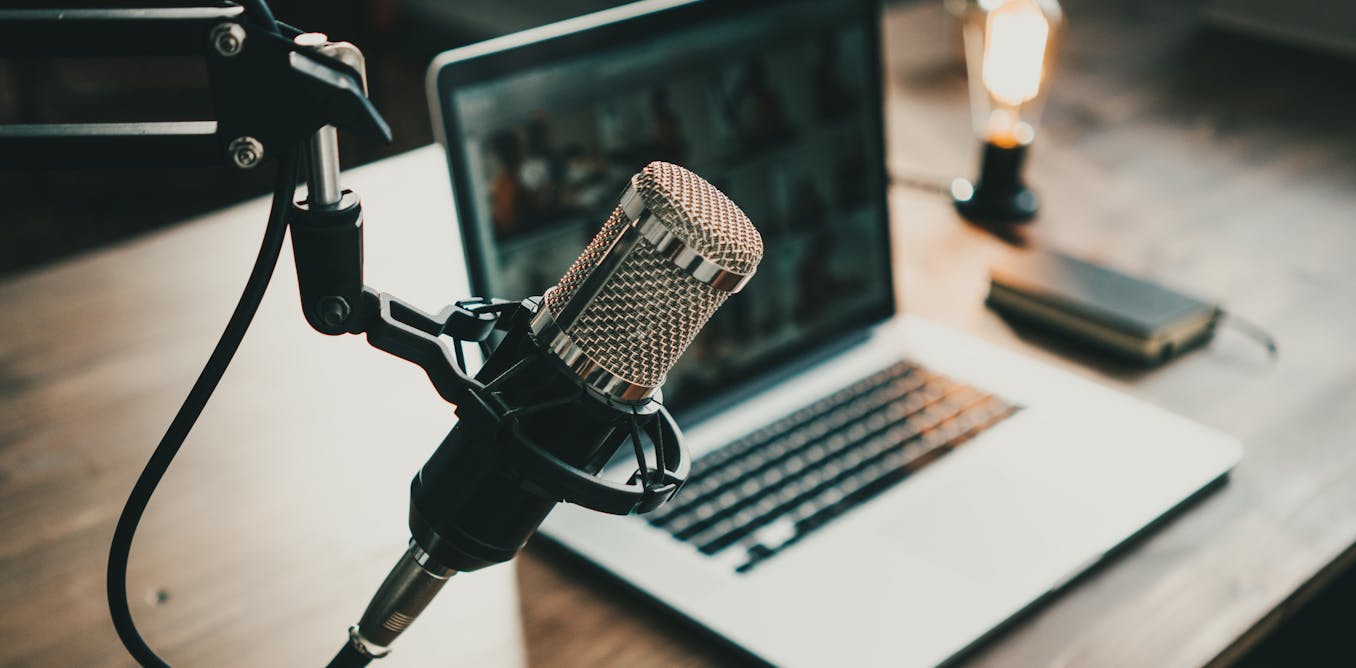
The podcasting boom, capturing millions of listeners globally with diverse content, has unfortunately spawned a new breed of deception: "fake podcasts." These short video clips, mimicking snippets from genuine podcasts, proliferate on platforms like TikTok, often featuring individuals behind professional microphones engaging in seemingly insightful conversations. However, these staged dialogues are frequently divorced from any actual podcast episode, serving as misleading marketing ploys or even vehicles for misinformation.

The phenomenon gained notoriety in late 2022 when internet sleuths debunked several viral clips of supposed high-profile podcast appearances. Fitness influencer Vincent Sant’s fabricated appearance on the Joe Rogan Experience, complete with Rogan’s signature backdrop and equipment, epitomized this trend. Though swiftly removed after exposure, Sant’s stunt inadvertently popularized fake podcasts as a marketing tactic. Today, some actors even specialize in creating such content, earning substantial incomes from mimicking popular podcast formats. LinkedIn now hosts guides instructing marketers on creating these deceptive videos, touting the practice as "the future of video marketing."

Fake podcasts exist on a spectrum of deceptiveness. At the benign end are explicit advertisements leveraging the podcast format for product promotion. These are easily identifiable, often carrying disclaimers like "paid partnership," and are less likely to mislead viewers. A more insidious category uses the podcast aesthetic to build personal brands, exploiting the perceived authority associated with the format. Influencers like Sebastian Ghiorghiu and Pearl Davis employ this strategy, intermingling clips from real and fake podcasts to cultivate followings, legitimize contentious viewpoints, and ultimately drive product sales. The lack of clear distinction between genuine and fabricated content allows these personalities to cloak their promotional efforts in a veneer of expertise.

The most dangerous form is the "deep fake" podcast. These clips employ manipulated audio and video, often with the aid of AI, to manufacture endorsements from prominent podcasters or experts. A recent example depicted Joe Rogan and Andrew Huberman seemingly promoting a dubious supplement. This deceptive practice exploits the trust listeners place in these figures, posing significant ethical and legal concerns.

What fuels the effectiveness of fake podcasts? The answer lies in the nature of "convergence culture," a concept coined by media scholar Henry Jenkins. This blurring of lines between traditional and social media elevates "popular experts" – individuals without formal credentials but possessing significant knowledge and influence within specific online communities. Podcasters, often viewed as popular experts, enjoy a perceived authority, similar to figures like My Favourite Murder hosts Karen Kilgariff and Georgia Hardstark, or YouTuber MatPat of The Game Theorists. Fake podcast creators exploit this blurred authority, capitalizing on the trust audiences bestow upon these online personalities.

The deceptive power of fake podcasts is amplified by the perceived credibility of the medium. Pew Research Center studies indicate that US adults tend to view news discussed on podcasts as more reliable than information from social media. Ironically, the relative ease and low cost of faking a podcast, compared to traditional media, makes it a prime target for manipulation. This combination of perceived trustworthiness and ease of fabrication creates fertile ground for misinformation and deceptive marketing.

Identifying fake podcasts requires vigilance. A key indicator is the availability and verifiability of the original recording. A genuine clip should link back to a full-length episode easily accessible and exceeding a minute in duration. Cross-referencing with official channels is also crucial. If a prominent expert appears to endorse a product in a short clip, checking their official social media for confirmation is essential. In the age of deep fakes and manipulated media, critical consumption and verification are paramount to navigating the increasingly complex digital landscape. Recognizing the tactics employed by fake podcast creators empowers consumers to make informed decisions and resist the allure of misleading content.

Share. Facebook Twitter Pinterest LinkedIn WhatsApp Reddit Tumblr Email

Read More

Tate Brothers Acknowledge Their Ostentatious Displays of Wealth Are Fabricated

August 25, 2026

Formal Advisory Warns Social Media Users of Fraudulent Protection Services

August 25, 2026

Identifying the Most Common Scams Originating on Social Media

August 25, 2026
Add A Comment
Leave A Reply Cancel Reply

Our Picks

Lincoln Families Respond to Meta’s New Restrictions on Adolescent Social Media Use.

August 27, 2026

Judge Expresses Concern Over Misinformation in RealPage Litigation.

August 27, 2026

Senator Padilla Probes Kalshi and Polymarket Regarding Election-Related Influencer Content.

August 27, 2026

Here are a few rewritten versions of the headline in a formal tone:

  1. Florida Declines $17 Billion Settlement with Meta Regarding Child Safety on Social Media

  2. State of Florida Rejects $17 Billion Meta Settlement Over Minors’ Social Media Use

  3. Florida Authorities Turn Down $17 Billion Meta Agreement Citing Concerns for Youth Welfare

  4. Florida Refuses Proposed $17 Billion Meta Settlement Addressing Impact on Children

  5. Florida Rejects $17 Billion Meta Settlement in Children’s Online Safety Case

August 26, 2026
Stay In Touch
  • Facebook
  • Twitter
  • Pinterest
  • Instagram
  • YouTube
  • Vimeo

Don't Miss

News

Here are a few options for a formal title, each with a slightly different nuance.

Option 1 (Most Direct and Standard)

Call for Papers: JMIR Metascience and Research Integrity Seeks Submissions on Misinformation in Scientific Publishing

Option 2 (More Formal and Announcement-Style)

Announcement: Call for Submissions on Misinformation in Publishing for the New JMIR Journal of Metascience and Research Integrity

Option 3 (Emphasizing the Journal’s Mission)

JMIR Metascience and Research Integrity Issues Call for Papers on Misinformation in Scholarly Publishing

Option 4 (Concise and Professional)

Call for Papers: Addressing Misinformation in Scientific Publishing in JMIR Metascience and Research Integrity

I recommend Option 1 for its clarity and directness, aligning with standard academic publishing conventions.

By Press RoomAugust 26, 20260

JMIR Metascience and Research Integrity Launches New Section to Combat Misinformation in Scholarly Publishing Toronto,…

Here are a few options with a formal tone:

Option 1 (direct and concise) The Osun 2026 Election: AI and the Weaponization of Doubt in Nigeria’s Information Landscape

Option 2 (more academic) Artificial Intelligence and Electoral Integrity: Examining the Weaponization of Doubt in Nigeria’s 2026 Osun State Election

Option 3 (journalistic and formal) The Role of Artificial Intelligence in the Weaponization of Doubt: Insights from Nigeria’s 2026 Osun Election

Option 4 (shorter, more precise) Artificial Intelligence and the Weaponization of Doubt in the Osun 2026 Election

August 26, 2026

Two-Day Conference at Sciences Po Examines Artificial Intelligence’s Influence on Democratic Institutions and Public Discourse


Alternatively:

Sciences Po Hosts Two-Day Symposium on the Implications of Artificial Intelligence for Democracy and the Public Sphere

August 26, 2026

Pre-Election Disinformation Campaign Directed at Chris Hipkins

August 26, 2026
DISA
Facebook X (Twitter) Instagram Pinterest
  • Home
  • Privacy Policy
  • Terms of use
  • Contact
© 2026 DISA. All Rights Reserved.

Type above and press Enter to search. Press Esc to cancel.