


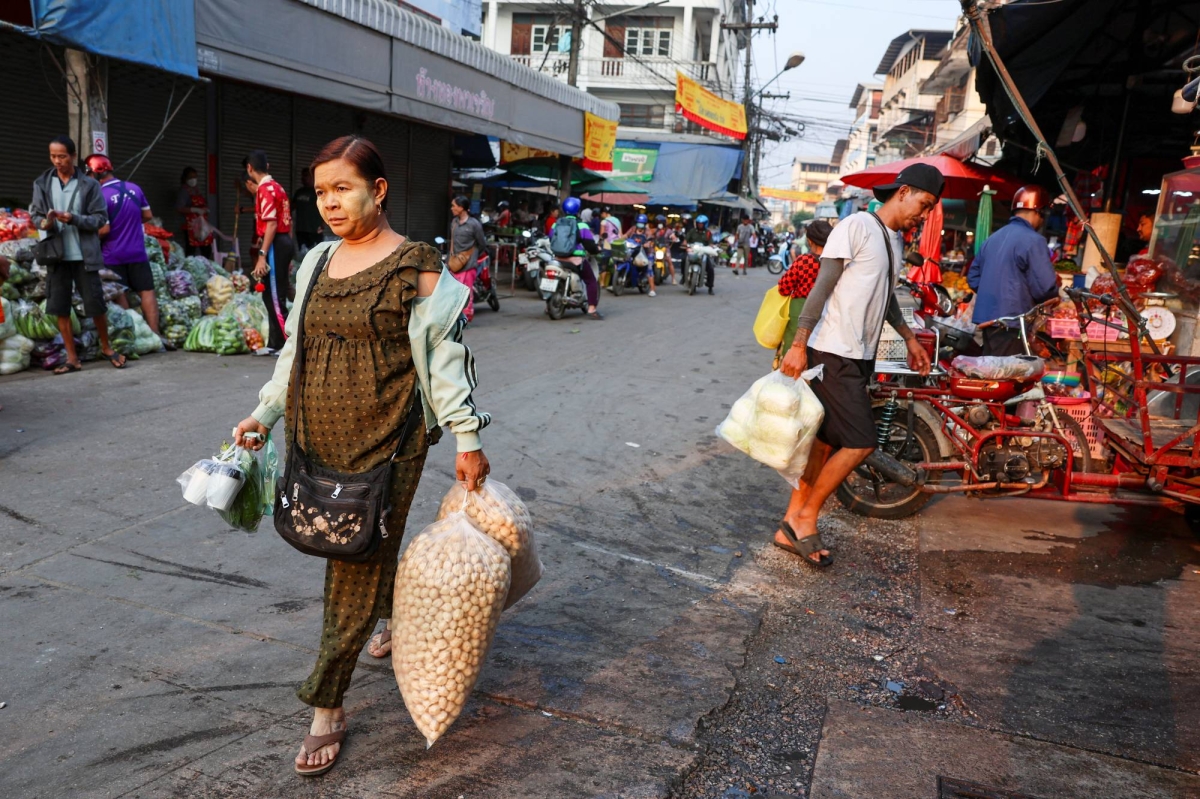
Myanmar’s Exodus: A Million Refugees Flee Conflict, Face Disinformation in Thailand
Bangkok – The ongoing civil war in Myanmar, marked by escalating violence and human rights abuses, has forced over a million people to flee their homes in search of safety and livelihood. Neighboring Thailand has become a primary destination for these refugees, but their arrival has been met with a rising tide of nationalist sentiment and disinformation campaigns, exacerbating the challenges they face. Experts warn that these fabricated narratives, often spread through social media, are deliberately designed to stoke prejudice and resentment against the vulnerable migrant population.
One of the most pervasive disinformation campaigns revolves around the issue of wages. False claims have proliferated online, alleging that Myanmar migrant workers are demanding a 700-baht ($21) minimum daily wage, nearly double the amount earned by Thai workers. These claims, often accompanied by manipulated images and misleading videos, have gained significant traction on social media platforms, reaching millions of viewers and fueling public anger. The rapid spread of these falsehoods has been amplified by influential figures, including a former Thai intelligence official, who have shared the misinformation with their extensive networks.
The dissemination of this false information has serious consequences for Myanmar refugees in Thailand. It not only incites hostility and discrimination against them but also undermines their efforts to secure fair wages and decent working conditions. Employers, influenced by the fabricated narratives, may exploit the vulnerable position of refugees, offering lower wages or denying basic labor rights, knowing that the refugees have limited recourse due to their precarious legal status.
The surge of refugees into Thailand has placed a significant strain on the country’s resources and infrastructure. This influx, coupled with existing economic challenges and social inequalities, has created fertile ground for nationalist groups to exploit public anxieties and direct them towards the migrant population. These groups often portray refugees as a threat to Thai jobs, culture, and national security, using inflammatory rhetoric to mobilize support for their anti-immigrant agendas.
The disinformation campaigns against Myanmar refugees are not isolated incidents but part of a broader pattern of xenophobia and intolerance that has been growing in Thailand. This trend has been further exacerbated by the political polarization and social divisions that have plagued the country in recent years. The proliferation of fake news and hate speech on social media, coupled with a lack of effective mechanisms for fact-checking and accountability, has created a climate of mistrust and suspicion, making it difficult to distinguish genuine information from fabricated narratives.
Addressing the challenges facing Myanmar refugees in Thailand requires a multi-pronged approach. First, there is an urgent need to counter the spread of disinformation and promote accurate information about the refugee situation. This requires collaboration between government agencies, media organizations, civil society groups, and social media platforms to identify and debunk false narratives, promote media literacy, and provide accurate information to the public. Secondly, the Thai government must strengthen its efforts to protect the rights and well-being of refugees, ensuring they have access to essential services, including healthcare, education, and legal assistance. Finally, it is crucial to foster greater understanding and empathy between Thai citizens and Myanmar refugees through community engagement programs and intercultural dialogue initiatives. By promoting social cohesion and addressing the root causes of prejudice, Thailand can create a more welcoming and inclusive environment for those fleeing the ongoing conflict in Myanmar.