







AI-Generated Fake Newspaper Front Pages Fuel Disinformation Ahead of Nigeria’s 2027 Election
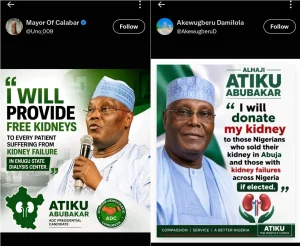
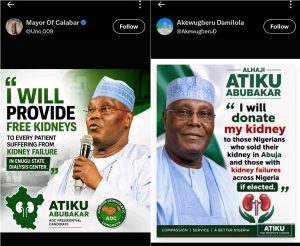
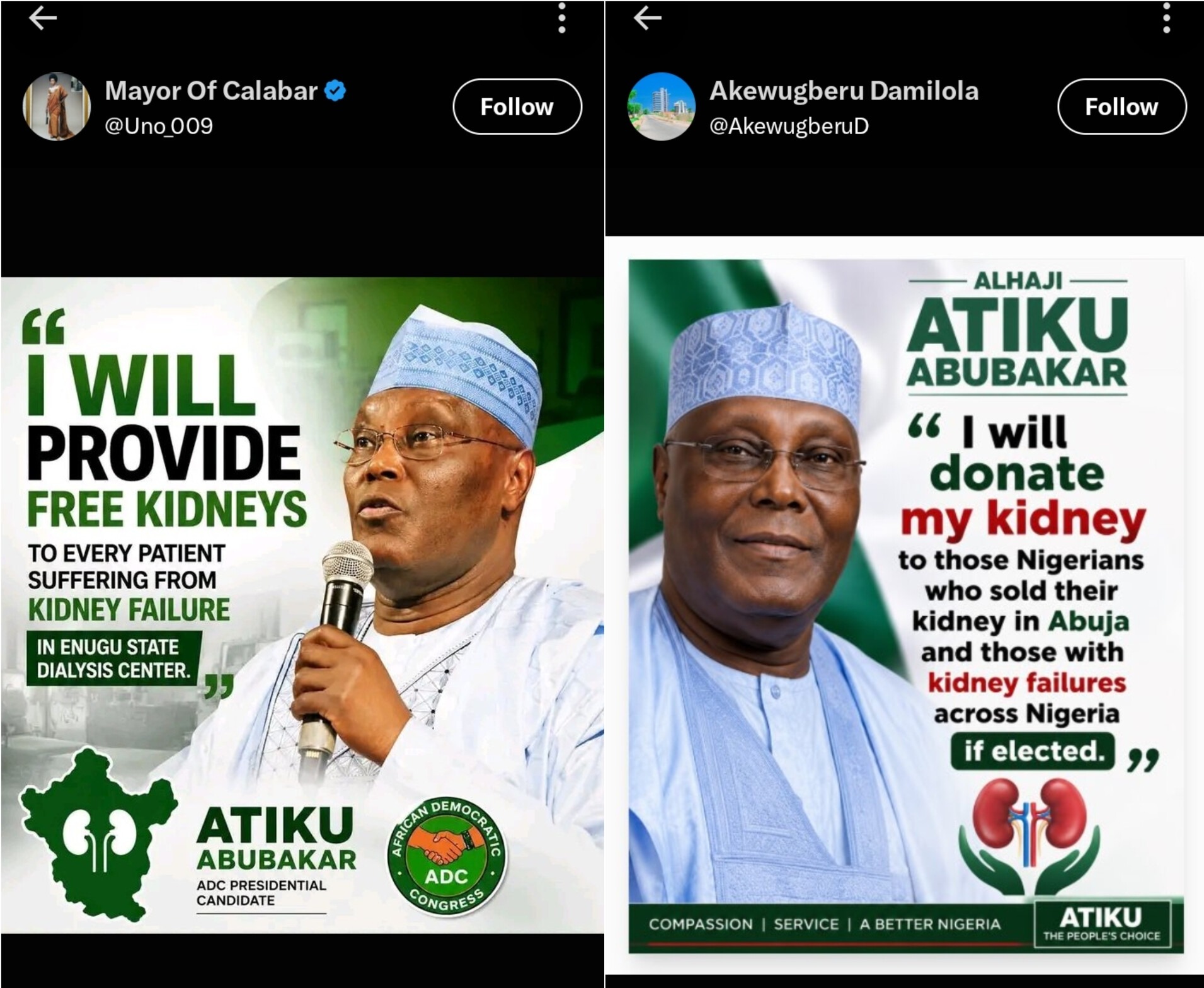
As Nigeria inches closer to the 2027 general election, supporters of various political parties have increasingly turned to social media to promote their preferred candidates and attack opponents. However, this digital political warfare has taken a troubling turn, with many users resorting to sharing false, malicious, and deceptive content, including manipulated images and fabricated newspaper front pages, to spread disinformation. In a recent development, fact-checking organisation DUBAWA identified a wave of fake headlines targeting both the presidential candidate of the Africa Democratic Congress (ADC), Atiku Abubakar, and President Bola Tinubu. One notable example involved an X user, “Mayor of Calabar” (Uno_009), who on Wednesday, September 2, 2026, shared an image featuring the ADC logo alongside a photo of Atiku, claiming that the former vice-president promised to provide free kidneys to every patient with kidney failure in Enugu State. By Friday, September 4, 2026, the post had garnered over 2,500 views, 41 comments, 45 likes, and 25 reposts, with similar claims also circulating on Facebook. However, a thorough check of the ADC’s official social media pages and Atiku’s own handles found no trace of such a promise, confirming that the post was a fabricated attempt to deceive voters and tarnish the candidate’s reputation.
The disinformation campaign against Atiku intensified dramatically in the days following the unveiling of his manifesto for the 2027 election. Social media users began attributing a series of outlandish and entirely false statements to him, employing sophisticated tactics including AI-generated fake newspaper front pages to lend an air of credibility to their claims. In one widely shared post, an X user, @Banty4them, uploaded a picture of a purported front page of a newspaper called “The Kachalla Newspaper,” with a bold headline claiming, “Each Nigerian citizen will be given a car and a house each if I become president,” attributing the quote to Atiku. The post, captioned sarcastically with “Congratulations Nigerians! It is a new dawn of white elephant promises,” generated over 1,700 views, 136 likes, 32 comments, and 52 reposts. A keyword search, however, revealed that no such newspaper exists, and no official publication or statement corroborated the claim. Disturbingly, the comment section showed that many users were more focused on defending their own political allegiance than questioning the authenticity of the post. One commenter, @Ronkecarey, wrote, “No surprises here, typical of Him. The good thing is he won’t ever become the president by God’s grace,” while another, @Omo28015Talabi, asked, “Where are the houses and cars you gave us when you were vice president?” The failure of many online users to critically evaluate the source allowed the fabricated narrative to spread unchecked, demonstrating how confirmation bias can facilitate disinformation.
The pattern of fabricating newspaper front pages to attack Atiku continued across multiple platforms, with each new post employing the name and logo of established or seemingly credible media outlets to deceive unsuspecting audiences. In a separate manipulation, an X user, @Sistaliano, shared a post supposedly from Sahara Reporters, claiming that Atiku had promised to sell the Central Bank of Nigeria if elected, with the caption: “I will sell the Central Bank if I’m elected. Other countries have done it in the past.” This particular piece of disinformation reached an alarming number of users, accumulating over 23,900 views, 357 likes, 147 comments, 186 reposts, and 14 bookmarks as of September 4, 2026. DUBAWA’s investigation found no publication, video, or post from Sahara Reporters carrying such a statement, nor any record of Atiku making such a pledge. Similarly, another post uploaded on September 4, 2026, claimed that Atiku had vowed to increase the number of Southeast states to eight and ensure they could access the ocean and have a seaport if elected in 2027. This post used the name and logo of Press Xpress Nigeria, but a search of the outlet’s original account yielded no trace of the reported story. While it is true that Atiku has spoken about reopening and developing borders in the South, citing the negative impact of border closures on businesses, there is no evidence he proposed expanding states in the Southeast. Even more absurd was a fabricated front page from a purported “The Daily News” newspaper, where Atiku was quoted as saying, “I will give every Nigerian one bag of rice weekly when I become President.” Despite generating over 270 views, this claim was likewise not traced to any official statement or credible publication, underscoring the reckless nature of these fabricated narratives.
After hours of sustained disinformation targeting Atiku, the same tactics were swiftly turned against President Bola Tinubu, dragging him into the digital mudslinging just as the 2027 election campaigns begin to heat up. On Thursday, September 4, 2026, an X user shared an image of a front page from a supposed “Nigerian Herald” newspaper, with a headline declaring that Tinubu had promised to provide 24-hour power supply if given a second term. By Friday, the post had already attracted over 4,600 views, 163 likes, 119 reposts, 73 comments, and 13 bookmarks. However, a keyword search revealed no credible publication attributing such a statement to President Tinubu. DUBAWA further found that the name “Nigerian Herald” may be an impersonation of the real “Herald Newspaper,” which is based in Kwara State. Another post shared by X user @Xagreat, purportedly from a media outlet called “The Daily Tribune,” claimed that Tinubu had announced petrol prices would sell for N5,000 per litre starting May 29, 2027. Investigation showed that the front page was entirely fabricated, as no Nigerian media outlet bears that name; the widely recognised organisation with a similar name is the “Nigeria Tribune.” The same user, @xagreat, also shared another manipulated front page claiming that Tinubu had said the Dollar may rise to 3,500/$ in 2027, and yet another alleging that the president threatened to jail students for life who refuse to repay their loans after graduation. In every instance, DUBAWA found no evidence that Tinubu made such statements, confirming that these posts were false attributions designed to mislead the public and damage his political standing.
A careful analysis of the proliferation of fabricated newspaper front pages targeting both Atiku and Tinubu reveals a distinct and troubling pattern that points to the use of AI-generated templates. DUBAWA observed that nearly all the fake front pages share the same year of establishment, volume, and issue number—specifically “Since 1951, Vol 75, no 0231”—which strongly indicates that the creators are relying on a common AI template tool to produce the images. Another striking flaw was visible in the front pages targeting President Tinubu: several of them featured a background picture showing the logo of the Peoples Democratic Party (PDP), despite Tinubu being a member of the All Progressives Congress (APC), not the PDP. Such sloppy errors, easily spotted by attentive readers, nonetheless did little to prevent the spread of the content, as many users shared the posts based solely on headlines that aligned with their preexisting biases. DUBAWA also identified several artificial intelligence tools that could have been used to generate the deceptive front pages, including Dremina, Canva, Adobe Express, and the popular ChatGPT, among others. The growing accessibility of these advanced AI models is making it increasingly simple for individuals to create realistic-looking but entirely fake content, blurring the line between genuine journalism and malicious fabrication. As these AI-generated visuals become more sophisticated, unsuspecting audiences are finding it ever more difficult to distinguish between authentic news reports and digitally manipulated disinformation, raising serious concerns about the integrity of information circulating online.
Amid this escalating wave of AI-powered disinformation, some social media users have ironically turned the trend into entertainment, sharing ridiculous and comical posts purely for fun, which further complicates the information ecosystem and desensitises the public to genuinely harmful falsehoods. Nevertheless, the threat posed by these deceptive practices to Nigeria’s electoral integrity cannot be overstated, and Nigeria’s electoral body has begun to take notice. The Independent National Electoral Commission (INEC) has issued warnings about the potential impact of artificial intelligence-fueled disinformation on the credibility of the 2027 election. To prepare for this challenge, the commission is conducting a comprehensive audit of its electoral technology systems, with the aim of identifying vulnerabilities that could be exploited through misinformation campaigns. Additionally, INEC is considering the implementation of a mock presidential election as part of a broader strategy to test its readiness and resilience against new forms of digital manipulation. The combination of widely available AI tools and the enthusiasm of politically partisan social media users poses a significant threat to the democratic process, as citizens may be swayed by false narratives that distort candidate records and policy positions. As the 2027 election approaches, it is becoming critical for voters to exercise media literacy, verify sources, and question the authenticity of sensational claims. Without a more informed and discerning public, the continued spread of fabricated newspaper headlines and manipulated imagery threatens to undermine trust in both the media and the electoral process itself, leaving Nigeria’s democracy vulnerable to those who would rather deceive than debate.


