







The 2027 Nigerian general election is already shaping up to be a fiercely contested political battleground, and as the race intensifies, the digital space has become a primary arena for political warfare. Supporters of various political parties are increasingly turning to social media platforms to promote their chosen candidates and, more concerningly, to attack opponents. This has led to a significant surge in the creation and dissemination of disinformation, often in the form of fabricated quotes, manipulated images, and entirely fake news articles. The goal is to mislead the public, damage reputations, and sow confusion among the electorate. As the political temperature rises, fact-checking organizations have noted a clear pattern of malicious and deceptive content circulating online, targeting key political figures and exploiting the public’s engagement with the electoral process.
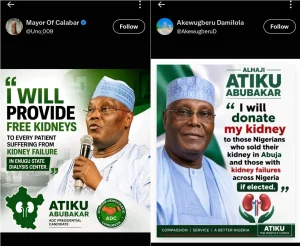
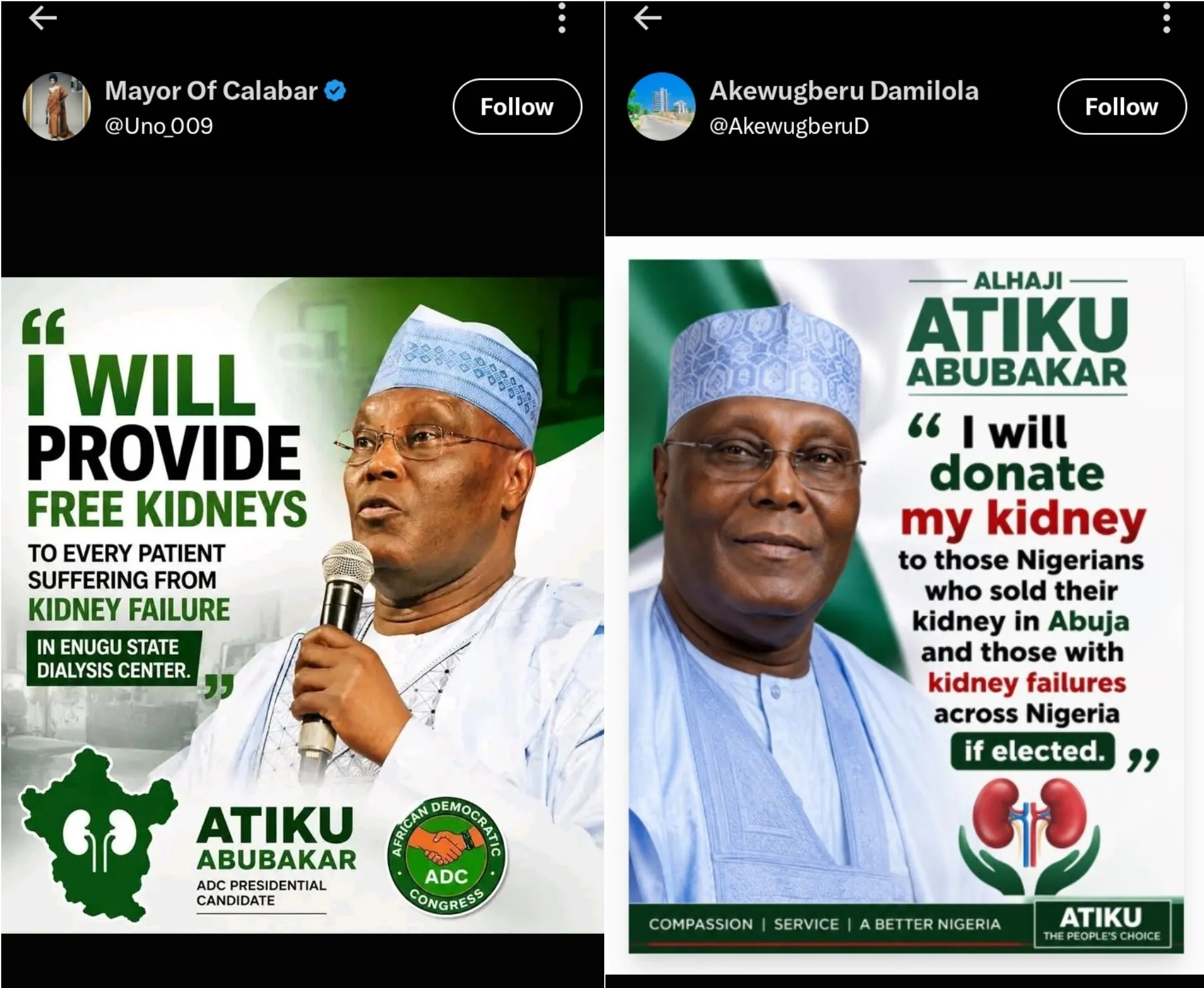
One of the earliest and most absurd examples of this trend was a viral claim targeting the presidential candidate of the African Democratic Congress (ADC), Atiku Abubakar. An X user, operating under the handle “Mayor of Calabar,” shared an image on September 2, 2026, that combined the ADC logo with a photo of Atiku and a caption promising “free kidneys to every patient with kidney failure in Enugu State.” This patently false and medically nonsensical claim quickly gained traction, amassing over 2,500 views and hundreds of engagements. Fact-checkers from DUBAWA investigated the claim by checking the official social media pages of the ADC and Atiku himself, finding no trace of any such promise. The image was flagged as a digital manipulation, yet its rapid spread demonstrated how easily fabricated content can gain a foothold in the online political discourse, with many users choosing to believe and share it without verification.
Following the release of Atiku’s manifesto, a coordinated wave of disinformation emerged, primarily consisting of fake newspaper front pages with sensational headlines attributed to him. One such fabricated front page from a non-existent publication called “The Kachalla Newspaper” quoted Atiku as promising to give “each Nigerian citizen a car and a house each.” Another false post, using the branding of Sahara Reporters, claimed he would “sell the Central Bank if elected.” These posts were designed to portray the former vice-president as making outlandish and irresponsible promises to curry favor with voters. Further fabricated reports included claims that Atiku would increase the number of Southeast states and provide them with seaports, and another that he pledged a free bag of rice weekly to every Nigerian. In each case, thorough investigations by DUBAWA revealed that the newspapers did not exist, the media outlets had never published such reports, and no official statement from Atiku could be found to support any of the claims.
President Bola Tinubu has also become a primary target of this same disinformation strategy, with his opponents using similar tactics to undermine his bid for a second term. Within a day of the fake Atiku headlines circulating, X users began sharing a fabricated front page from a supposed “Nigerian Herald” newspaper, which claimed Tinubu had promised a 24-hour power supply if re-elected. This was followed by a barrage of other fake headlines, including one from a fabricated “The Daily Tribune” claiming he had approved a petrol price of N5,000 per litre starting in May 2027, and another alleging he stated the dollar would rise to N3,500. In a more malicious fabrication, one user claimed Tinubu threatened to jail students for life who fail to repay their loans. DUBAWA’s verification found all of these claims to be baseless, noting that the media outlets named in the posts either did not exist or had no record of publishing such stories.
A detailed analysis of these viral fabricated newspaper front pages reveals a common, low-effort pattern that points to the use of readily available digital tools. The most obvious flaw is that all the fake front pages share the exact same year of establishment, volume, and issue number, suggesting they were created using a simple AI template. Another critical error was spotted on the fake front pages targeting President Tinubu, which used a background photograph featuring the logo of the Peoples Democratic Party (PDP), despite Tinubu being a member of the rival All Progressives Congress (APC). These inconsistencies indicate that the creators are not aiming for high-quality deception but rather rely on the speed of sharing and the partisan leanings of the audience to spread the falsehoods. The analysis suggests that various AI image-generation tools, such as Dremina, Canva, and Adobe Express, could have been used to create these fake visuals.
The proliferation of these AI-generated fake newspaper pages highlights the growing challenge of artificial intelligence in the electoral process. As AI models become more sophisticated and accessible, the ability for ordinary users to create highly realistic but entirely fabricated content is increasing. This makes it significantly more difficult for the average social media user to distinguish between authentic news and malicious disinformation. While some users have turned the trend into a form of entertainment by creating obviously comical fake headlines, the potential for harm is immense. These fabricated stories can easily sway public opinion, reinforce negative biases, and ultimately undermine the integrity of the electoral process by deceiving voters about the true policies and promises of the candidates.
In response to this growing threat, Nigeria’s Independent National Electoral Commission (INEC) has raised alarms about the potential impact of AI-driven disinformation on the 2027 polls. The commission recognizes that the spread of false information could severely compromise the fairness and credibility of the election. To mitigate this, INEC has announced plans to conduct a comprehensive audit of its electoral technology systems and is considering a mock presidential election as a test run to ensure its readiness. However, the sheer volume and velocity of disinformation online mean that the onus is also on the public to be more discerning consumers of information. The task of safeguarding the 2027 election from the scourge of AI-generated fake news will require a collaborative effort from the electoral body, social media platforms, fact-checkers, and, most importantly, the Nigerian electorate themselves.


