


Close Menu
DISADISA
  • Home
  • News
  • Social Media
  • Disinformation
  • Fake Information
  • Social Media Impact
Trending Now

Lincoln Families Respond to Meta’s New Restrictions on Adolescent Social Media Use.

August 27, 2026

Judge Expresses Concern Over Misinformation in RealPage Litigation.

August 27, 2026

Senator Padilla Probes Kalshi and Polymarket Regarding Election-Related Influencer Content.

August 27, 2026
Facebook X (Twitter) Instagram
Facebook X (Twitter) Instagram YouTube
DISADISA
Newsletter
  • Home
  • News
  • Social Media
  • Disinformation
  • Fake Information
  • Social Media Impact
DISADISA
Home»Fake Information»Debunking Pakistan’s Top 5 Social Media Disinformation Narratives Regarding the Indo-Pakistani Conflict.
Fake Information

Debunking Pakistan’s Top 5 Social Media Disinformation Narratives Regarding the Indo-Pakistani Conflict.

Press RoomBy Press RoomMay 9, 2025No Comments
Facebook Twitter Pinterest LinkedIn Tumblr Email

Pakistan’s Disinformation Campaign Amidst Escalating Tensions with India

Tensions between India and Pakistan flared dramatically in early May 2023, marked by cross-border military engagements involving drones and missiles. India reported neutralizing Pakistani drone and missile attacks targeting military installations, while also thwarting infiltration attempts along the border. Pakistan responded with heavy shelling along the Line of Control. However, beyond the physical confrontations, a more insidious battle unfolded in the digital realm: a coordinated disinformation campaign orchestrated by pro-Pakistan accounts and bot networks. This campaign leveraged fabricated videos, doctored images, and outright lies to manipulate public perception and control the narrative surrounding the escalating conflict.

One prominent example of this disinformation campaign involved a viral image purporting to show multiple explosions at the Jammu Air Force Base. Fact-checkers quickly debunked this claim, revealing the image was actually from the Kabul Airport bombing in August 2021, deceptively repurposed to incite panic and spread misinformation. Similarly, a widely circulated WhatsApp message falsely claimed that ATMs across India would be shut down for several days, creating unnecessary anxiety among the public. The Press Information Bureau (PIB) confirmed that ATMs were operating normally and the message was entirely fabricated.

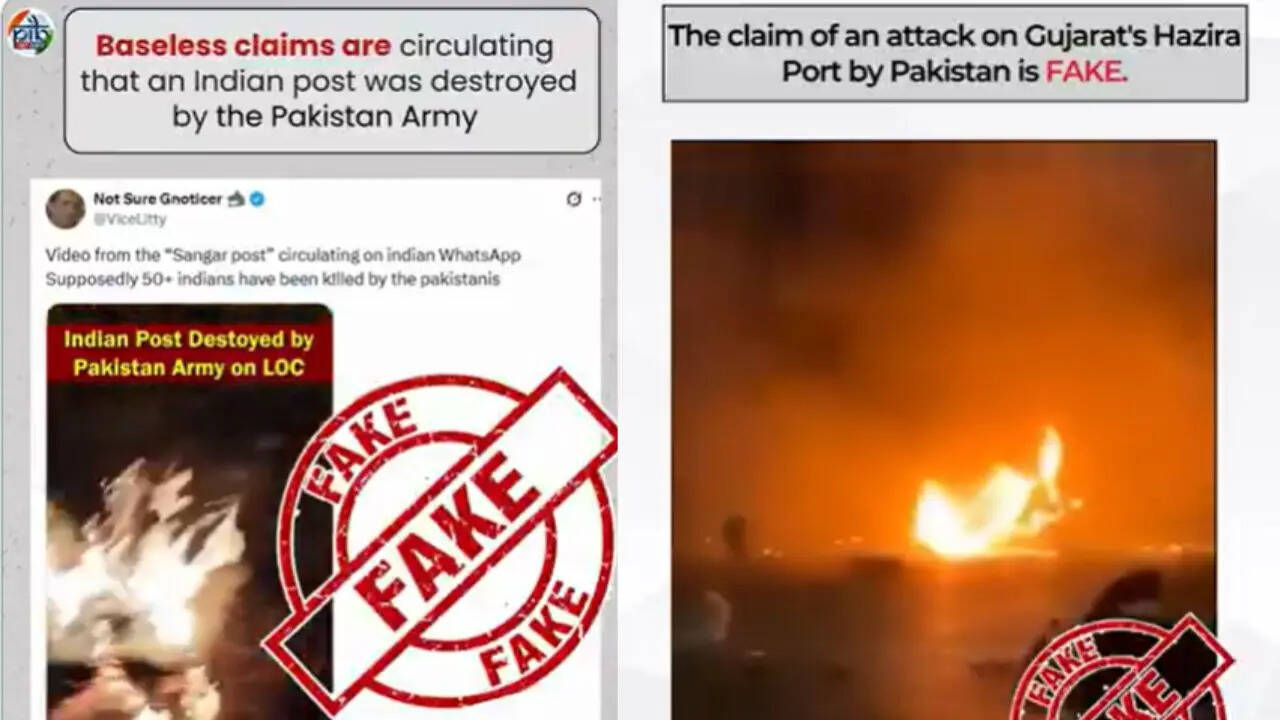
The disinformation campaign extended to misrepresenting incidents unrelated to the current conflict. A video circulating on social media claimed to depict an attack on Gujarat’s Hazira Port. However, fact-checking revealed the footage was from an oil tanker explosion in 2021, completely unrelated to the recent tensions. Another video, falsely claiming a drone attack in Jalandhar, was actually footage of a farm fire, with a timestamp clearly predating the alleged drone attack.

Pakistan-linked accounts also disseminated a staged video purporting to show a successful strike on an Indian Army post operated by a fictitious "20 Raj Battalion." Indian authorities confirmed the video’s fabrication and the non-existence of such a unit, highlighting the deliberate attempt to mislead the public and escalate tensions. These instances underscore the calculated nature of the disinformation campaign, exploiting social media to spread false narratives and manipulate public opinion.

The spread of disinformation during times of heightened tension is particularly dangerous, as it can exacerbate existing anxieties and potentially fuel further conflict. The rapid dissemination of false information through social media platforms makes it challenging for individuals to discern truth from falsehood, increasing the likelihood of manipulation. The coordinated nature of this particular campaign, involving pro-Pakistan accounts and bot networks, suggests a deliberate effort to undermine trust in legitimate sources of information and sow discord.

The incidents described above represent just a snapshot of the broader disinformation campaign waged during this period of heightened Indo-Pak tensions. The use of fabricated videos, doctored images, and false narratives underscores the importance of critical thinking and media literacy in the digital age. Fact-checking organizations play a crucial role in debunking false claims and providing accurate information, but individuals also bear a responsibility to scrutinize information encountered online and avoid contributing to the spread of misinformation. The escalating tensions between India and Pakistan highlight the increasing use of disinformation as a tool of modern warfare, underscoring the need for vigilance and critical evaluation of information in the digital landscape.

Share. Facebook Twitter Pinterest LinkedIn WhatsApp Reddit Tumblr Email

Read More

Tate Brothers Acknowledge Their Ostentatious Displays of Wealth Are Fabricated

August 25, 2026

Formal Advisory Warns Social Media Users of Fraudulent Protection Services

August 25, 2026

Identifying the Most Common Scams Originating on Social Media

August 25, 2026
Add A Comment
Leave A Reply Cancel Reply

Our Picks

Judge Expresses Concern Over Misinformation in RealPage Litigation.

August 27, 2026

Senator Padilla Probes Kalshi and Polymarket Regarding Election-Related Influencer Content.

August 27, 2026

Here are a few rewritten versions of the headline in a formal tone:

  1. Florida Declines $17 Billion Settlement with Meta Regarding Child Safety on Social Media

  2. State of Florida Rejects $17 Billion Meta Settlement Over Minors’ Social Media Use

  3. Florida Authorities Turn Down $17 Billion Meta Agreement Citing Concerns for Youth Welfare

  4. Florida Refuses Proposed $17 Billion Meta Settlement Addressing Impact on Children

  5. Florida Rejects $17 Billion Meta Settlement in Children’s Online Safety Case

August 26, 2026

Here are a few options for a formal title, each with a slightly different nuance.

Option 1 (Most Direct and Standard)

Call for Papers: JMIR Metascience and Research Integrity Seeks Submissions on Misinformation in Scientific Publishing

Option 2 (More Formal and Announcement-Style)

Announcement: Call for Submissions on Misinformation in Publishing for the New JMIR Journal of Metascience and Research Integrity

Option 3 (Emphasizing the Journal’s Mission)

JMIR Metascience and Research Integrity Issues Call for Papers on Misinformation in Scholarly Publishing

Option 4 (Concise and Professional)

Call for Papers: Addressing Misinformation in Scientific Publishing in JMIR Metascience and Research Integrity

I recommend Option 1 for its clarity and directness, aligning with standard academic publishing conventions.

August 26, 2026
Stay In Touch
  • Facebook
  • Twitter
  • Pinterest
  • Instagram
  • YouTube
  • Vimeo

Don't Miss

News

Here are a few options with a formal tone:

Option 1 (direct and concise) The Osun 2026 Election: AI and the Weaponization of Doubt in Nigeria’s Information Landscape

Option 2 (more academic) Artificial Intelligence and Electoral Integrity: Examining the Weaponization of Doubt in Nigeria’s 2026 Osun State Election

Option 3 (journalistic and formal) The Role of Artificial Intelligence in the Weaponization of Doubt: Insights from Nigeria’s 2026 Osun Election

Option 4 (shorter, more precise) Artificial Intelligence and the Weaponization of Doubt in the Osun 2026 Election

By Press RoomAugust 26, 20260

Osun Election Exposed a New Era of Disinformation: Manufacturing Doubt, Not Just Lies The 2026…

Two-Day Conference at Sciences Po Examines Artificial Intelligence’s Influence on Democratic Institutions and Public Discourse


Alternatively:

Sciences Po Hosts Two-Day Symposium on the Implications of Artificial Intelligence for Democracy and the Public Sphere

August 26, 2026

Pre-Election Disinformation Campaign Directed at Chris Hipkins

August 26, 2026

Judge Raises Misinformation Concerns in RealPage Case

August 26, 2026
DISA
Facebook X (Twitter) Instagram Pinterest
  • Home
  • Privacy Policy
  • Terms of use
  • Contact
© 2026 DISA. All Rights Reserved.

Type above and press Enter to search. Press Esc to cancel.