


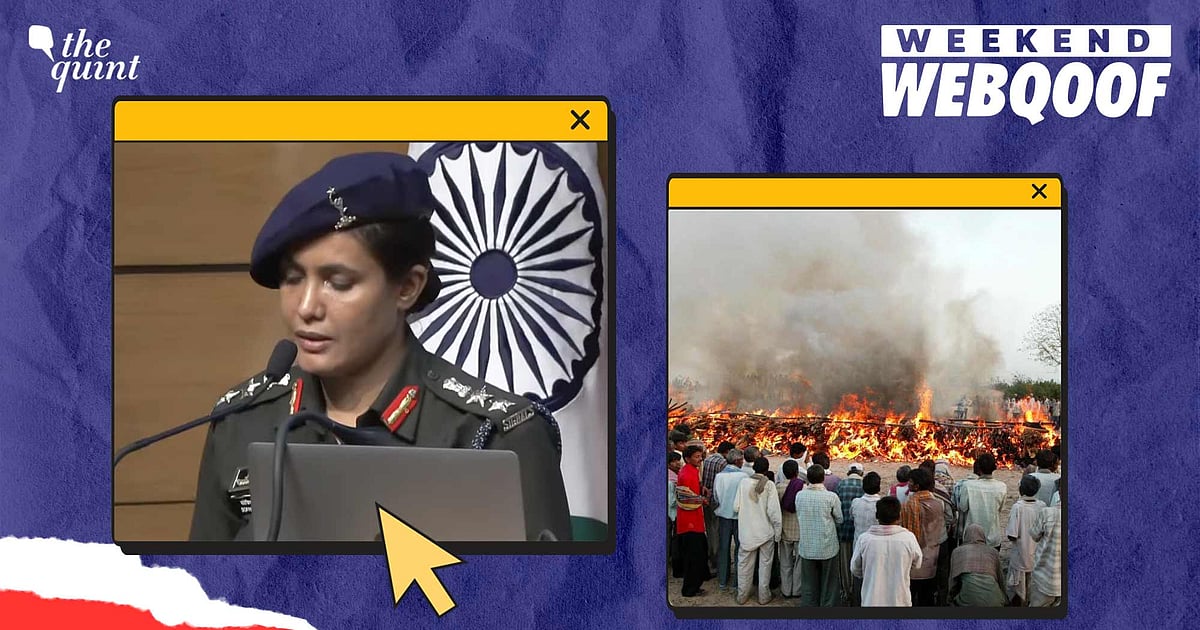
AI-Generated Video Fuels False Narrative About Military Officer’s Views on Religion and Terrorism
A deepfake video featuring a fabricated statement attributed to Colonel Sofia Qureshi has rapidly spread across social media platforms, igniting a controversy over its authenticity and the implications of its message. The video depicts Colonel Qureshi, a distinguished military officer, seemingly declaring, "I am a Muslim but not Pakistani. I am a Muslim but not a terrorist. Terrorism has no religion. I have the courage to kill every terrorist and that too without asking their religion.” This statement, while seemingly bold and courageous, has been confirmed to be the product of sophisticated AI manipulation, raising concerns about the increasing prevalence and potential dangers of deepfake technology.
The emergence of this doctored video highlights the growing ease with which AI can be employed to create convincing yet entirely fabricated content. Deepfakes, which leverage artificial intelligence to generate realistic but synthetic media, pose a significant threat to the integrity of information disseminated online. This particular instance exemplifies the potential for deepfakes to misrepresent individuals’ views, spread misinformation, and inflame public sentiment. The manipulated video not only falsely portrays Colonel Qureshi’s stance on sensitive issues of religion and terrorism but also serves as a stark reminder of the vulnerability of individuals to online manipulation and misrepresentation.
The rapid dissemination of the deepfake video underscores the urgent need for robust mechanisms to detect and counter the spread of manipulated media. As AI technology continues to advance, the creation of deepfakes becomes increasingly sophisticated and difficult to discern from genuine content. This poses a challenge to social media platforms, news organizations, and individuals alike in their efforts to identify and combat the proliferation of misinformation. The incident involving Colonel Qureshi’s manipulated video emphasizes the importance of media literacy and critical thinking skills in navigating the digital landscape.
The implications of this deepfake incident extend beyond the misrepresentation of an individual’s views. The fabricated statement touches upon sensitive topics of religion and terrorism, potentially exacerbating existing societal tensions and contributing to the spread of harmful stereotypes. By falsely associating a military officer with controversial statements, the deepfake video risks fueling mistrust and division within communities. This incident underscores the potential for deepfakes to be weaponized for malicious purposes, including political manipulation, defamation, and the incitement of violence.
Efforts to combat the spread of deepfakes require a multi-pronged approach. Social media platforms must invest in advanced detection technologies and implement stricter content moderation policies to prevent the dissemination of manipulated media. News organizations and fact-checking websites play a crucial role in debunking false narratives and providing accurate information to the public. Media literacy education is essential in empowering individuals to critically evaluate online content and identify potential deepfakes.
Furthermore, legal frameworks may need to be adapted to address the unique challenges posed by deepfake technology. Holding creators and distributors of malicious deepfakes accountable could deter the misuse of this technology and protect individuals from online manipulation. The incident involving Colonel Qureshi’s fabricated video serves as a wake-up call, highlighting the urgent need for collective action to mitigate the risks associated with deepfakes and safeguard the integrity of information in the digital age. As AI technology continues to evolve, proactive measures are essential to prevent deepfakes from further eroding trust in online content and undermining social cohesion. The incident underscores the need for a combined effort from tech companies, policymakers, media organizations, and individuals to navigate the complex ethical and societal challenges posed by deepfakes. Only through collaboration and vigilance can we hope to mitigate the harmful effects of this rapidly evolving technology and protect the integrity of online information. The case of Colonel Qureshi serves as a cautionary tale, reminding us of the potential consequences of inaction in the face of this growing threat.