


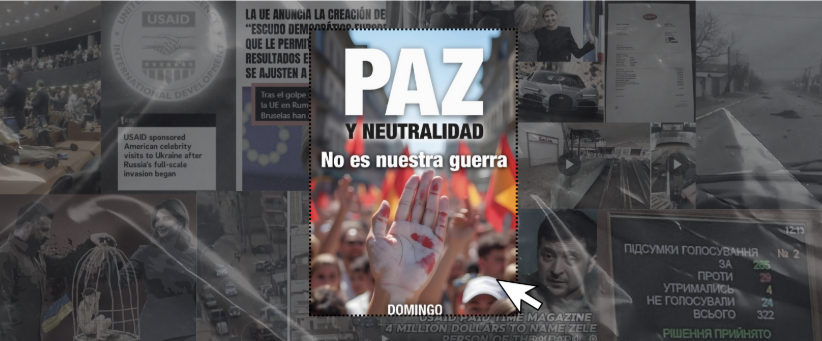
Pro-Russian Disinformation Network Fuels Anti-War Protests in Madrid
A recent demonstration in Madrid against Spain’s involvement in the Ukraine conflict has raised concerns about the influence of pro-Russian disinformation networks in shaping public opinion. An analysis by Fundación Maldita.es revealed a significant overlap between accounts promoting the demonstration and those previously disseminating pro-Kremlin narratives and anti-Ukrainian falsehoods. The demonstration, held on March 9th, advocated for Spanish neutrality in the war, echoing themes frequently amplified by Russian propaganda efforts.
The investigation focused on 28 social media profiles and Telegram channels that collectively boast over two million followers. These accounts generated a staggering 800,000 impressions promoting the demonstration in just 24 hours. Maldita.es discovered that a striking 82% of these accounts had a history of spreading pro-Russian disinformation, including fabricated stories about the Bucha massacre and false claims about Ukrainian President Zelenskyy misusing Western aid. The analysis considered ten distinct pro-Russian hoaxes, finding that the majority of the accounts promoting the demonstration had disseminated at least two of them.
This network’s reach extends beyond the Ukraine conflict, also encompassing disinformation about domestic Spanish issues. Half of the accounts had propagated falsehoods related to the DANA natural disaster in Valencia, including conspiracy theories about concealed casualties and misrepresentations of the King’s security detail. The amplification of these domestic narratives, some of which were initially promoted by Russian networks, further illustrates the interconnectedness of the disinformation ecosystem.
The demonstration, organized under the slogan "Peace and Neutrality, Not Our War," was spearheaded by Rubén Gisbert, an individual with a documented history of spreading pro-Russian disinformation. Gisbert’s call to action rapidly gained traction within the identified network, with 27 other profiles quickly joining the promotional effort. Among these amplifiers were accounts like VerdadesOfenden and the Albatros Telegram channel, both of which have consistently disseminated a high percentage of the pro-Russian hoaxes examined by Maldita.es. Further bolstering the campaign was Spanish News Pravda, a network of websites flagged by the European Digital Media Observatory (EDMO) for disseminating disinformation and propaganda.
The disinformation spread by these accounts encompasses a range of pro-Kremlin narratives. Examples include the false claim of a Ukrainian child trafficking network, the fabricated story of a European Parliament ovation for US missile strikes against Russia, and the baseless allegation that USAID paid celebrities to boost Zelenskyy’s popularity. The sheer breadth of these falsehoods underscores the concerted effort to manipulate public perception of the Ukraine conflict.
The investigation further revealed that the Bucha massacre was the most widely disseminated piece of disinformation among the accounts promoting the Madrid demonstration. Seventeen of the 28 profiles shared content denying Russian involvement in the atrocities, echoing Kremlin talking points that attempted to deflect blame for the killings. This coordinated amplification highlights the strategic nature of the disinformation campaign.
Beyond the Ukraine conflict, the network also targeted domestic Spanish issues, notably the DANA floods in Valencia. A quarter of the accounts involved in promoting both the demonstration and pro-Russian disinformation also spread conspiracy theories related to the floods, including false claims about hundreds of deaths in the Bonaire shopping center parking lot. These domestic disinformation campaigns, some of which were initially amplified by Russian networks, reveal the interconnectedness of the disinformation ecosystem and its capacity to exploit local events for broader geopolitical aims. The investigation by Maldita.es sheds light on the concerning role of pro-Russian disinformation networks in influencing public opinion and potentially shaping political discourse in Spain. The significant overlap between accounts promoting the Madrid demonstration and those spreading pro-Kremlin narratives raises serious questions about the authenticity of the movement and the extent to which it reflects genuine public sentiment versus manufactured consent.