


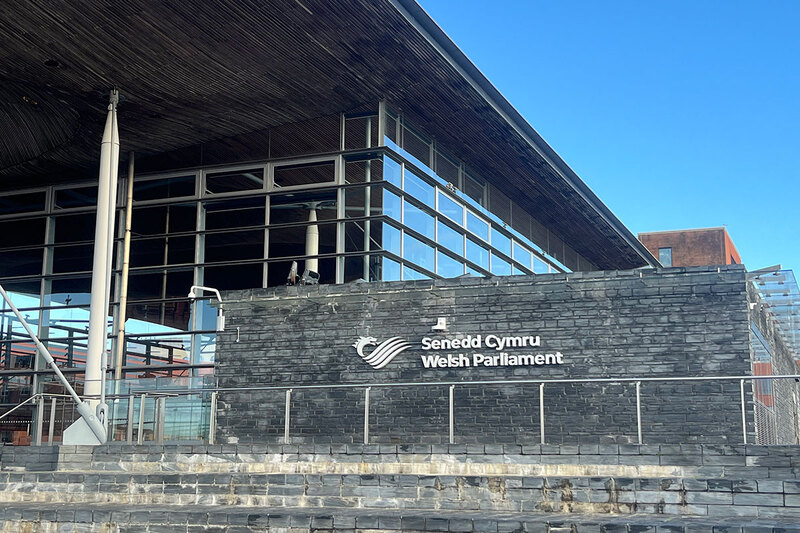
A new research briefing on the relationship between migration and housing demand in Wales has concluded that the nation’s housing crisis is “not one problem with one fix”, warning that devolved policy cannot fully control the wider demographic and economic forces shaping where people live and what they pay for housing. The briefing, prepared by Senedd Research for Members of the Senedd, says the Welsh Government “can reshape supply over time, but it cannot fully control the demand pressures that interact with it.” In doing so, the research seeks to inject a degree of nuance into a politically charged debate, moving beyond simplistic arguments that house prices are driven primarily by newcomers. It arrives at a moment when housing is one of the most urgent concerns expressed by people across Wales. Rising rents, high house prices and a shortage of affordable homes are not only causing individual hardship but also affecting economic growth, as employers struggle to recruit and retain workers in areas with insufficient accommodation. The report underlines that migration is one of several factors influencing housing demand, but it is neither the sole cause nor an isolated phenomenon. It also warns that the answers are unlikely to be found in any single intervention. The briefing will be examined by committees and used to inform future policy discussions. It challenges both those who treat migration as the root cause of the crisis and those who insist the state can simply build its way out of the problem. Instead, the research points to a more complex picture, in which supply, affordability, taxation, welfare, planning, demography and the division of powers between the UK Government and the Senedd all interact. The phrase “not one problem with one fix” is likely to become a reference point in the coming debate over housing policy in Wales.
The starting point for the Senedd Research briefing is the scale of the housing challenge. There is broad consensus that Wales has too few homes relative to the number of households wanting to live in them. Successive administrations have promised to increase house building, but the rate of new housing has fallen far short of estimated need. This shortage has pushed up prices and rents in many areas, especially in cities such as Cardiff, Swansea and Newport, as well as in attractive coastal and rural locations. At the same time, household sizes have been changing. More people are living alone or in smaller households, meaning that even a stable population requires a growing number of homes. Wales also has an ageing population, and migration of older people into some regions makes this trend more pronounced. Migration, the briefing stresses, must be viewed in this context. Population change is not simply a matter of births and deaths; it also depends on people moving into Wales from elsewhere, including other parts of the United Kingdom, from Europe and from further afield. These movements have a significant effect on housing demand, but the effect varies greatly between different types of property and tenure. An influx of workers to a city, for example, creates demand for flats and rental accommodation, while in rural and coastal areas a greater share of migration may be seasonal, connected to tourism and second home ownership. The research is careful not to treat migration as a single monolith. It distinguishes between international migrants, who may be concentrated in particular places for employment or family reasons, and domestic migrants, who may be moving within Wales or from England. It also recognises that migration supplies labour, including the construction and service workers needed to build and maintain housing. The picture is dynamic: migration both adds to housing demand and contributes to the capacity to respond to it. The central message is that policymakers must not over-simplify, because doing so risks designing remedies that treat symptoms while leaving causes untouched.
Perhaps the most important finding is the limit of Welsh Government power. Immigration policy, including who is allowed to enter the United Kingdom, on what basis and for how long, is largely reserved to the UK Government. The Senedd does not control borders, asylum policy, work visas or the rights of EU citizens in the way that it might wish in a distinctively Welsh set of circumstances. Nor can it control movements across the border between England and Wales, which are impossible to restrict in any meaningful sense and have never been part of the devolution settlement. This means that while the Welsh Government can set housing planning policy, allocate funding, exercise devolved property taxes and regulate landlords, it cannot directly manage one of the primary demand-side variables: how many people come to Wales and why. The briefing’s phrase that policy “can reshape supply over time, but it cannot fully control the demand pressures that interact with it” is a direct reflection of this constitutional reality. The report argues that, in the absence of control over migration, the responsible approach for a devolved government is to understand and anticipate demand pressures as precisely as possible. It points to the need for robust population and household projections, using migration data to model future housing needs in different parts of Wales. This is not about forecasting a disaster but about preparing for known pressures. If a particular town is likely to see an influx of health workers to staff a new hospital, the planning system should already be thinking about housing those workers. Likewise, if a university expects to expand its international student intake, the local authority should consider the implications for the private rented sector. The research therefore argues for better integration between migration data, housing strategy and economic planning. It casts doubt on the idea that a single national target can solve the problem, because demand pressure varies between regions and communities. What works in urban Cardiff will not necessarily work in rural Anglesey or in the post-industrial valleys.
The report’s framing invites readers to abandon the binary argument that migration is either the whole problem or entirely irrelevant. In reality, the demand for housing in Wales is inflated by a range of factors. Some are demographic: population growth, ageing, shrinking household size, changes in life expectancy and internal movement. Others are economic: low interest rates over recent decades made borrowing cheaper and house prices more volatile; wage stagnation means younger people cannot compete with investors; and the expansion of buy-to-let and property ownership as a pension strategy has shifted the housing market away from need and toward speculation. Others are cultural and behavioural: the attraction of rural idylls, the growth of second homes and holiday lets, the rise of remote work after the pandemic, and the pressure of tourism. Then there are failures in the supply system itself: planning delays, viability disputes, land banking, labour shortages in construction and the high cost of materials. These forces interact in different ways in different communities. A coastal village may have soaring prices driven by second home ownership and holiday rentals, while a post-industrial valley town may suffer from weak demand and empty properties. To describe both as parts of a single housing crisis is politically useful, but it can obscure very different local realities. The Senedd briefing does not try to decide which factor is largest; rather, it insists that the combined effect cannot be addressed by one policy lever. Policies that only increase the supply of market homes may not help lower-income households if those homes are quickly purchased as second homes or buy-to-let investments. Similarly, policies that focus on cutting migration would not solve affordability problems caused by low wages, land speculation, and the slow pace of construction. The phrase “not one problem with one fix” is a deliberate warning against silver-bullet solutions. It is a call for a portfolio of policies designed to work together: more social housing, stronger rent regulation, planning reform, taxation of second homes, support for first-time buyers, investment in infrastructure and transport, and a realistic approach to population change. The research acknowledges that such a broad approach is difficult to communicate, but it says that is the only honest conclusion.
The political implications are significant. The Welsh Government has already made commitments in recent years, including measures to tackle second homes by giving councils the ability to increase council tax premiums and to require planning permission for changing properties into holiday lets. It has also brought forward proposals to reform the planning system, with promises to speed up the delivery of housing and to prioritise social housing. There have been calls to reintroduce targets for affordable house building and to expand the capacity of the not-for-profit housing sector. But the Senedd Research briefing warns that these levers operate mainly on the supply side and cannot by themselves control demand. Without a coherent approach to the demand side, new homes may simply be absorbed by speculative pressure. At the same time, the research suggests that policymakers should not be paralysed by complexity. The phrase “not one problem with one fix” might sound like an excuse for inaction, but the report intends the opposite: because the problem is complex, there are many points at which progress can be made. It recommends that the Welsh Government should use all of its available levers in combination, set clear outcomes, and measure whether policies are making housing more affordable, more secure and more appropriate for different groups. It also indicates that local authorities need stronger powers and greater capacity. They are often the first point of contact for planning applications, but many lack the skills and resources to use land supply strategically. The report stresses the need for consistency with economic development policy and for joining up housing with health, transport and education. It warns that this will require cross-party willingness to take long-term decisions. The research also highlights the need for honest public debate. A debate dominated by rhetoric about migration is not only inaccurate but can be damaging, leading to division in communities that have welcomed new residents and relied on them for public services and economic activity. The report does not romanticise migration; it treats it as one factor among many. But it insists that evidence should be the basis for policy.
Ultimately, the Senedd Research briefing is important because it changes the terms of the argument. In the coming months, the Senedd will scrutinise the Welsh Government’s housing policy, with committees considering new legislation and reviewing the effectiveness of existing measures. Members can use this briefing to ask ministers about the assumptions underlying their strategies. Are they building enough affordable homes? Are they anticipating migration trends? Are they using tax powers to curb harmful purchases? Are they working with the UK Government on joined-up approaches? The research does not provide all the answers, but it clarifies the nature of the problem. Housing in Wales is a complex system, shaped by global capital flows, domestic planning rules, local wages, age structure and, yes, migration. No single actor can control all of those forces. The Welsh Government can reshape supply over time, using land, planning and funding, but it cannot fully control the demand pressures that interact with it. What it can do is improve the accuracy of its projections, target investment at areas of greatest need, and design policies that are robust under different population scenarios. It can also avoid the trap of blaming migration, or any single factor, for the entire crisis. The idea that there is one problem and one fix is politically satisfying but analytically false. This report provides a foundation for a more mature debate. It does not necessarily make for easy headlines, and it places responsibility on the public to accept that solutions will be mixed, gradual and sometimes difficult. But for those who want everyone in Wales to have a safe, affordable and suitable home, the message is clear: look at the whole picture, use all the available tools, and understand that housing demand is the product of many interrelated pressures. The investigation by Senedd Research has produced a balanced and necessary reminder that there are no shortcuts. As it says, the housing crisis in Wales is not one problem with one fix. The challenge is to act accordingly.