


Christiana Figueres Named Inaugural Recipient of Jane Goodall Earth Medal, Honoring Science, Courage and Responsibility
The Starmus Festival board has announced that former United Nations climate chief Christiana Figueres will receive the inaugural Jane Goodall Earth Medal, a prestigious new award created to honor individuals who “unite science, courage and responsibility.” The announcement carries profound emotional weight, coming just months after the death of Jane Goodall in October 2025 at the age of 91. Goodall, the legendary primatologist, conservationist and tireless voice of hope, spent more than six decades reshaping humanity’s understanding of chimpanzees and championing environmental stewardship across the globe. She also served on Mongabay’s advisory council, where she lent her wisdom and moral authority to independent environmental journalism. The new medal, established by the board of the Starmus Festival, an international gathering that celebrates the intersection of science, space and the arts, will be presented during this year’s festival, scheduled to take place from October 17 to 22 in Spain. The festival’s theme, “The Search for Truth,” is especially fitting for the medal’s debut, as it addresses the growing crisis of information integrity in what political ecologist Bram Buscher previously characterized on the Mongabay Newscast as a “post-truth era.”
Figueres, who served as executive secretary of the U.N. Framework Convention on Climate Change and led the grueling diplomatic negotiations that produced the landmark 2015 Paris climate agreement, discussed the honor on the Mongabay Newscast, hosted by Mike DiGirolamo. Her reaction was deeply personal, reflecting the profound influence Goodall had on her and countless others. Figueres told DiGirolamo that Goodall was “an absolute giant” to her very last day, a woman whose presence and principles never wavered even as she approached the end of a remarkable life. “And the fact that a medal has been made in her honor, and that I will debut that, is just an unbelievable honor,” Figueres said. For Figueres, the recognition is not merely a tribute to her own achievements but a continuation of Goodall’s legacy—a legacy that insisted science must be paired with empathy, courage with action, and knowledge with responsibility. The Paris Agreement, often described as a historic turning point in global climate diplomacy, was the culmination of years of painstaking work under Figueres’s leadership, and it remains a cornerstone of international efforts to limit global warming. Yet Figueres has always maintained that the agreement was never the end goal but rather a foundation for further ambition. In the same spirit, the Jane Goodall Earth Medal is intended not simply to celebrate past accomplishments but to inspire future ones, recognizing those who carry forward the courage to confront inconvenient truths and act on them.
The origins of the Jane Goodall Earth Medal lie within the creative and activist circles of the Starmus Festival’s advisory board. Astrophysicist and Starmus co-founder Garik Israelian, who joined Figueres on the podcast, revealed that advisory board members Brian May—the astrophysicist best known as the guitarist for the rock band Queen—and fellow musician Peter Gabriel together conceived the idea for the medal. May, who has long balanced his scientific career with his musical fame, has been deeply involved in animal welfare through his foundation Save Me, which campaigns for the protection of animals and wildlife habitats. Gabriel, meanwhile, has spent decades using his platform to advocate for human rights causes around the world, from supporting refugees to amplifying marginalized voices. The collaboration between May and Gabriel to create an award in Goodall’s name is a testament to the breadth of her influence, reaching across disciplines and generations. It also underscores the Starmus Festival’s unique mission: to bring scientists, artists, musicians and thinkers together in celebration of curiosity and discovery. Since its founding, Starmus has become one of the most distinctive gatherings of its kind, featuring Nobel laureates, astronauts and cultural icons, all united by the belief that science and art are not separate realms but complementary ways of understanding and protecting the world. The decision to name the medal after Goodall, a woman who embodied both rigorous scientific observation and profound emotional connection to the natural world, reinforces that vision. By choosing Figueres as the first recipient, the board has signaled that the award will honor those who navigate the difficult terrain between evidence and action, between knowledge and political will.
This year’s Starmus Festival, organized around the theme “The Search for Truth,” arrives at a moment when public discourse is increasingly polluted by misinformation and disinformation. During the Mongabay Newscast episode, both Figueres and Israelian addressed this crisis directly, warning that social media platforms have become powerful amplifiers of falsehoods, often with devastating consequences for science and society. Figueres argued that engagement-driven algorithms, designed to maximize profit rather than promote accuracy, are undermining the very foundations of democratic debate and informed decision-making. “We are swimming in both disinformation and misinformation all the time without even knowing it,” she said, describing the expansion of such content as an abuse of free speech. She pointed to a troubling paradox: in an age of unprecedented access to information, people are increasingly choosing to consume content that reinforces their biases rather than content grounded in scientific evidence. “The fact that we choose to consume more misinformation and disinformation than science-based, truth-based information is to me the root of the problem of why these companies do what they do with algorithms,” Figueres added. Her words echo concerns raised by researchers and journalists worldwide, who have documented how algorithmic amplification can spread conspiracy theories, climate denial and public health misinformation faster than factual corrections can reach audiences. The implications are especially serious for environmental issues, where coordinated campaigns of skepticism and denial have delayed climate action for decades.
Israelian echoed Figueres’s concerns but offered a path forward centered on education and regulation. “It’s much harder to lead very educated, very knowledgeable people to this route of using misinformation and … to inform them completely wrong things,” he said, emphasizing the importance of building a society resilient to falsehoods. Education, in his view, is the first line of defense, equipping people with the critical thinking skills necessary to evaluate sources and resist manipulation. But Israelian also called for structural changes, arguing that the immense power of technology companies must be reined in. “But also limiting the power of tech companies. Those who do social media, to limit the algorithms or to control those algorithms. They should be under control,” he said. His remarks reflect a growing global conversation about the responsibilities of digital platforms, from the European Union’s efforts to regulate online content to debates in the United States and elsewhere over free speech, censorship and corporate accountability. The pairing of Figueres and Israelian on the podcast illustrated the interdisciplinary nature of the challenge: climate change, biodiversity loss and the erosion of truth are not separate crises but interconnected symptoms of a deeper failure to align human systems with reality. The Jane Goodall Earth Medal, by honoring individuals who unite science, courage and responsibility, seeks to highlight examples of leadership that confront these failures head-on. Goodall herself often spoke about the power of individual action and the importance of hope, not as passive optimism but as a determined choice to act despite uncertainty. Figueres, who has similarly spoken about the need for radical optimism in the face of climate crisis, embodies that ethos.
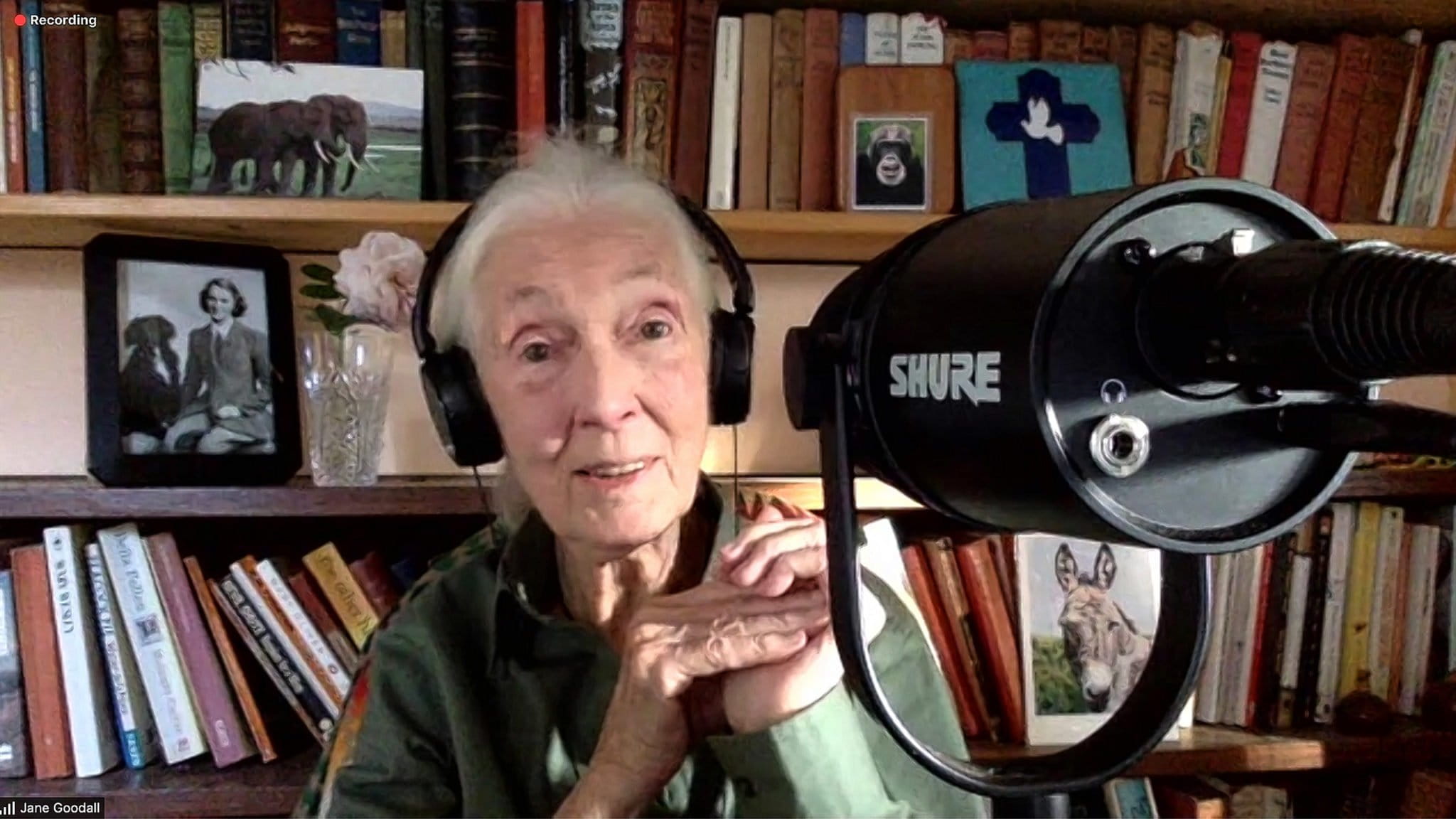
As the Starmus Festival prepares to gather in Spain this October, the presentation of the inaugural Jane Goodall Earth Medal will serve as both a tribute and a call to action. Figueres’s receipt of the award acknowledges her decades of service in the fight against climate change, from her pivotal role in securing the Paris Agreement to her continued advocacy for ambitious emissions reductions and climate justice. But it also celebrates the values that Goodall represented: the courage to speak truth to power, the responsibility to protect the vulnerable, and the unwavering belief that science can guide humanity toward a better future. The medal’s creation, inspired by musicians and scientists, and its first award to a diplomat and climate leader, reflect the growing recognition that the world’s most urgent problems cannot be solved by any single discipline or sector. In a time of widespread distrust in institutions, the example of Goodall and Figueres offers a reminder that integrity, persistence and hope remain essential tools. Listeners can hear the full conversation with Christiana Figueres and Garik Israelian on the Mongabay Newscast, where they delve deeper into the challenges of truth-telling in the digital age, the legacy of Jane Goodall, and the role of festivals like Starmus in fostering meaningful dialogue. The banner image accompanying the news of the award shows Goodall on her Hopecast podcast, a fitting visual reminder of a woman who never stopped asking questions, never stopped learning, and never stopped believing in the capacity of humans to change course. The Jane Goodall Earth Medal will now carry her name forward, and with Christiana Figueres as its first recipient, it begins a legacy of its own—one that unites the rigor of science with the courage of conviction and the responsibility of action.