


The Battle Against Misinformation: Why Facts Aren’t Enough
The proliferation of misinformation, especially regarding critical issues like vaccines and climate change, poses a significant challenge to scientists and policymakers. While countering false information with factual evidence and preemptively "inoculating" individuals against misinformation tactics are valuable strategies, they often fall short in the face of deeply ingrained beliefs and social influences. The crux of the problem lies not in the lack of accurate information, but in the complex interplay between individual worldviews, social networks, and the emotional responses triggered when cherished beliefs are challenged.
The human brain, while capable of rational thought, is also susceptible to biases that prioritize existing beliefs over new information, particularly when those beliefs are intertwined with personal identity or social belonging. When confronted with information that contradicts their worldview, individuals may experience a stress response, making them more likely to reject the information and reinforce their existing views. This phenomenon is amplified within social groups, where individuals tend to conform to the prevailing norms and beliefs of their community, regardless of their factual accuracy. This explains why misinformation often clusters within specific geographic and social pockets, creating echo chambers where skepticism is reinforced and evidence is dismissed.
Harnessing the Power of Social Networks: A New Approach to Combating Misinformation
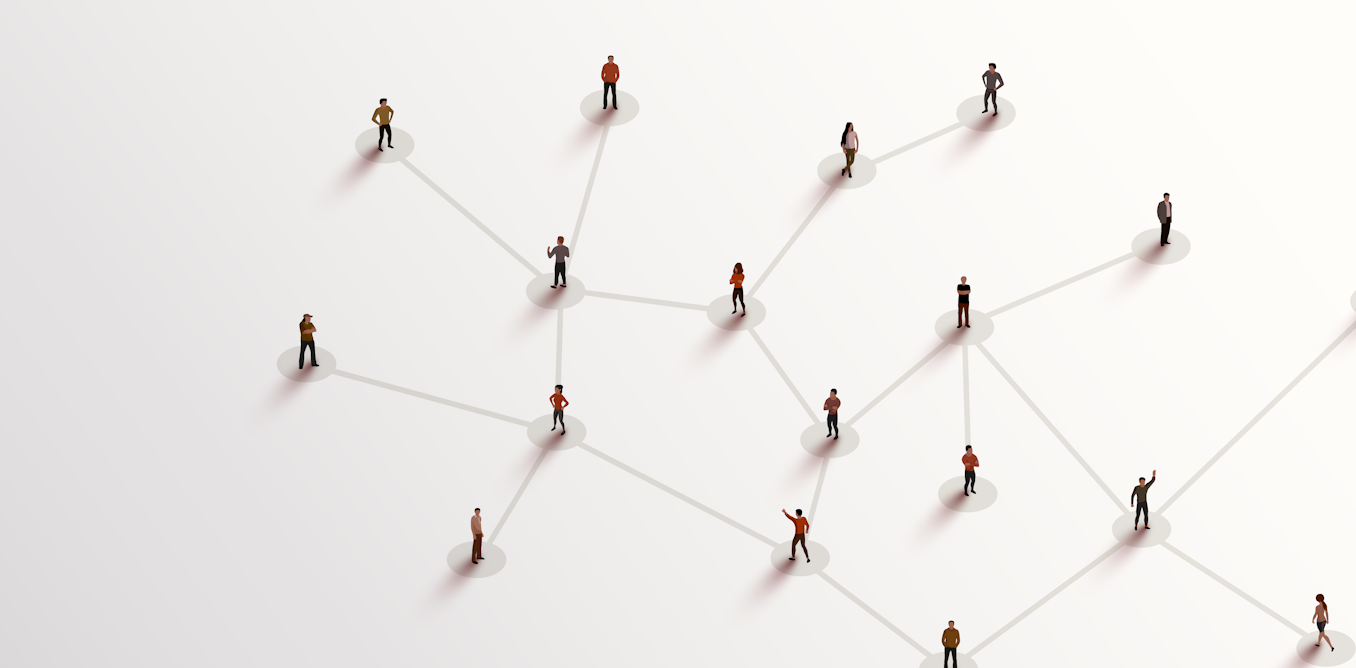
Recognizing the limitations of fact-based approaches, researchers are turning their attention to the power of social networks as a tool for disseminating accurate information and changing minds. Instead of fighting against the inherent human tendency to rely on social cues, this approach seeks to leverage it. By engaging trusted individuals within a community to act as ambassadors for scientific information, it becomes possible to bypass the defensive mechanisms that often block the acceptance of new ideas. This strategy acknowledges that trust and social acceptance are often more influential than factual evidence.
The success of India’s polio eradication campaign serves as a compelling example of this approach. By enlisting volunteers from within vaccine-hesitant communities, public health officials were able to build trust and address concerns in a culturally sensitive manner. These volunteers became bridges between the scientific community and skeptical populations, facilitating dialogue and fostering a sense of shared responsibility for public health. The result was a dramatic decline in polio cases and a significant increase in vaccination rates, demonstrating the transformative potential of community-based interventions.
Deep Canvassing: Fostering Dialogue and Shifting Perspectives
Another promising method for addressing misinformation is deep canvassing, a technique that emphasizes personalized conversations and empathetic listening. Unlike traditional canvassing, which typically targets existing supporters, deep canvassing focuses on engaging with individuals who hold opposing viewpoints, particularly within communities where controversial issues are deeply entrenched. Trained canvassers engage in in-depth conversations, seeking to understand the individual’s perspective and sharing personal stories that create a sense of connection and shared humanity. This approach aims to de-escalate the emotional defensiveness that often accompanies discussions of sensitive topics, paving the way for more open and productive dialogue.
The work of Neighbours United, an environmental non-profit in Canada, showcases the effectiveness of deep canvassing in addressing climate change skepticism. By engaging residents of a conservative, resource-dependent community in respectful conversations, the organization was able to shift public opinion and generate support for a transition to renewable energy. This success demonstrates the potential of deep canvassing to bridge divides and foster consensus on complex scientific issues, even in communities where resistance to change is strong.
Building Trust Through Interpersonal Connections: The Key to Acceptance
The effectiveness of both the Indian polio campaign and deep canvassing initiatives highlights the crucial role of interpersonal connections in promoting the acceptance of scientific information. These examples demonstrate that building trust and rapport is often more effective than simply presenting facts and figures. Face-to-face interactions with trusted community members or trained canvassers can humanize scientific experts, making them appear more relatable and less threatening. These interactions can also provide a safe space for individuals to express their concerns and anxieties, fostering a sense of shared understanding that can pave the way for the acceptance of new information.
The concept of "access points," as described by sociologist Anthony Giddens, underscores the importance of these interpersonal interactions. Access points, which refer to interactions between experts and the public, are crucial for maintaining trust in scientific and governmental institutions. By fostering personal connections and demonstrating empathy, experts can build credibility and counter the distrust that often fuels misinformation. This approach recognizes that scientific information is more likely to be accepted when it is delivered by a trusted source within a supportive social context.
The Path Forward: Embracing Social Networks for Positive Change
The ongoing struggle against misinformation requires a shift in strategy, moving beyond a reliance on facts alone and embracing the power of social networks. By engaging trusted community members, fostering dialogue through deep canvassing, and building interpersonal connections between experts and the public, we can create a more receptive environment for scientific information. These approaches recognize that combating misinformation is not simply about presenting the right facts, but about building trust, addressing concerns, and fostering a sense of shared understanding within communities. While social networks can be a conduit for misinformation, they can also be a powerful tool for promoting accurate information and driving positive social change.