


Devastating Mudslide on Nepal-China Border Sparks Rescue Efforts and Online Misinformation Crackdown
The Catastrophic Disaster and Its Immediate Aftermath
A devastating mudslide along the Nepal-China border has triggered an unprecedented humanitarian crisis, with Chinese authorities now penalizing ten individuals accused of spreading false information about the disaster’s scale. The catastrophic wall of water and debris tore through communities on both sides of the border last week, sweeping away entire villages and leaving a trail of destruction that has captivated international attention and prompted urgent rescue operations. The mudslide, which occurred in a remote and geographically challenging region, has become one of the deadliest natural disasters to strike the area in recent memory, with the full extent of the damage still being assessed as rescue teams navigate treacherous terrain to reach affected areas. The disaster has highlighted the vulnerability of mountain communities to climate-related catastrophes, while also raising questions about information management during emergencies in the region.
Chinese cybersecurity authorities have confirmed that the penalties ranged from fines to ten days in detention, targeting individuals who shared rumors suggesting the death toll was significantly higher than officially reported figures. One individual, identified only by the surname Qiu, had claimed online that “the news reports 1,400 fatalities, but in reality 3,000 people had previously been reported missing.” Another person, surnamed Liu, went further by alleging that more than 3,000 people died in China as a direct result of the mudslide. These claims, which authorities have characterized as misinformation, were shared across various online platforms and prompted the government to take decisive action against what it views as attempts to undermine public trust in official reporting during a crisis situation.
The Human Toll and Ongoing Rescue Operations
The human cost of this disaster has been staggering, with at least 903 people confirmed dead in Nepal alone, while an additional 4,247 individuals remain missing according to the country’s disaster management authority. In Chinese-administered Tibet, the situation remains equally dire, with sixteen confirmed fatalities and 546 people still unaccounted for. The mudslide flattened an area of approximately 0.7 square kilometers, equivalent to the size of 98 football pitches, according to official Chinese state media reports. This massive area of destruction has made rescue operations particularly challenging, as emergency workers must search through vast expanses of debris, mud, and destroyed infrastructure in their desperate attempt to locate survivors. The scale of the missing persons list suggests that the death toll could rise significantly as rescue teams continue their painstaking search through the affected region.
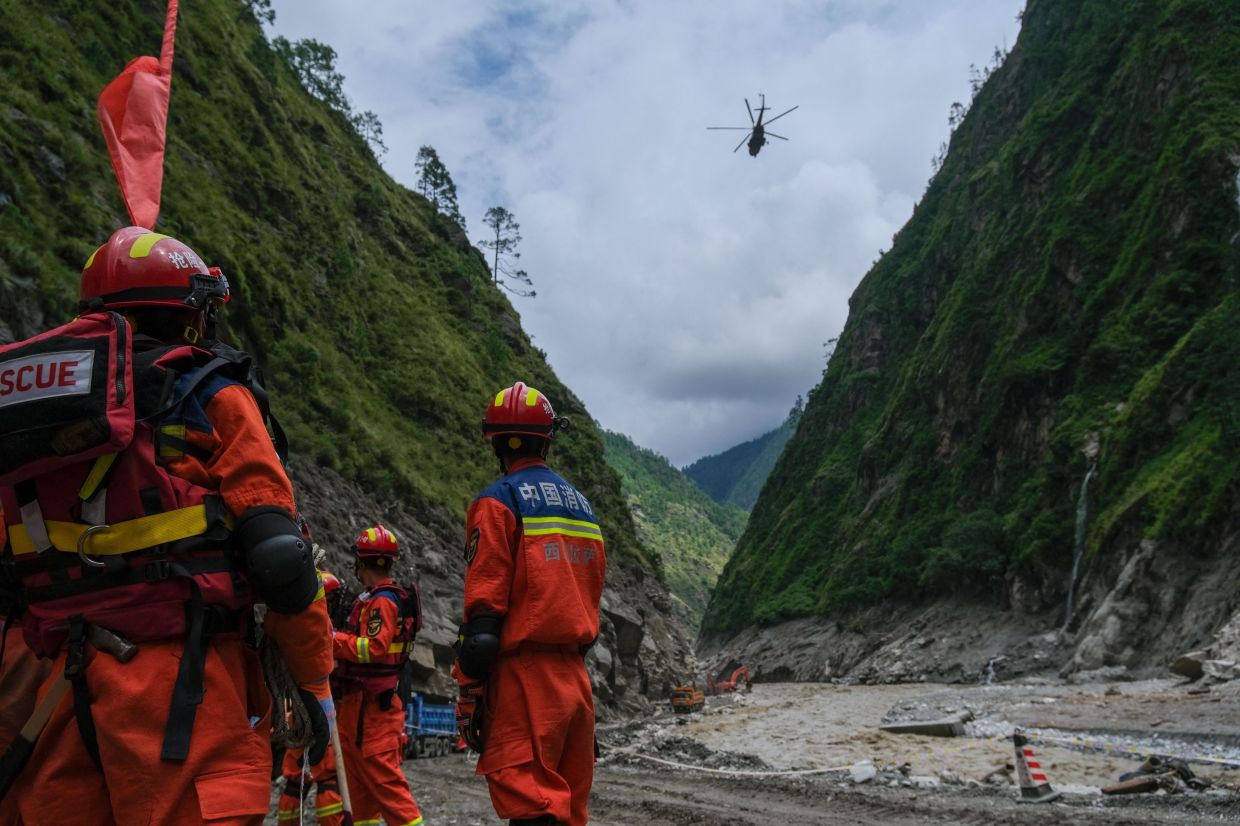
Chinese state news agency Xinhua reported that emergency workers are racing against time and overwhelming odds to locate survivors in the disaster zone. Rescuers are being described as “pushing forward into the core disaster area” despite facing numerous challenges, including “high-altitude terrain, steep valleys and volatile weather conditions.” These environmental factors have severely hampered rescue efforts, forcing teams to adapt their strategies to the unforgiving landscape. The rescue operations involve multiple components: clearing roads buried under mud and debris, conducting search and rescue missions, identifying hazards that could pose additional risks, implementing disinfection and epidemic prevention measures, and working to clear and restore damaged routes that are crucial for delivering aid and evacuating survivors.
Government Response and Information Management
The Chinese government has found itself defending its handling of information related to the disaster, particularly in response to international reports suggesting that authorities were censoring images of the floods and underreporting the number of casualties. Beijing’s foreign ministry issued a robust defense of its approach, with spokesperson Guo Jiakun declaring that the “release of information has been open, transparent and timely.” The ministry further warned that “malicious smearing and sensationalism using the disaster situation will not receive popular support.” This strong statement reflects the government’s determination to control the narrative surrounding the disaster while maintaining that its reporting is accurate and complete. However, the fact that Tibet remains largely inaccessible to foreign journalists has prevented independent verification of the scale of the disaster, a situation that has fueled international skepticism about the official figures.
The penalties imposed on the ten individuals accused of spreading misinformation represent a broader effort by Chinese authorities to manage information flow during the crisis. The cybersecurity bureau of China’s Ministry of Public Security released a detailed statement outlining the nature of the rumors being circulated, which suggested that official numbers were significantly understated. By taking swift action against these individuals, the government is sending a clear message about the consequences of sharing unverified information during national emergencies. This approach reflects China’s broader information management strategy, which prioritizes social stability and public order, particularly during crisis situations when misinformation could potentially lead to panic or undermine confidence in government response efforts.
The Unique Challenges of High-Altitude Rescue Operations
The rescue operations in Tibet are being conducted under extraordinarily difficult conditions that test the limits of both human endurance and technical capability. Gyirong, the county hardest hit by the mudslide, is expected to experience rainfall in the coming days, according to forecasts from the National Meteorological Center. This predicted precipitation could create additional hazards for rescue workers, including slippery roads and the potential for further landslides in already unstable areas. The region’s geography presents unique challenges, with high-altitude terrain, steep valleys, and unpredictable weather patterns all combining to make rescue operations more complex and dangerous. Emergency teams are having to carefully balance the urgency of their mission against the safety risks posed by the environment itself.
State broadcaster CCTV has released video footage showing rescue workers with sniffer dogs trudging through debris in valleys where the mudslide had swept through, providing a glimpse into the grim reality of the search operation. In other areas, rescuers were seen wading through thick mud that threatened to impede their progress, while others worked to repair damaged power lines essential for communications and emergency operations. The physical toll on rescue workers is immense, as they work in challenging conditions while dealing with the psychological impact of searching for survivors in areas of complete devastation. Despite these overwhelming challenges, there have been some signs of progress, with communication having been restored in Gyirong port, a crucial development that will improve coordination among rescue teams and facilitate the delivery of aid to affected communities.
International Dimensions and Foreign Casualties
The disaster’s impact extends far beyond the immediate border region, with international implications that have drawn attention from governments around the world. Among those reported missing in Tibet, 261 were foreign nationals, including 104 from Nepal, 49 from India, 33 from Latvia, and 18 from the United States. This international dimension adds layers of complexity to the crisis, requiring coordination with foreign governments and diplomatic missions as they seek information about their citizens. The presence of foreign nationals in the affected area is largely due to the area’s popularity as a tourist destination and its importance as a border crossing point for travelers and traders moving between China and Nepal. The high number of Nepalese citizens among the missing reflects the close cross-border ties between the two countries and the region’s importance as a transit hub.
The situation has been further complicated by geological instability in the aftermath of the initial disaster. Workers near the port had been moved to a safe location after a new lake was formed by a landslide, creating the potential for additional flooding or mudslides. However, in a positive development, the Ministry of Emergency Management confirmed that the lake “has naturally overflowed and basically emptied,” reducing an immediate secondary threat to rescue operations and nearby communities. This natural resolution of the immediate danger has allowed rescue teams to refocus their efforts on the primary mission of locating missing individuals. The formation of such lakes is a common secondary hazard in landslide-prone mountain regions, and their management requires careful monitoring to prevent additional catastrophes.
Political Response and Path Forward
President Xi Jinping has personally addressed the disaster, stating on Monday that China is making every effort to search for those missing on its side of the border. This high-level political response underscores the significance of the disaster and the government’s commitment to responding effectively. Xi’s statement serves multiple purposes: reassuring the domestic population that the government is taking decisive action, signaling to the international community that China is managing the crisis responsibly, and committing resources to the ongoing rescue operations. The mention of the search for missing individuals suggests that authorities still hold hope of finding survivors, even as the likelihood of this diminishes with each passing day. The president’s personal involvement also indicates that the disaster will remain a priority for the government as the broader humanitarian response continues.
Looking forward, the path to recovery will be long and difficult for the affected communities on both sides of the border. Beyond the immediate search and rescue operations, there will be substantial needs for reconstruction, economic recovery, and support for survivors and the families of victims. The disaster has destroyed homes, infrastructure, and livelihoods in an area that serves as an important link between Nepal and China. Both countries will need to cooperate closely in the coming months and years to address the full scope of the disaster’s impact. The international community’s attention will likely remain focused on the region as the true scale of the tragedy becomes clearer and as questions about information management and reporting continue to be raised. For now, the immediate priority remains the search for survivors and the provision of assistance to those affected by one of the most devastating natural disasters to strike this region in recent history. The resilience of the local communities, supported by external assistance, will be crucial in overcoming the enormous challenges that lie ahead in the long and difficult process of recovery and rebuilding.