


China Combats Disaster Misinformation and Rallies Aid for Nepal After Himalayan Floods
Beijing’s Legal Framework Targets Rumour-Mongering as Embassy Rejects False Claims and Delivers Emergency Relief
As the devastating floodwaters and mudslides in the Himalayan border region continue to claim lives on both sides of the China-Nepal frontier, Beijing has simultaneously mounted a two-pronged campaign: enforcing its legal statutes against misinformation while extending tangible humanitarian assistance to its southern neighbour. Under Chinese law, individuals who intentionally spread rumours or falsely report dangers, epidemics, disasters and police alerts—thereby disrupting public order—face detention of up to ten days and fines reaching 1,000 yuan (approximately US$149). More severe penalties await those found guilty of fabricating information about “false dangers”, epidemics, disasters, or police matters and disseminating such content through social media networks; such offenders may be sentenced to imprisonment for up to three years. Should their actions result in what the legal system deems “serious consequences”, the punishment escalates dramatically, with offenders facing a maximum of seven years behind bars. These provisions underscore the seriousness with which Chinese authorities treat the spread of unverified information during times of crisis, particularly when such misinformation could undermine public confidence in official disaster response efforts or strain international relations.
Embassy in Nepal Moves to Counter Disinformation
Beijing’s efforts to combat misinformation have extended well beyond casualty figures and domestic legal enforcement, reaching into the diplomatic arena where the Chinese embassy in Nepal has taken a particularly assertive stance. In a post on the social media platform X last Thursday, the Chinese diplomatic mission singled out two claims circulating across online platforms as categorically “fake news”. The first allegation suggested that China had failed to issue early warnings to Nepal, allegedly resulting in significant casualties on the Nepali side of the border. The second claim asserted that the collapse of a geological disaster dam on the Chinese side of the boundary had caused major losses within Nepali territory. The embassy rejected both assertions unequivocally, while simultaneously stressing that the disaster had indeed “caused significant casualties” and left numerous people missing on both the Nepali and Chinese sides of the Gyirong-Rasuwagadhi border region. Adopting a conciliatory yet firm tone, the diplomatic mission wrote that “accusation helps nothing. Cooperation saves lives,” signalling Beijing’s preference for collaborative disaster management over public recriminations that could strain bilateral relations during an already tragic period.
Diplomatic Pushback Against Media Criticisms
The embassy’s communication strategy did not conclude with its initial rebuttal, as it followed up with a separate statement on Saturday evening crafted specifically in response to comments appearing in Nepali media outlets and circulating across online platforms that “accused China of failing to warn Nepal of the mudslide disaster”. This more detailed response cited findings from both Chinese and international experts, who demonstrated that “risk points” throughout the Himalayan region are “highly dispersed” in nature, making comprehensive monitoring exceedingly difficult. The statement further argued that routine ground surveys conducted in high-altitude areas cannot achieve the same level of thoroughness as those performed in lower-altitude regions, where accessibility and infrastructure facilitate more systematic inspection. Emphasising Beijing’s commitment to transparency and cooperation, the embassy stated that “Chinese expert teams have always made every effort, within the limits of existing technology, to conduct monitoring, assessment and analysis, and have shared important information with the Nepali side in a timely manner”. This articulation of the technical limitations faced by all parties involved in Himalayan disaster monitoring served to contextualise the situation while deflecting accusations of negligence or deliberate information withholding.
Expert Commentary Frames Tragedy Within Regional Context
Shortly before issuing this detailed statement, the embassy had shared and reproduced portions of a commentary penned by a Chinese expert and published in Online Khabar, a prominent Nepali news platform. Huang Yunsong, professor and associate dean at Sichuan University’s School of International Studies, offered a sobering perspective on the disaster’s broader significance. “Two countries are burying their dead together. This is the truth of Langtang Lirung,” Huang wrote, referencing the mountain in the Himalayas that has become synonymous with the tragedy. The professor’s commentary then pivoted to address the swirling speculation and accusations that had emerged in the disaster’s aftermath: “Everything else—every rumour, every unverified claim, every attempt to turn grief into a geopolitical weapon—is noise the dead and the missing cannot afford.” Huang’s framing deliberately redirected attention away from political point-scoring and toward the shared human cost of the catastrophe, emphasising that natural disasters of this magnitude transcend national boundaries and demand collective mourning rather than mutual blame. The reproduction of this commentary by the embassy suggested Beijing’s endorsement of this perspective as the preferred narrative for understanding the tragedy—one rooted in shared vulnerability and cooperative response.
China Rushes Emergency Relief to Nepal
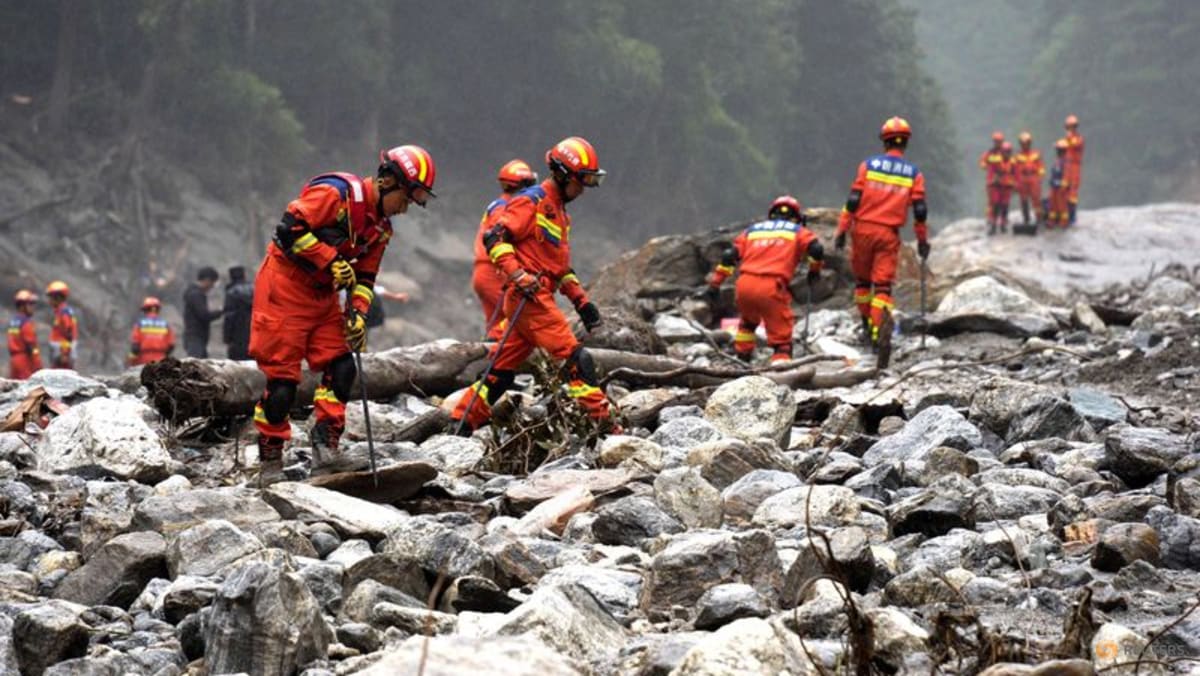
Beyond the war of words and information management, China has simultaneously escalated its emergency assistance to Nepal as rescue operations continue amidst challenging conditions in the mountainous terrain. On Sunday, China’s ambassador to Nepal, Zhang Maoming, formally handed over US$2 million in emergency flood relief assistance from the Chinese government to the Nepali government, representing a tangible commitment to supporting the affected communities. This financial contribution complements ongoing search and rescue efforts being conducted on both sides of the border, with Chinese teams reportedly coordinating with their Nepali counterparts to locate missing individuals and provide essential supplies to displaced populations. The aid package signals Beijing’s recognition that while information management and diplomatic messaging are important components of disaster response, they must ultimately be backed by concrete material support that addresses the immediate needs of affected communities. The handover ceremony also provided an opportunity for both governments to demonstrate their ongoing cooperation in the face of shared challenges, reinforcing the message that bilateral relations can withstand the pressures that natural disasters often generate.
Balancing Information Control and International Cooperation
The multifaceted Chinese response to this Himalayan disaster reveals a sophisticated approach to crisis management that balances domestic legal enforcement against misinformation with proactive international diplomatic engagement. Domestically, the legal framework provides clear disincentives against the spread of unverified information, reflecting Beijing’s longstanding position that public order and social stability are paramount during emergencies. Internationally, the embassy’s aggressive rebuttal of what it deems “fake news” demonstrates a commitment to shaping the narrative surrounding China’s disaster response capabilities, while the acknowledgment of shared casualties and the framing of the tragedy as a joint challenge between neighbours emphasises Beijing’s preferred framing of regional solidarity. The provision of substantial financial assistance further underscores that China’s commitment extends beyond message management to material support. As the region continues to recover and the full scope of the disaster becomes clearer, Beijing’s combination of legal deterrence, diplomatic communication, expert engagement, and humanitarian aid represents a comprehensive strategy designed to protect its interests, manage its image, and contribute to regional stability during an undeniably difficult period for all affected communities.