


Disinformation Campaign Targets Chief Justice in South Korean Impeachment Trial
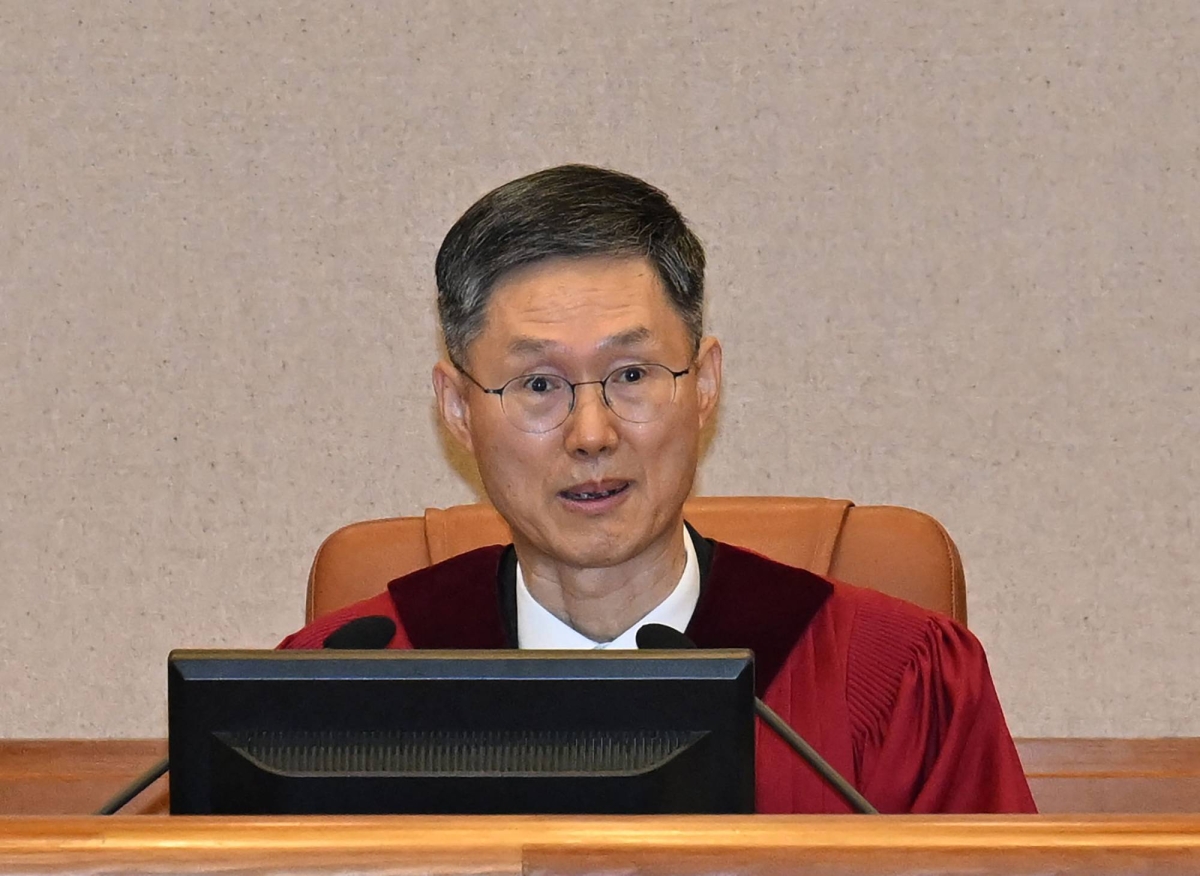
SEOUL – A relentless wave of disinformation has engulfed Moon Hyung-bae, the interim head of South Korea’s Constitutional Court, as he presides over the impeachment trial of suspended President Yoon Suk Yeol. The trial stems from Yoon’s controversial attempt to declare martial law in December, a move that prompted the National Assembly to vote for his removal. The court’s deliberations carry immense weight, as its decision will determine the fate of the presidency and the direction of South Korea’s political landscape. However, the proceedings have been overshadowed by a concerted effort to discredit Justice Moon through fabricated allegations and manipulated online content, raising concerns about the integrity of the judicial process and the vulnerability of public figures to malicious online campaigns.
The disinformation campaign against Justice Moon is multi-pronged and designed to undermine his credibility and influence the court’s decision. Fabricated accusations of possessing child pornography, baseless claims of supporting communist ideologies, and manipulated images depicting Elon Musk calling for his removal have proliferated across social media platforms. These false narratives aim to paint Justice Moon as morally corrupt, politically extreme, and unfit to lead the impeachment proceedings. The sheer volume and variety of these attacks suggest a deliberate and orchestrated campaign intended to pressure Justice Moon and potentially sway the court’s deliberations.
The motives behind the disinformation campaign remain unclear, though speculation abounds. Some analysts suggest that pro-Yoon factions are attempting to discredit Justice Moon and undermine the impeachment proceedings, hoping to secure the president’s reinstatement. Others point to potential involvement of foreign actors seeking to destabilize South Korea’s political system. Regardless of the source, the campaign represents a dangerous escalation of disinformation tactics and a serious threat to the integrity of the judicial process. The blatant disregard for truth and the willingness to employ such malicious tactics underscore the vulnerability of public figures to online manipulation and the urgent need for effective countermeasures.
The proliferation of disinformation poses a significant challenge for South Korean authorities, who are struggling to contain the spread of false narratives and identify the perpetrators. The anonymity and decentralized nature of online platforms make it difficult to trace the origin of these campaigns and hold those responsible accountable. Moreover, the speed at which disinformation spreads online often outpaces efforts to debunk and counteract it. This asymmetry creates an environment where falsehoods can take root and influence public opinion before accurate information can effectively counter the narrative.
The disinformation campaign targeting Justice Moon has broader implications for South Korean society. It underscores the growing threat of online manipulation and its potential to undermine democratic institutions and processes. As disinformation becomes increasingly sophisticated and pervasive, it poses a serious challenge to the integrity of information and the public’s ability to distinguish between truth and falsehood. This erosion of trust in information sources can have a corrosive effect on public discourse and political stability. Furthermore, the targeting of a high-profile judge raises concerns about the chilling effect such campaigns may have on judicial independence and the willingness of individuals to serve in public office.
Addressing the challenge of disinformation requires a multi-faceted approach. South Korean authorities need to strengthen their capacity to detect and respond to disinformation campaigns, including investing in investigative resources and developing effective counter-narratives. Social media platforms must also take greater responsibility for the content shared on their platforms, implementing robust mechanisms to identify and remove disinformation campaigns and hold malicious actors accountable. Furthermore, media literacy initiatives are crucial to equip citizens with the critical thinking skills necessary to discern credible information from fabricated narratives. A collective effort involving government, social media platforms, and civil society is essential to combat the growing threat of disinformation and protect the integrity of democratic processes in South Korea and beyond. The case of Justice Moon serves as a stark reminder of the vulnerability of judicial independence and the urgent need for a comprehensive strategy to counter the insidious influence of disinformation in the digital age.