


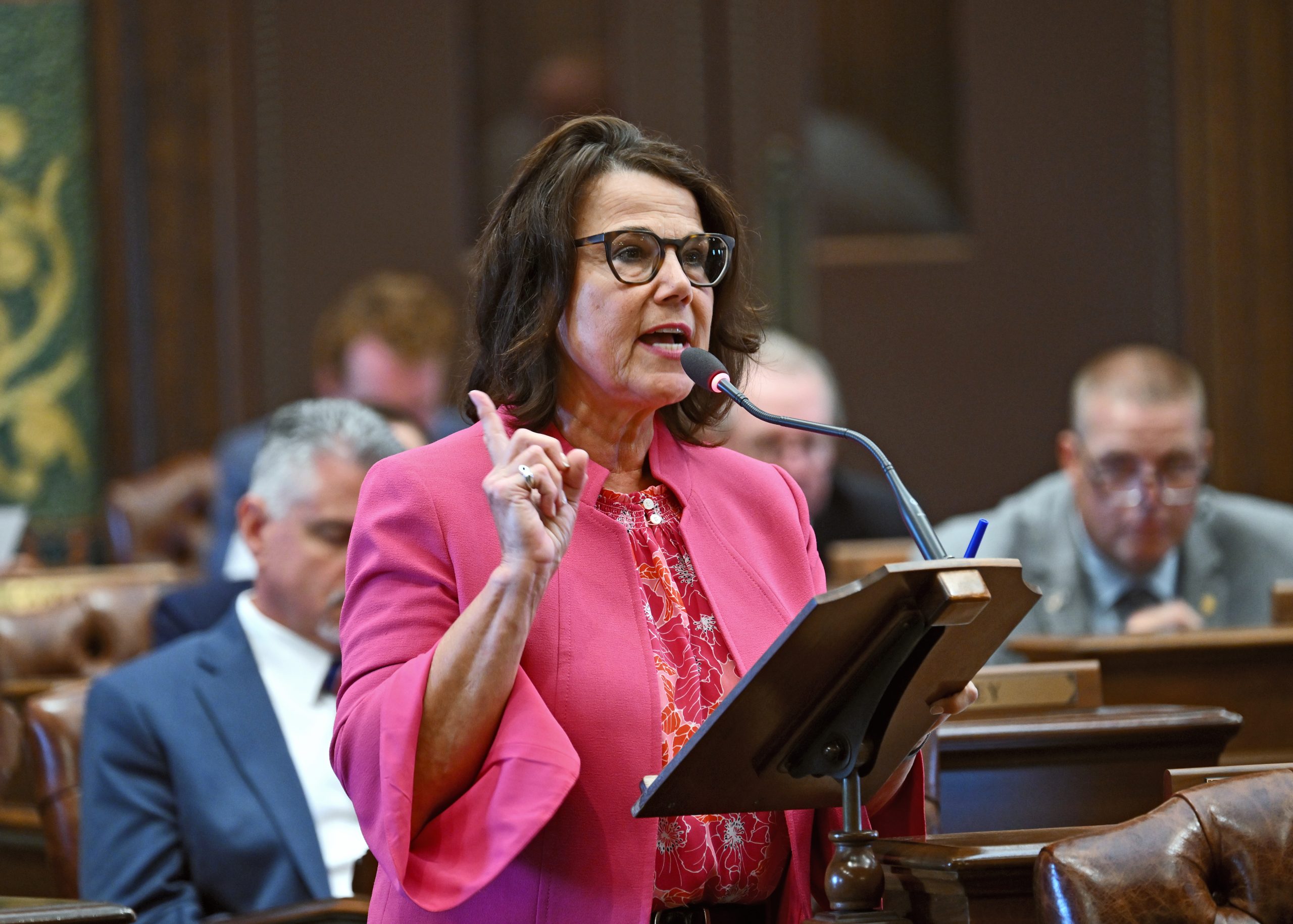
Michigan Budget Battle: Representative Bollin Accuses Secretary of State Benson of Misinformation Regarding Proposed Cuts
LANSING, MI – A heated exchange has erupted between Michigan State Representative Ann Bollin, chair of the House Appropriations Committee, and Secretary of State Jocelyn Benson over the proposed state budget. Rep. Bollin has accused Secretary Benson of disseminating misinformation regarding the budget cuts and their potential impact on Michigan residents, asserting that Benson’s claims of service disruptions and extended wait times at Secretary of State branches are misleading and designed to incite public fear.
At the heart of the dispute are proposed cuts to the Department of State’s budget, which Benson argues will cripple essential services and lead to significant delays for residents seeking services such as license renewals and title transfers. However, Rep. Bollin contends that the majority of the proposed cuts target unfilled positions – essentially “phantom employees” that exist only on paper – and will not affect frontline staff who directly serve the public.
Rep. Bollin, a Republican from Brighton Township, has challenged the Secretary’s assertions, stating that the budget eliminates 240 positions within the Department of State. Of these, 186 are vacant positions, 49 are newly created roles under Benson’s tenure, and only five are unclassified administrative positions that do not directly interact with the public at local branch offices. Bollin has argued that cutting these five administrative posts, which she characterizes as political appointees advancing Benson’s “radical agenda,” should not lead to the widespread service disruptions Benson predicts.
The Republican representative further questioned Benson’s administrative competence, suggesting that if the removal of five administrative staff members could truly cause hours-long waits at branch offices statewide, it reflects either poor management or a deliberate attempt to create disruptions. Bollin has accused Benson of using taxpayer dollars to fund self-promotional activities and boost her political profile, framing the budget cuts as a necessary measure to curb wasteful spending and prioritize essential services.
“Secretary Benson is attempting to frighten Michigan families by suggesting that routine services like license renewals and title transfers will come to a grinding halt,” Rep. Bollin stated. “The reality is that these cuts will not impact the staff members who directly serve our residents. This budget prioritizes essential services while eliminating unnecessary spending, ensuring that taxpayer dollars are used effectively to benefit the people of Michigan.”
The ongoing budget debate reflects a larger partisan struggle over spending priorities in Michigan. Republicans have emphasized fiscal responsibility and reducing government bloat, while Democrats argue that the proposed cuts will compromise essential services and disproportionately impact vulnerable populations. The clash between Rep. Bollin and Secretary Benson serves as a microcosm of this broader political battle, with both sides accusing the other of misrepresenting the facts and prioritizing political gain over the well-being of Michigan residents. The final budget outcome and its impact on the Department of State and the services it provides to Michigan citizens remain to be seen.
Key Points of Contention in the Michigan Budget Debate:
-
Proposed Cuts to the Department of State: The core issue revolves around proposed cuts to the Department of State’s budget, with Rep. Bollin advocating for the elimination of what she deems wasteful spending on unfilled positions and administrative roles, while Secretary Benson argues that the cuts will hinder essential services and lead to significant delays for Michigan residents.
-
Impact on Service Delivery: Secretary Benson has warned of severe service disruptions and extended wait times at Secretary of State branches if the proposed budget cuts are implemented. Rep. Bollin disputes this claim, arguing that the cuts target non-essential positions and will not affect frontline staff directly serving the public.
-
Focus on Administrative Roles: Rep. Bollin specifically targets the elimination of five unclassified administrative positions, alleging they serve primarily to advance Secretary Benson’s political agenda rather than provide essential services. Benson’s response to this specific critique remains a key element in the ongoing debate.
-
Accusations of Misinformation: Rep. Bollin accuses Secretary Benson of spreading misinformation and fear-mongering to protect her budget and bolster her political profile. Benson, in turn, could argue that Bollin’s characterization of the cuts downplays their potential impact.
-
Partisan Divide: The budget dispute highlights a broader partisan divide in Michigan, with Republicans prioritizing fiscal conservatism and Democrats emphasizing the importance of funding essential government services. This political backdrop shapes the narrative and rhetoric surrounding the budget debate.
Looking Ahead:
The ongoing budget negotiations will likely continue to be contentious, with both sides vying for public support and attempting to frame the narrative in their favor. Key questions that remain to be addressed include:
-
Will the proposed cuts ultimately be implemented in their current form? The final budget outcome will determine the extent to which the Department of State is impacted.
-
What will be the actual impact on service delivery at Secretary of State branches? The predicted service disruptions and extended wait times may or may not materialize depending on the final budget and subsequent operational adjustments.
-
How will the public perceive the actions of both Rep. Bollin and Secretary Benson? Public opinion could play a significant role in shaping the direction of future budget negotiations and policy decisions.
The budget debate in Michigan serves as a crucial test case for the balance between fiscal responsibility and maintaining essential government services, with the potential to impact residents’ access to vital resources and shape the political landscape in the state.