


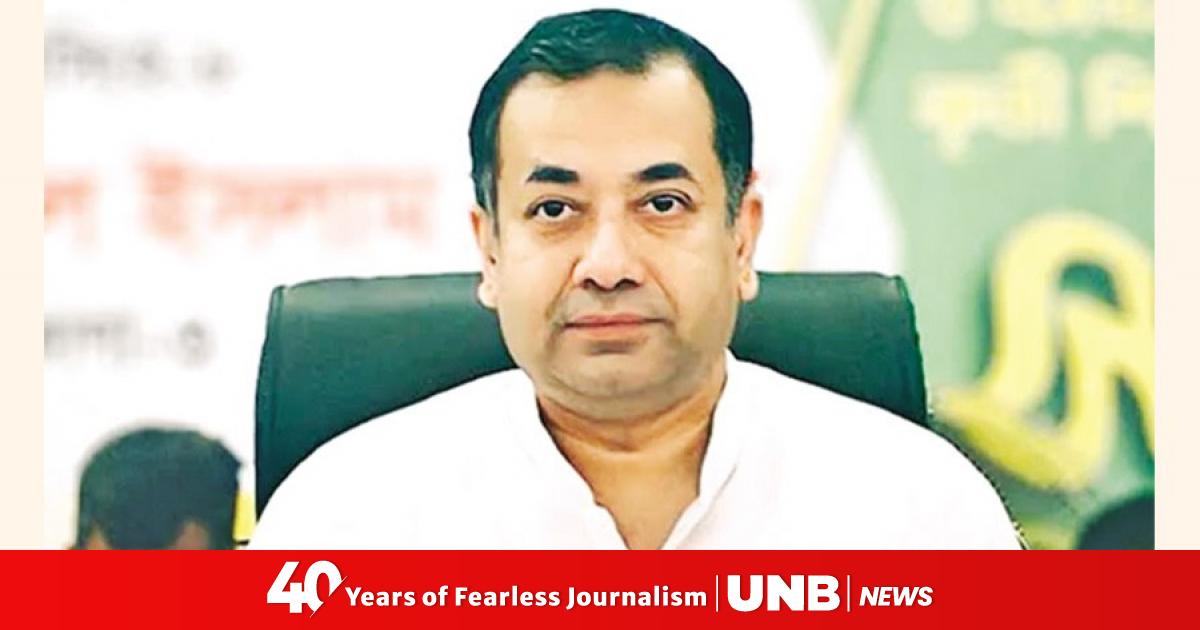
HOSSAINPUR, Kishoreganj — State Minister for Information and Broadcasting Yasser Khan Chowdhury on Saturday called on journalists to act as a first line of defence against misinformation, rumours and AI-generated misleading content circulating on social media. He was speaking as the chief guest at a certificate distribution ceremony that concluded a three-day training workshop on multimedia journalism, fact-checking and AI for journalists in Hossainpur upazila. The state minister said journalists should highlight government errors and shortcomings, but they must do so through fact-based reporting rather than smear campaigns or the spread of false narratives. The workshop, he explained, was never intended simply to award certificates; it was meant to build the professional capacity of journalists so that they can verify information, detect manipulated media and report responsibly. “Journalists play a crucial role in curbing the spread of misinformation in Bangladesh,” he said. In an era when social media can amplify falsehoods within minutes, the need for trained journalists has never been greater. The event formed part of a broader effort to strengthen journalism beyond Dhaka and to equip local reporters with tools to navigate the digital information landscape. The minister’s emphasis on AI-based threats reflected a growing global concern about deepfakes and algorithmically manipulated content. He also reminded journalists that their duty to the public includes being sceptical of sources and cross-checking facts before publication. By focusing on multimedia journalism, the training aimed to help participants adapt to the changing habits of news consumers, who increasingly rely on video, social media and mobile platforms. Journalists who attended the programme were expected to serve as multipliers by sharing their knowledge with colleagues in their newsrooms and communities. The minister’s presence at the ceremony underscored the importance the government attaches to media professionalism and the fight against disinformation.
Yasser Khan Chowdhury expressed deep concern over the prevalence of smear campaigns in Bangladesh. “There is hardly any popular or well-known figure in Bangladesh who has not been targeted by smear campaigns on social media. Even our mothers and sisters are being humiliated through misinformation and impersonation. This amounts to a violation of human rights,” he said. His words drew attention to the human cost of digital falsehoods. Public figures are not the only victims; ordinary citizens, including women and family members of public personalities, are frequently targeted by anonymous accounts. The state minister said smear campaigns are not limited to professional journalists, as many people posing as journalists spread rumours and false information. Some also use AI to manipulate images and create videos that are circulated on social media, damaging the reputation of genuine journalists. This conflation of real journalism with fake accounts is a serious threat, because it undermines public trust in the media. The training workshop was therefore designed to help journalists identify such content, verify sources and report ethically. The state minister also said the training aimed at developing journalists’ skills in fact-checking and dealing with misinformation and disinformation. He stressed that journalists should not be silent about government failures; instead, they should expose errors through evidence. But he drew a clear distinction between constructive criticism and destructive smear tactics. Smear campaigns, he argued, are not journalism; they are a violation of rights. The remarks point to the ethical responsibilities that come with media freedom. In a country where social media use is expanding rapidly, distinguishing between fact and falsehood has become an urgent public interest issue. The minister’s words served as a reminder that journalists must be open to being held accountable for what they publish, while also holding the powerful to account. Ultimately, the state minister said, a healthy democracy depends on a healthy information ecosystem, and journalists are central to maintaining that ecosystem.
To help journalists meet these challenges, the government is creating opportunities for advanced training, including two-year master’s programmes and AI-based journalism courses, Yasser Khan Chowdhury announced. He said a list of genuine journalists will be prepared through press clubs, and they will subsequently be brought under the training programmes. This is an important step towards professionalising journalism in Bangladesh. By using press clubs as the entry point, the government aims to ensure that training reaches working journalists rather than self-described social media personalities. The mention of AI-based journalism courses is particularly relevant: journalists will learn not only how to report with digital tools but also how to detect AI-generated images, videos and voice recordings. In an era when synthetic media can be used to spread political falsehoods and personal attacks, these skills are essential for newsroom survival. The two-year master’s programmes would provide a deeper academic foundation for journalists who wish to specialise in data journalism, fact-checking and media ethics. The state minister said the initiatives will be rolled out in phases, and that the first phase had already been organised in the Mymensingh Division, Bogura, Feni and districts surrounding Dhaka. This regional approach recognises that journalists outside the capital often have less access to cutting-edge training. By bringing opportunities to the districts, the government hopes to raise the standard of journalism across the country. The minister also noted that genuine journalists are often harmed by the actions of fake ones, and that establishing a credible list through press clubs could help protect the profession. Participants at the Hossainpur workshop welcomed the announcement, saying that local journalists need more support in understanding AI and fact-checking. The training itself, they added, allowed them to share experiences with fellow journalists and learn new ways to verify sources. The government’s approach appears to combine welfare, education and technology in a single strategy aimed at improving the quality and credibility of Bangladesh’s news media. However, questions remain about implementation, funding and the selection process. The minister did not give a timeline, but he made clear that the intention is to expand gradually and systematically.
The state minister also addressed journalists’ welfare, saying that various forms of support are being provided through the Journalist Welfare Trust. He said a proposal had been made to the Prime Minister to increase support for journalists and that the process had begun at the Ministry of Finance. This signals a possible expansion of the safety net for media workers who face illness, injury, disability or financial hardship. Journalist welfare is a pressing issue in Bangladesh, where many media workers, especially those in regional newspapers and online portals, lack job security and adequate compensation. The proposed increase in funding would allow the trust to help more journalists and their families in times of crisis. Yasser Khan Chowdhury reminded the audience that his responsibilities are not limited to one region. “I am not only a minister for the Mymensingh Division; I am a minister for the entire country. The ministry works for all of Bangladesh. However, it is only natural to have a special concern for the people of the surrounding areas,” he said. The statement reflected a balance between national vision and local sensitivity. It was delivered in Hossainpur, a rural subdistrict where journalists and residents appreciate recognition from high-ranking officials. The state minister said the first phase of journalist training programmes had been organised in the Mymensingh Division, Bogura, Feni and districts surrounding Dhaka, and that the programme would gradually be expanded to other parts of the country. This phased approach is practical; it allows the government to evaluate the effectiveness of the training and make improvements before scaling up. It also creates a sense of inclusion and fairness, as journalists outside Dhaka are given priority in the early stages. The state minister’s remarks on welfare were well received, especially his acknowledgment that journalists need both skills and security to work with integrity. Without adequate welfare mechanisms, journalists may be vulnerable to financial pressure and less able to report independently. Thus, training and welfare are two sides of the same coin in the effort to strengthen Bangladesh’s journalism profession. The minister also indicated that the government’s commitment to journalists is ongoing and not limited to a single event. He encouraged journalists to continue their work with courage and responsibility.
Turning to the issue of development promises, Yasser Khan Chowdhury warned against unrealistic rhetoric. “We do not wish to offer false or hollow assurances, such as promising to transform Bangladesh into Singapore within the next five years. We do not make such empty promises. However, we are working to make Bangladesh a better and more prosperous country,” he said. His comments appeared to be a deliberate rejection of quick-fix political formulas in favour of sustainable development. He said Bangladesh belongs to everyone, and that politicians, administrators, government employees and journalists all have responsibilities towards the country. Journalists, he said, voice the concerns of the people and highlight the government’s errors and shortcomings, but this must be done through responsible and fact-based journalism. The minister’s remarks were an attempt to define a responsible media role: supportive of progress but not blindly loyal; critical of failure but not malicious. On media freedom, Yasser said the freedom currently enjoyed by the media under the leadership of Prime Minister Tarique Rahman would continue. He urged journalists to play a constructive role in protecting democracy and the interests of the state. “You must remain vigilant to ensure that the fascism which once shattered the state and crippled Bangladesh’s economy over 17 years does not return, and that democracy is upheld,” he said. This reference to fascism and the damage done over a 17-year period underlined the political stakes involved. The minister was clearly trying to connect media freedom with the survival of democratic institutions. For journalists, the statement carried a dual message: they are protected to do their work, but they also have a duty to prevent the return of authoritarian politics. The minister’s language echoed the government’s broader emphasis on fighting misinformation, which is sometimes seen as a struggle for the hearts and minds of the public. By invoking the past, he reminded his audience that unchecked disinformation can have destructive political consequences. The plea for responsible journalism can therefore be understood as a plea for national stability. At the same time, his acknowledgment of media freedom is a commitment that journalists should be able to publish without fear, provided they act lawfully and ethically. The relationship between the media and the state, he suggested, should be one of mutual accountability, not confrontation or subservience.
Finally, the state minister spoke about local development in Hossainpur and other upazilas of Kishoreganj, saying government development programmes would be implemented in phases. This was consistent with his earlier rejection of empty promises: progress would be made, but it would take time and careful planning. For local residents, this was a realistic assurance rather than a spectacular pledge. For journalists, it meant that they should continue to track these projects and report on whether they are actually benefitting the public. The certificate distribution ceremony brought the three-day training workshop to a close, marking the end of an intensive learning experience and the beginning of what the state minister hopes will be a wider culture of fact-based journalism. Participants received certificates for their work in sessions on multimedia journalism, fact-checking and AI. They also gained practical knowledge that they can use when covering politics, crime, health, education and social affairs. The minister’s main message was that journalists have a central role in safeguarding truth in the digital age. They must verify, question and report, but they must not become purveyors of rumours. The fight against misinformation is a shared responsibility, and the government says it is willing to invest in the necessary training. Whether the promises made at Hossainpur are fully implemented remains to be seen, but the event itself signals that the issue of media literacy is firmly on the agenda. In the end, the state minister’s speech was an appeal for balance: balance between criticism and cooperation, between freedom and responsibility, and between national development and local needs. He asked journalists not to allow the mistakes of the past to repeat in a different form. By remaining vigilant, fact-based and ethical, the media can strengthen democracy and help build a more prosperous Bangladesh.