








Paragraph 1:
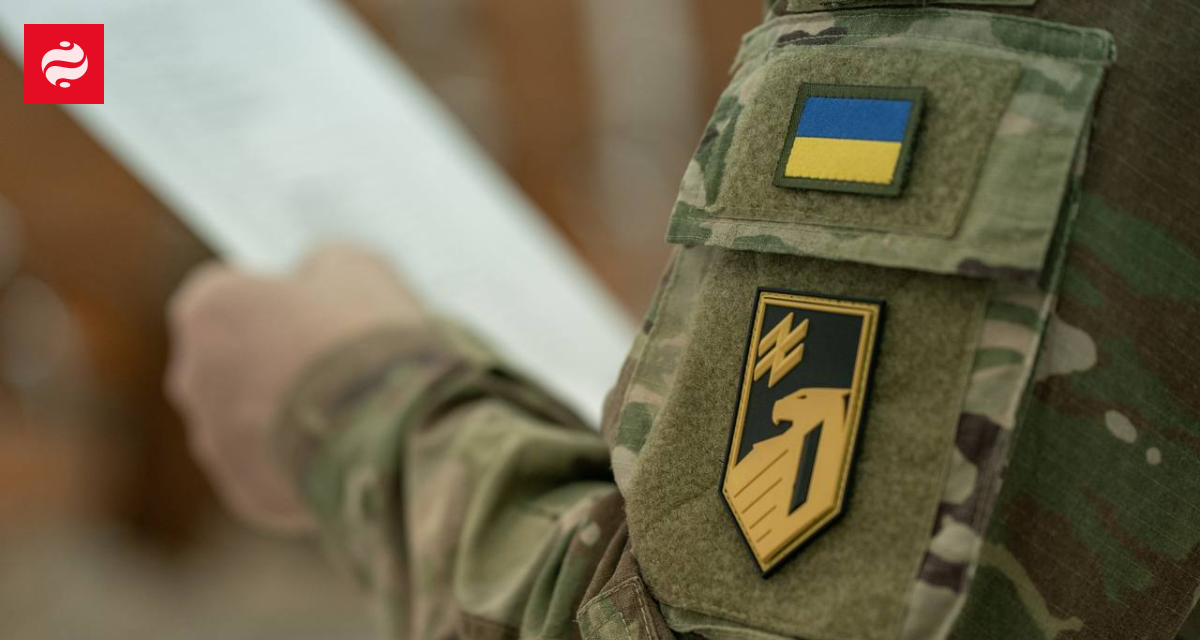
The strategic city of Dobropillya in the Ukrainian Donetsk Oblast remains firmly under the control of the National Guard’s 1st “Azov” Corps and its associated units, according to a critical operational update that pushes back against recent Russian claims. Acting corps commander Nikita Nadtochiy explicitly refuted the notion that Ukrainian defenders are trapped, stating that Moscow’s assertions of a successful encirclement are fundamentally disconnected from the reality on the ground. “The enemy claims to have us surrounded, but its assaults result in casualties even before they reach our positions,” Nadtochiy declared in an official video released by the Azov unit, offering a stark rebuttal to the Kremlin’s narrative of impending victory. This statement underscores the ferocity of the fighting in a sector that has become one of the most hotly contested areas of the entire front line in recent months. The very fact that the city remains a fortified bastion, rather than a collapsing pocket, suggests a significant operational failure by Russian forces to achieve the tactical maneuverability required to trap an entire corps. Analysts believe that while Russian forces have attempted to seize the initiative through relentless attritional warfare, the geometric reality of the front lines in this region has forced them into predictable, costly frontal assaults against dug-in Ukrainian defenses. Dobropillya itself holds deep symbolic and logistical value, serving as a critical rail hub and supply nexus for Ukrainian forces operating further east. Its continued control means that Ukrainian command structures can still effectively rotate troops, deliver ammunition, and coordinate artillery fire across the entire Donetsk salient, fundamentally ruining any Russian hopes of a rapid, decisive collapse of the Ukrainian line in this direction. The street-to-street engagement and the static nature of the defensive positions reveal a conflict that has evolved into a brutal war of position, where strategic depth is measured in meters gained and lost.
Paragraph 2:
In a detailed elaboration of the tactical situation directly outside the city’s boundaries, Maksym Kravets, the Chief of Staff of the National Guard of Ukraine’s 14th Operational Brigade “Chervona Kalyna,” revealed that Russian forces are resorting to small-scale, high-risk infiltration tactics to circumvent the stalemate at the main defensive line. Kravets stated that these small groups of Russian soldiers, often ranging from fireteams to reinforced squads, are repeatedly attempting to exploit gaps and dead zones between the established Ukrainian positions. However, the intelligence and target acquisition capabilities of the Ukrainian defenders have proven superior, ensuring that these infiltration attempts are routinely detected before they can consolidate a foothold. “Small groups trying to infiltrate the space between our positions are being detected and eliminated,” Kravets reported, highlighting a warfare environment dominated by drone reconnaissance and counter-battery operations. This report paints a picture of a front line where the Soviet-era doctrine of massed armored columns has devolved into a conflict characterized by high-intensity machine-gun fire, mortar strikes, and explosive FPV drone sorties. The “space between positions” is often a moonscape of craters and minefields, heavily denuded of cover, making infantry movement perilous. The Russian command, presumably under pressure to generate at least local successes for domestic consumption, has thrown these assault groups into a meat grinder, but the sheer volume of these attempts indicates that they are accepted as the cost of attempting to stretch Ukrainian reserve forces. Furthermore, Kravets’ comments implicitly criticize the Russian operational logic—while they may be hoping to find weak points through meticulous probing, the Ukrainian forti’fications, anchored by the defense-in-depth strategy, are designed to absorb exactly these kinds of incursions, bleed them dry, and then counter-attack to restore the original line.
Paragraph 3:
Perhaps the most striking data point illustrating the heavy toll being exacted on Russian military resources in the Dobropillya sector comes from Pavlo Yatsyuk, the head of the National Guard of Ukraine’s elite “Omega” Special Forces Center. Yatsyuk provided a staggering quantitative breakdown of Russian losses since the beginning of 2026, stating that “Omega” troops operating in the area have successfully eliminated nearly 1,500 enemy personnel and destroyed approximately 1,000 pieces of military equipment. This logistics and personnel attrition is further compounded by the systematic destruction of 3,700 enemy UAVs and about 100 artillery systems. These numbers are radically disproportionate to the Russian advance, which has been measured in meters. The loss of nearly 100 artillery systems alone represents a catastrophic degradation of Russian counter-battery capability in the local area, severely hampering their ability to suppress Ukrainian firing positions or conduct effective bombardments to support their infantry assault groups. The staggering number of UAVs shot down highlights a modern warfare phenomenon: the operational environment is so saturated with reconnaissance and strike drones that the sky above Dobropillya is a perpetual swarm of buzzing electronics, and the side with superior electronic warfare and anti-drone defenses essentially dictates who can see the battlefield and move freely. Yatsyuk explained that his special forces are engaging these threats in advance, using a combination of radar-guided guns, shoulder-launched missiles, and, increasingly, electronic jamming to blind the Russian artillery. By eliminating the artillery and its forward observers, the Ukrainian forces have effectively severed the Russian “kill chain,” meaning that even when Russian infantry successfully identifies a target, the command structure is often too degraded or too disrupted to bring firepower to bear promptly. This attritional asymmetry is not just tactically convenient but strategically vital, as it forces the Russian command to reinforce failure by sending in untrained reserves and obsolete equipment, which are then systematically destroyed in the predetermined killing zones.
Paragraph 4:
The immediate consequence of this relentless Ukrainian pressure is a marked improvement in the ability of Ukrainian units to maneuver forward and reclaim the initiative in certain areas, according to Dmytro Semenyuk, commander of the 425th Separate Assault Regiment “Skelya.” In a statement that suggests a precarious yet tangible shift in the battlefield dynamic, Semenyuk noted that “the enemy is being eliminated in advance” and that “it has become safer to move between some positions.” While he was quick to acknowledge the omnipresent threat posed by reconnaissance and strike drones, which he noted “are present in very large numbers in some areas,” his tone was one of cautious optimism. Semenyuk’s unit, the “Skelya” regiment, has been at the absolute epicenter of the defense, and his assessment carries significant weight. The fact that the regiment is evidencing improved mobility suggests that local Ukrainian counter-battery fire and electronic warfare have effectively suppressed—though certainly not destroyed—the immediate Russian artillery threat. This relocation capability allows for faster resupply, quicker casualty evacuation, and the ability to shift soldiers between strongpoints to reinforce threatened sectors. Semenyuk ambivalently summed up the current situation by saying, “even our units are managing to achieve success and push the enemy further away from our land.” This is a far more proactive stance than a few weeks ago, where the front was entirely static. It indicates that Ukrainian forces are engaging in aggressive close-combat patrolling, pushing back the main Russian forward logistics buffer, and reclaiming the regions from which the enemy was launching their attacks. This tanking of morale is evident not just in the defensive success but in the very real, albeit local, counter-offensive movements, which signal a strategic backhanded slap at the Russian warm machine.
Paragraph 5:
This Ukrainian assessment directly challenges the narrative manufactured by the Russian Ministry of Defense, which, prior to these statements, had claimed a major breakthrough in the theatre. On September 22, the Russian MoD asserted that it had allegedly surrounded a Ukrainian Armed Forces defensive stronghold in Dobropillia and was “continuing its offensive toward Oleksandrivka.” The Russian military propaganda machine specifically claimed that fighters from the 425th “Skelya” unit and the 4th and 15th National Guard brigades were trapped inside the “encirclement,” presumably waiting to be mopped up. However, the strikingly detailed update from the Ukrainian side, coupled with the sheer volume of destroyed Russian equipment, paints a vastly different picture. If the December 22 claim of encirclement had an iota of truth, the Ukrainian commanders currently issuing statements would be dead or captured, whereas instead they are managing a structured, stable defense. The fact that troops are reportedly pushing the enemy away from Ukrainian land rather than attempting a desperate breakout fundamentally undermines the Russian MoD’s core assertion. The Russian Ministry’s statement appears to be a classic example of a phantom offensive, aimed at pleasing domestic hardliners and generating a false sense of momentum before any stock market or territorial concessions. The emphasis on the “4th and 15th National Guard brigades” in the propaganda also seems designed to humiliate the Ukrainian National Guard specifically, seeking to exploit historical and political separation between the Main Intelligence Directorate and the regular army, but the efficient coordination on the ground shows a lack of any operational hold. The Russian military bloggers themselves have been forced to moderate the MoD’s “all is going well” proclamations with field reports of heavy firefights and aborted assaults, creating a disconnect between the official narrative and the harsh reality of the body-strewn fields.
Paragraph 6:
Ultimately, the battle for Dobropillya represents a microcosm of the broader strategic stalemate in the Donbas in 2026, as the conflict enters a phase of industrial-scale attritional warfare interspersed with flashpoint counteroffensives. While the Russian military may still hold the operational initiative and possess an enormous quantitative advantage in men and material, the defenders currently appear to have optimized their tactics to a purely defensive mode designed to inflict maximum casualties and shatter the enemy’s remaining offensive capability. The statements from the National Guard and Azov Corps leadership serve a dual purpose: to provide an unfiltered tactical assessment to the Ukrainian public and to deliver a psychological victory over the Russian command, demonstrating that despite the colossal losses, Ukrainian morale remains intact and is even strengthened by the realization that the invader can be held back. The destruction of 1,500 troops, nearly 1,000 pieces of heavy armor (from tanks to APCs), 3,700 UAVs, and 100 artillery systems is not a static number; it represents a cumulative bleeding that fundamentally reduces the conduct of Russian offensives elsewhere. As long as the gate to Dobropillya remains defended, the road to the strategic railway junction of Pokrovsk remains effectively sealed. For the moment, the reality on the ground is one of Ukrainian resilience. The initiative in this sector remains in the balance, yet with the Ukrainian reserve detachments remaining mostly untouched and the sky saturated with counter-drones, the Russian mission of “liberating” Donetsk according to Moscow’s initial 24th Annexation plans is far from complete, instead facing a determined, adaptive, and lethal defensive network that remains confident its scope will preclude a Russian victory.


