


Wildfire Misinformation Spreads Through AI-Generated Images in Northwest Territories
The Northwest Territories (N.W.T.) is battling not only raging wildfires but also a surge of misinformation fueled by AI-generated images circulating online. Fire officials are urging residents to exercise caution and rely solely on official sources and local media outlets for accurate and timely emergency updates. The proliferation of fabricated images and misleading videos has added another layer of complexity to an already challenging situation, highlighting the growing threat of AI-generated content during crises.
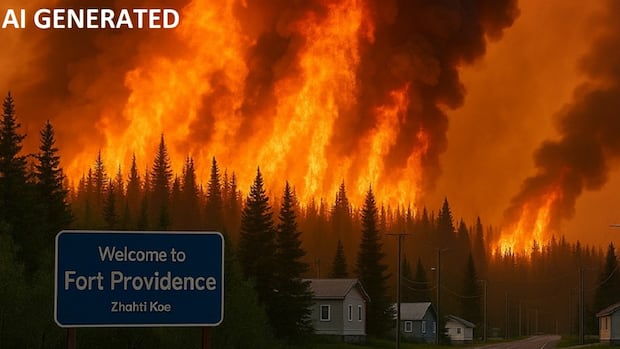
The issue came to a head following the evacuation of Fort Providence, N.W.T., on Sunday. An AI-generated image depicting flames encroaching upon homes in the community quickly spread across social media, causing unnecessary alarm and confusion. The N.W.T. Fire promptly denounced the image as “sensationalized slop” and stressed that it did not reflect the reality on the ground. The image, shared on a Facebook page with a substantial following, garnered hundreds of shares and comments before being removed. While some users identified the image as fake, others reacted with fear and concern, believing it to be genuine.
This incident underscores the speed with which manipulated content can proliferate online during emergencies, particularly as wildfire season intensifies across Canada. N.W.T. fire information officer Mike Westwick highlighted the dangers of such misinformation, emphasizing its potential to mislead and endanger residents during critical evacuations. He stressed the importance of media literacy and urged the public to seek information from credible sources like the N.W.T. Fire website, official Facebook page, and local media outlets. This was not an isolated incident, as another Facebook page shared an outdated video of a previous N.W.T. wildfire alongside the Fort Providence evacuation information, further compounding the confusion.
The problem extends beyond the N.W.T., as the British Columbia Wildfire Service also raised concerns earlier this month about the rise in AI-generated wildfire images contributing to misinformation and exacerbating already stressful situations. The proliferation of these fabricated visuals underlines the need for improved public awareness and more robust strategies to combat misinformation in the digital age.
Experts weigh in on the motivations behind creating and sharing such misleading content. Vered Shwartz, a CIFAR AI chair and assistant professor at the University of British Columbia, suggests that financial gain through increased website traffic is a likely driving factor. She advises the public to rely on official sources for accurate information and acknowledges the limitations of AI detection tools, which are constantly challenged by increasingly sophisticated AI models designed to mimic real-world images.
The harmful impact of fake content extends beyond confusion, as it can cause significant emotional distress. Maleknaz Nayebi, an associate professor at York University, explains that the illusion created by fabricated images can be damaging, leading people to believe they or their loved ones are in immediate danger. She points out that some individuals may share AI-generated content unintentionally, unaware of the potential harm it can inflict. Nayebi advocates for the development of evidence-based fact-checking platforms for AI images and stronger legal consequences for creating and disseminating misleading information.
The incident in the N.W.T. serves as a stark reminder of the challenges posed by the rapid advancement of AI technology and its potential for misuse. As AI-generated content becomes increasingly realistic, distinguishing fact from fiction becomes more challenging. The need for heightened media literacy, robust fact-checking mechanisms, and collaboration between government, research institutions, and social media platforms to combat the spread of misinformation is more crucial than ever. The ongoing wildfire crisis underscores the urgency of addressing this issue to protect public safety and ensure access to reliable information during emergencies.