


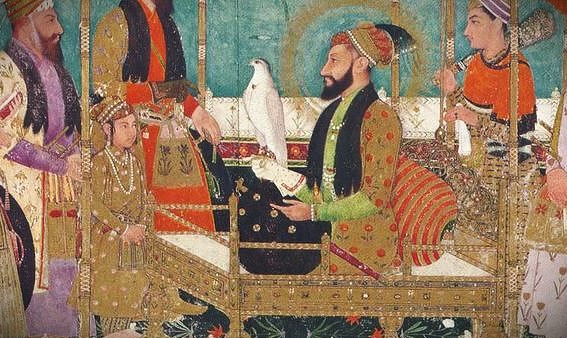
The Spectre of Aurangzeb: History as a Battlefield in Modern India
The Mughal emperor Aurangzeb Alamgir has become a lightning rod in contemporary Indian discourse, his legacy refracted through the prism of political polarization. No longer a complex historical figure, Aurangzeb serves as a potent symbol in a narrative increasingly amplified by the echo chambers of social media and the dramatic simplifications of Bollywood. This weaponization of history transforms the past into a battleground where facts are casualties and nuance is a lost art. Right-wing narratives paint Aurangzeb as the archetypal villain, fixated on enforcing religious law and persecuting Hindus. Even within secular circles, he’s often cast as an aberration, a departure from the purportedly more tolerant Mughal rulers who preceded him. This simplistic portrayal ignores the intricacies of his nearly 50-year reign, marked by evolving policies, strategic alliances with Rajput rulers, and the appointment of numerous non-Muslims to high-ranking positions. The contemporary fixation on selectively highlighting his enforcement of certain religious laws overlooks the pragmatic complexities of pre-modern imperial governance and the delicate balance of power within a diverse empire.
This oversimplified and often demonized image finds fertile ground in a media landscape increasingly prone to sensationalism. The recent Bollywood film "Chhaava," which depicts Aurangzeb as a one-dimensional antagonist against the heroic Maratha ruler Sambhaji, exemplifies this trend. The film, like much of popular media, ignores the complex political realities of Mughal-Maratha relations, reducing a nuanced historical conflict to a clash of good versus evil. This simplistic framing not only distorts the past but also fuels present-day tensions, as evidenced by the widespread outrage that erupted following a Samajwadi Party leader’s acknowledgment of some of Aurangzeb’s contributions. The incident underscores how historical figures, long deceased, can be resurrected to serve contemporary political agendas, further exacerbating societal divisions.
The dominance of these narratives poses a significant challenge to academic historians. While rigorous scholarship emphasizes context, nuance, and the exploration of multiple perspectives, these voices are often drowned out by the clamor of social media and the simplified pronouncements of politically motivated commentators. The rapidity with which misinformation spreads online, often through orchestrated campaigns, makes it increasingly difficult for historians to counter these distorted portrayals. While classrooms and academic publications remain important platforms, they struggle to compete with the pervasive influence of popular media and social media, which shape public perception and collective memory.
Contrary to the prevalent narrative, historians like Audrey Truschke, in her book "Aurangzeb: The Man and the Myth," argue that Aurangzeb demonstrated a commitment to justice, drawing on contemporary accounts from figures like the Italian traveler Niccolao Manucci and the Hindu astrologer Ishvaradasa. These accounts offer a different perspective on Aurangzeb’s character and reign, highlighting his emphasis on fairness and lawful governance, a perspective often ignored in popular discourse. The tendency to evaluate historical figures through the lens of modern morality further complicates the matter, neglecting the social and political context of their time. The binary often presented, contrasting Aurangzeb with his brother Dara Shikoh, the supposed symbol of pluralism, further perpetuates this simplistic and misleading view.
The politicization of history extends beyond Aurangzeb. Even figures once celebrated for their tolerance, like Emperor Akbar, are now subject to revisionist interpretations. This trend highlights the precarious nature of historical memory in a polarized climate, where the past becomes fodder for present-day ideological battles. These battles, often waged in the digital sphere, can have real-world consequences, fueling tensions and even inciting violence. The historical record demonstrates the integration of Hindus, particularly Rajputs, into the Mughal administration, a practice continuing under Aurangzeb. This fact, often overlooked, underscores the pragmatic and multifaceted nature of Mughal rule, which transcended simplistic religious binaries. Support for both Dara Shikoh and Aurangzeb during the war of succession was divided across religious lines, further highlighting the complexity of political alliances in that era.
The gap between academic history and popular narratives poses a critical challenge. Politicians and the media often prioritize simplistic and sensationalized versions of the past, neglecting the nuanced understanding offered by scholarly research. The public’s appetite for easily digestible narratives further complicates the issue, creating a fertile ground for the spread of misinformation. "WhatsApp University," a sardonic term referring to the proliferation of misinformation on social media platforms, epitomizes this challenge. Combating these pervasive myths requires innovative strategies to engage the public with rigorous historical scholarship.
Bollywood plays a significant role in shaping public perceptions of history, often portraying India’s Muslim past in a negative light to reinforce a singular cultural narrative. This selective portrayal ignores the country’s rich and diverse heritage, a tapestry woven from multiple cultures and civilizations. Films like "Chhaava" exemplify this trend, offering a distorted retelling of history that reinforces existing prejudices. This phenomenon is further amplified by prime-time television debates where ill-informed commentators engage in shouting matches, reducing complex historical issues to superficial soundbites.
The challenge for historians lies in bridging the gap between academic rigor and public engagement. While scholars possess deep expertise, they often struggle to communicate their findings effectively to a wider audience. This challenge is compounded by a growing distrust of intellectuals and academics, further widening the divide between scholarly research and popular understanding. Professor Anirudh Deshpande, in his book "King, Country and War: Ideology, Memory and Written Indian History, c. 1600–1900," critiques both colonial and nationalist historiographies and highlights the urgent need for critical reflection and open dialogue between academics and those producing popular historical narratives. However, as Deshpande points out, the willingness to engage in such dialogue is often lacking, particularly among those promoting simplified and often ideologically driven versions of history.
The rise of social media as a primary source of information has exacerbated this challenge. The ease with which misinformation circulates online, often through compelling and easily digestible formats, undermines the work of professional historians. Combating this requires not only debunking specific myths but also fostering a deeper understanding of the complexities of historical interpretation.
Works like A. Azfar Moin’s "The Millennial Sovereign" offer fresh perspectives on Mughal kingship, emphasizing the blending of spiritual and political authority. Moin’s study reveals the nuanced layers of Mughal power, incorporating diverse religious backgrounds and administrative structures where Hindus played significant roles. Viewing such a complex system through the simplistic lens of modern binaries distorts its true nature.
Neeladri Bhattacharya, in "Predicaments of Secular History," examines the challenges faced by historians striving to present inclusive and unbiased accounts of India’s past. He
highlights the complexities of crafting a secular history in a context marked by communal interpretations and the politicization of historical narratives. Bhattacharya acknowledges the critiques of secular historiography while emphasizing the ongoing efforts of historians to refine their approaches and engage with these critiques. This ongoing dialogue within the field contributes to a broader and more nuanced understanding of the past.
The field of history continues to evolve, encompassing a growing range of themes and methodological approaches. The regionalization of history writing allows for more localized and nuanced narratives, enriching our understanding of the past. The challenges posed by social media and the spread of misinformation, while significant, also create opportunities for historians to engage with broader audiences in new and innovative ways. By embracing these opportunities, historians can ensure that rigorous historical scholarship remains relevant and accessible in the digital age.