


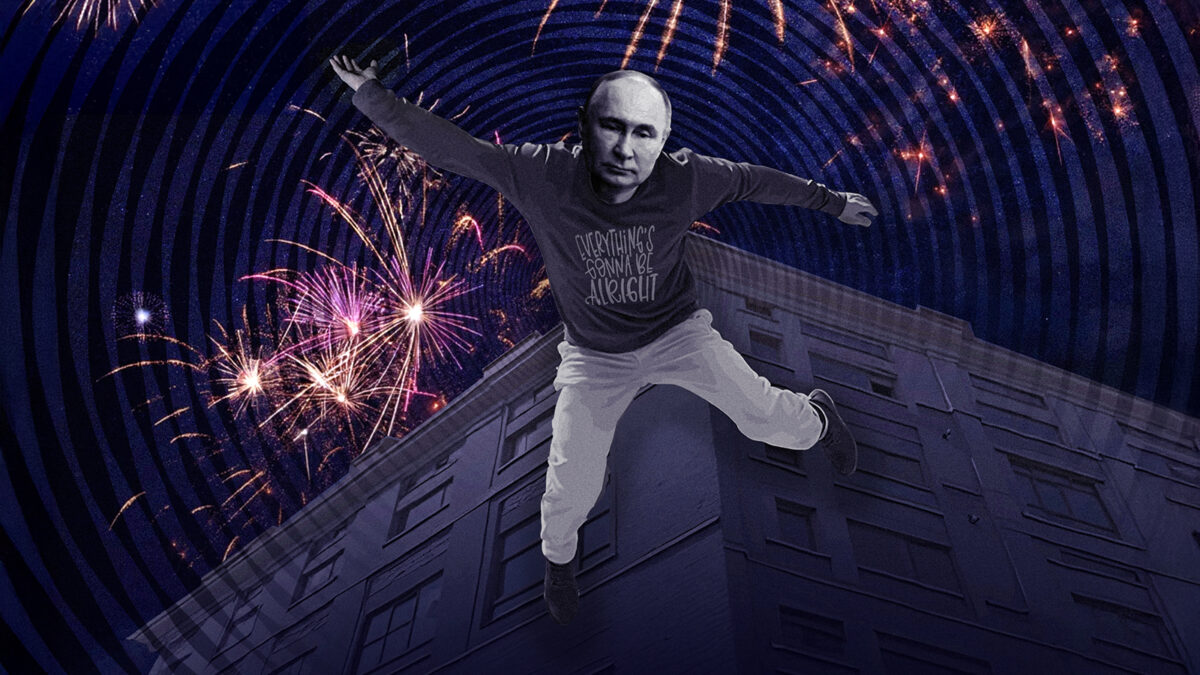
Putin’s New Year’s Address Masks a Crumbling Economy and a Faltering War
As the new year dawned, Russian President Vladimir Putin delivered his annual address, painting a rosy picture of a strengthening Russia poised for greater achievements. However, this optimistic facade belies the harsh realities of a protracted war in Ukraine and a Russian economy teetering on the brink of collapse. Putin’s pronouncements, devoid of any mention of Ukraine, echo the hollow reassurances of someone falling from a great height, proclaiming "so far, so good" as they plummet past each floor.
The Kremlin’s Web of Disinformation: From Downing Planes to Fabricating Terror Plots
The Kremlin’s war effort extends beyond the battlefield, encompassing a relentless campaign of disinformation and manipulation. This strategy seeks to distort reality, deflect blame, and sow confusion, both domestically and internationally. One recent example is the downing of an Azerbaijan Airlines passenger plane over Grozny. After initially blaming a flock of birds, the Kremlin eventually admitted to the incident but attributed it to air defense systems targeting Ukrainian drones. This incident follows a familiar pattern: Russia commits an act of aggression, then spins a narrative to shift blame, often portraying itself as the victim of a provocation.
This tactic was also employed in the aftermath of tragic incidents in the United States. Following a terror attack in New Orleans and a suicide bombing in Las Vegas, Russian disinformation channels swiftly linked the events to Ukraine, even before investigations could commence. This narrative, built on flimsy pretexts, aims to portray Ukraine as a global terror threat, deflecting attention from Russia’s own destabilizing actions. This echoes the Kremlin’s response to the downing of MH17, where similar attempts were made to deflect responsibility.
The Kirillov Assassination: A Case Study in Disinformation Adaptation
The assassination of Russian General Igor Kirillov in Moscow further illustrates the Kremlin’s adaptable disinformation strategy. While typically blaming Ukraine for such incidents, the Kremlin instead pointed fingers at the West, accusing NATO, the CIA, and even Joe Biden of orchestrating the killing. This narrative, tailored for domestic consumption, reinforces the image of Russia under siege by hostile foreign powers. For international audiences, the Kremlin resurrected old conspiracy theories about Western biological and chemical weapons programs, portraying Kirillov as a martyr who exposed these alleged clandestine operations. In reality, Kirillov, the head of Russia’s chemical and biological defense troops, was sanctioned for his role in deploying chemical weapons against Ukrainian forces and faced formal charges for ordering their use in thousands of attacks. This stark contrast between reality and the Kremlin’s narrative underscores the cynical manipulation at play.
Disinformation on Multiple Fronts: Gas Supplies, Maritime Rescue, and Syrian Conflict
The Kremlin’s disinformation campaign extends to various other arenas. When Ukraine halted the flow of Russian gas to the EU through its territory, a move projected to cost Russia billions in revenue, the Kremlin blamed the US and EU, portraying Ukraine as a mere puppet. This attempt to deflect responsibility for economic consequences and potential humanitarian crises in gas-dependent regions like Transnistria reveals the Kremlin’s consistent strategy of shifting blame.
Another example involves the sinking of the Russian cargo ship Ursa Major. Russian officials and media outlets accused a Norwegian vessel of refusing to rescue the crew, fueling accusations of Russophobia. However, reports and photographic evidence revealed that the Norwegian ship had followed established protocols, assisting the lifeboats and awaiting the arrival of Spanish coast guard vessels. This incident showcases how even routine international cooperation can be twisted into a narrative of anti-Russian discrimination.
Finally, the collapse of the Assad regime in Syria provided another opportunity for disinformation. Pro-Kremlin outlets accused the US of orchestrating the events and subsequently claimed that the West was using terrorist groups to destabilize the region, even as the US conducted airstrikes against ISIS targets. This contradictory narrative underscores the Kremlin’s willingness to manipulate facts to fit its agenda.
The Underlying Strategy: Maintaining Control through Deception
The Kremlin’s consistent use of disinformation serves several key purposes. Domestically, it reinforces the narrative of a besieged Russia, justifying the ongoing war and deflecting criticism of the government’s handling of the economic crisis. Internationally, it seeks to sow discord among Western allies, undermine support for Ukraine, and promote a distorted view of reality. This sustained campaign of deception is a crucial component of the Kremlin’s strategy to maintain control and deflect blame for its own actions. Recognizing and countering this disinformation is crucial for understanding the true nature of the conflict and the challenges facing the international community.
The Importance of Critical Analysis in the Age of Disinformation
In an era of rampant disinformation, critical analysis and media literacy are paramount. The Kremlin’s tactics demonstrate how easily facts can be twisted and manipulated to serve a political agenda. It is essential to rely on credible sources, scrutinize narratives, and seek corroborating evidence before accepting information as true. By remaining vigilant and informed, we can counter the insidious effects of disinformation and uphold the principles of truth and transparency.