


The Age of AI-Powered Disinformation: Navigating a World of Dragons
From the dawn of language, humanity has grappled with misinformation and its deliberate counterpart, disinformation. The printing press and mass media amplified these phenomena, but the advent of the internet and social media ignited an unprecedented wildfire of false narratives. Today, the very notion of truth has become entangled with identity, politics, and cultural biases. In this digital age, where everyone is a potential content creator and algorithms prioritize sensationalism, we inhabit an environment ripe for the spread of both unintentional and malicious falsehoods, often driven by political agendas, economic incentives, or personal vendettas.
The lines between information producers and consumers have blurred, with everyone possessing the power to disseminate information to a vast audience. Algorithms, the invisible puppet masters of the digital realm, often reward sensationalist content, creating a fertile ground for the proliferation of misinformation and disinformation. This dynamic presents ethical challenges for those tasked with producing accurate and truthful content. Navigating this landscape demands a renewed focus on ethical practices, a commitment to truthfulness, and a constant awareness of the potential for harm.
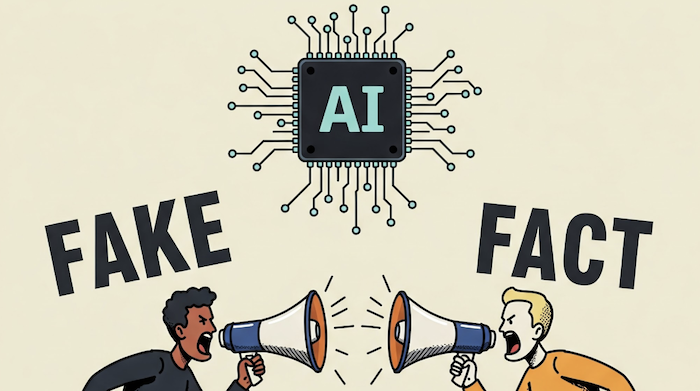
The emergence of artificial intelligence has further complicated the information landscape, acting as a supercharger for the production of untruths. AI-powered "news" sites churn out convincingly written, yet entirely fabricated, content, effectively industrializing the production of falsehoods. This ease of generating and distributing misinformation at scale has plunged us into an age of myth, where consuming information feels akin to studying ancient maps dotted with mythical creatures. Distinguishing fact from fiction has become an increasingly difficult, and often impossible, task.
This challenge extends even to institutions traditionally built on the bedrock of truth, as highlighted by the recent Mavundla case in the Pietermaritzburg High Court. A candidate attorney’s reliance on AI-generated legal citations, seven of which were entirely fictitious, underscores the potential for even unintentional misinformation to infiltrate established systems. This incident serves as a stark reminder of the importance of rigorous fact-checking and the ethical obligations of those entrusted with upholding the truth. The candidate attorney’s oversight, though unintentional, highlights the critical need for human oversight and verification, even when utilizing AI tools.
The potential for AI to be weaponized for disinformation is equally concerning. A simple experiment demonstrated the ease with which AI can generate biased and misleading narratives, crafting a fabricated story about the alleged genocide of white Afrikaner farmers in South Africa. This fabricated narrative, subtly laced with kernels of truth, fulfilled all the criteria for effective disinformation: plausible, topical, locally relevant, and difficult to debunk. This example vividly illustrates the potential for AI to be used for malicious purposes, manipulating public opinion and fueling social divisions.
In this age of information uncertainty, how can we protect ourselves from being misled by both inadvertent misinformation and deliberate disinformation? Vigilance and skepticism are paramount. We must develop a critical eye, questioning everything we encounter and cross-referencing information from multiple reliable sources. Recognizing the limitations of AI is crucial. AI can easily mimic human language and generate seemingly credible content, but it lacks the critical thinking and ethical judgment of a human journalist. Furthermore, AI-generated content often bears distinct stylistic fingerprints, clues that can help identify its synthetic origins. Visuals, too, require careful scrutiny, as manipulated images and videos can be powerful tools of deception. Finally, demanding attribution and verifying sources is essential to assess the credibility of information.
Navigating this treacherous information landscape requires a proactive and discerning approach. While we may not need to slay dragons, we must equip ourselves with the tools of critical thinking, rigorous fact-checking, and a healthy dose of skepticism. By embracing these strategies, we can navigate the age of AI-powered disinformation and strive to discern the elusive truth amidst the swirling mists of falsehood. The ability to evaluate information critically, identify biases, and seek out diverse perspectives is no longer a luxury but a necessity for informed citizenship. We must empower ourselves with the skills and habits of mind necessary to navigate this complex information landscape and arrive at something closer to the truth. This includes understanding the limitations of AI, recognizing its potential for misuse, and demanding transparency in the information we consume. The quest for truth in the digital age requires constant vigilance and a commitment to critical thinking.