


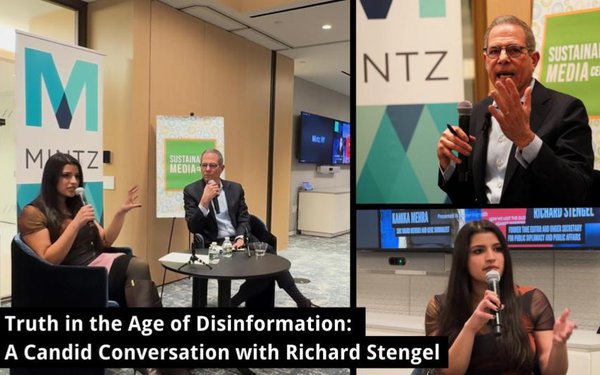
The Disinformation Dilemma: A Post-Truth World and the Erosion of Democracy
The proliferation of disinformation poses a significant threat to democratic societies. No longer confined to state-sponsored actors, the spread of false narratives has been "democratized," transforming every individual into a potential vector of misinformation. This "disinformation industrial complex" leverages social media algorithms, AI-powered tools, and a pervasive appetite for easily digestible falsehoods to undermine truth and erode public trust. The rise of AI, in particular, has supercharged the disinformation machine, allowing malicious actors to fabricate credible online personas and disseminate fabricated content with unprecedented ease and effectiveness. This, coupled with the inherent human tendency to seek information that confirms pre-existing beliefs, creates a dangerous cocktail that fuels political polarization and societal fragmentation.
Richard Stengel, former Time magazine editor and Under Secretary of State for Public Diplomacy, highlights the shift from state-sponsored disinformation campaigns to a more widespread phenomenon where individuals readily consume and share misleading information. This “truth fentanyl,” as Stengel calls it, preys on insecurities and anxieties, offering simplistic explanations and a sense of belonging in an increasingly complex world. This demand for easy answers fuels the supply of disinformation, creating a vicious cycle that undermines rational discourse and critical thinking.
The media landscape, particularly social media platforms, plays a crucial role in this dynamic. Algorithms designed to maximize engagement inadvertently prioritize sensationalism and emotional triggers over factual accuracy. While algorithms are inherently neutral tools, their optimization for engagement creates a fertile ground for the spread of disinformation. This poses a challenge for traditional journalism, which struggles to compete with the addictive nature of algorithmically curated content that panders to existing biases. This tension is particularly evident in platforms like TikTok, where the algorithm’s power to personalize content raises concerns about psychological manipulation and the erosion of journalistic values.
The constant barrage of information without context contributes to a phenomenon known as “relentless presentism,” hindering the public’s ability to understand the broader historical and societal context of current events. The focus on immediate gratification and novelty, fueled by the insatiable demand of algorithms, comes at the expense of in-depth analysis and informed understanding. This contributes to the "death of expertise," where informed opinions are given equal weight to unfounded claims, further blurring the lines between fact and fiction.
The challenge of government reform adds another layer of complexity. While acknowledging the inefficiencies and bureaucratic bloat of government institutions, Stengel argues for their defense against anti-democratic forces. This defensive posture, however, risks alienating those who have legitimate grievances about government overreach and inefficiency. Finding a balance between criticizing government shortcomings and defending its essential role in a democratic society remains a delicate balancing act.
Despite the bleak outlook, the fight against disinformation is not without hope. Learning from historical figures like Nelson Mandela, who prioritized understanding opposing viewpoints, offers a potential path forward. Engaging with diverse perspectives, even those we disagree with, is crucial to bridging the divides that fuel polarization. Recognizing that disinformation is not a new phenomenon and that societies have navigated similar challenges throughout history can provide a sense of perspective and resilience.
Addressing the root causes of the disinformation crisis requires a multi-faceted approach. Reclaiming the value of truth in public discourse, restoring trust in institutions and expertise, and developing business models that prioritize accuracy over engagement are crucial steps. Building networks and communities that actively promote truthful information and fostering media literacy among citizens are equally important. Finally, recognizing the spiritual dimension of the crisis and promoting genuine human connection outside the digital sphere may be essential to counteracting the isolating effects of constant online engagement. Ultimately, winning the fight against disinformation requires a long-term, intergenerational effort to rebuild the foundations of trust, critical thinking, and informed citizenship upon which a healthy democracy depends.