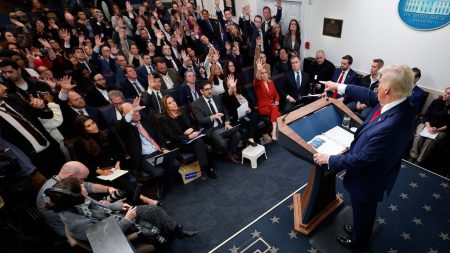




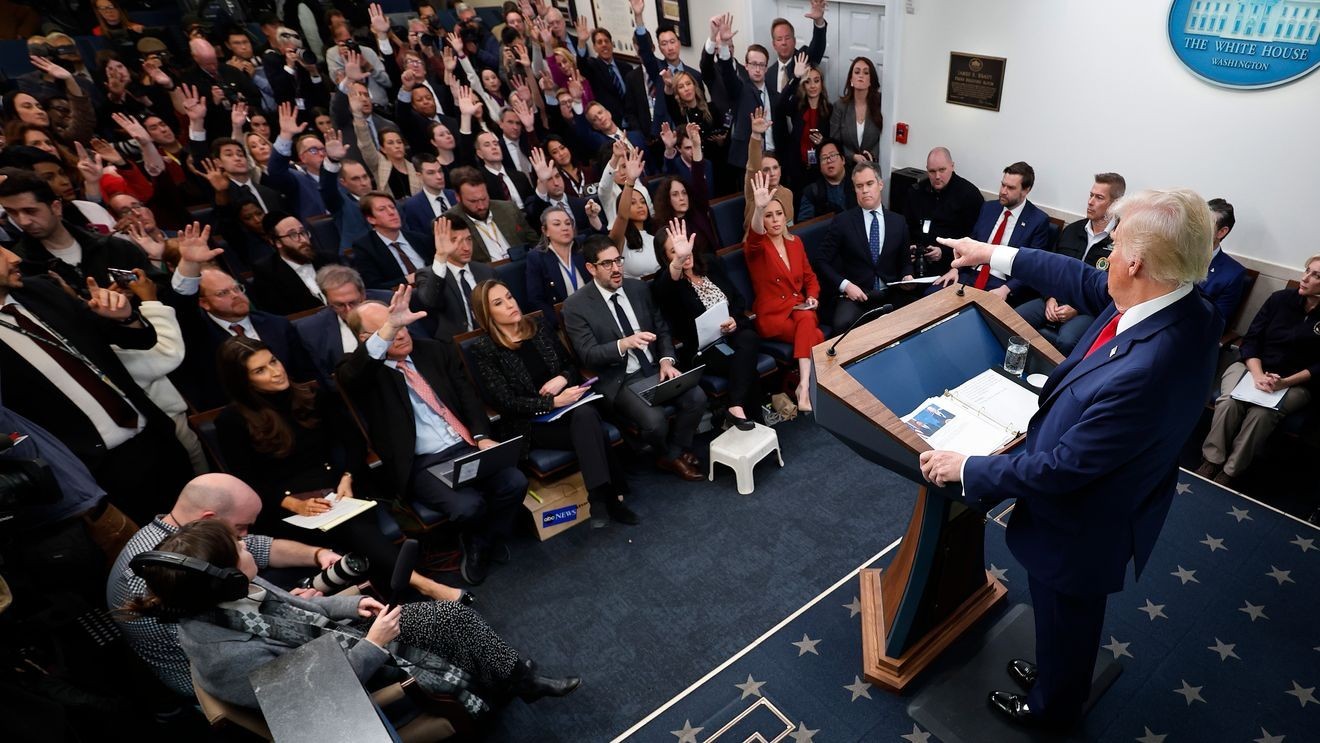
WASHINGTON (TNND) — A new study from the Pew Research Center and the Pew-Knight Initiative reveals a deeply conflicted American public: while 73% of U.S. adults consider freedom of the press very or extremely important to the well-being of society, a majority also says there are circumstances in which the government should be able to force news organizations to remove or alter coverage. Freedom of the press, protected by the First Amendment, remains a core democratic value for most Americans, but the findings show that it is not viewed as an absolute right. Instead, Americans weigh press independence against concerns about false information, national security, and public accountability. The poll found that majorities of both political parties say press freedom is highly important, though Democrats are more likely than Republicans to hold that view. But when asked whether the government can demand that a news organization take down a story containing false information, just over half of all respondents said yes — including 59% of Republicans and 45% of Democrats. That seeming contradiction is at the heart of the study: Americans want a free press, but they are also willing to let the government step in when they believe the press has crossed a line. The study adds to a growing body of evidence that public commitment to press independence is real but conditional, and that citizens often expect the government to police journalism even as they defend the idea of a free press.
The survey found especially strong support for government intervention when national security is at stake. Sixty percent of Americans — including 72% of Republicans and 50% of Democrats — said it is acceptable for the government to order a news organization to remove a story that poses a risk to national security. That means even as a strong majority of Democrats defend press freedom from government intrusion, half of them are willing to support a national-security exception. For false information, the partisan gap is also notable: 59% of Republicans versus 45% of Democrats support government demands to take down stories deemed false. Roughly four in ten Americans overall would oppose such government action, a sizable minority who prioritize an unfettered press even when the government claims the story is dangerous or untrue. These findings reveal a delicate balance. Many citizens seem to trust the government to decide what is false or threatening, while others fear that this kind of authority could be exploited by political leaders. The word “censorship” carries a negative meaning in American political culture, yet when respondents are presented with concrete scenarios, many endorse actions that look like censorship. The Pew-Knight Initiative data suggest that the debate over press freedom is not a simple partisan story. Democrats are more protective of press independence from government action, while Republicans are more concerned about media bias and the spread of misinformation. Still, both parties show a willingness to embrace restrictions in specific cases, which underscores the complexity of public opinion on this issue.
Peter Loge, director of the School of Media and Public Affairs at George Washington University, said most Americans understand that some limits on a free press are legitimate, just as there are limits on free speech. “Just as you can’t falsely yell fire in a crowded movie theater … most Americans would agree for some national security purposes, there’s some things best left unsaid, or at least unsaid in the moment,” Loge said. He noted that journalists have ethical responsibilities to avoid harm, tell the truth, and strive for fairness. But he drew a hard line between professional ethics and government authority over newsroom decisions. “I may not love all journalists policing themselves,” he said. “I really loathe the government trying to police journalists.” That distinction is central to the debate. Journalists may make mistakes, show bias, or withhold information, but the remedy in a democracy is public criticism, transparency, and professional standards — not government power to silence or punish news organizations. Loge’s comments suggest that the survey results reflect a deep tension in public thinking: Americans distrust both the media and the government, so they are not sure whom to trust with deciding what should be published. They worry about false information and national security, but they also worry about censorship and political abuse. The answer, Loge argued, is not to put the government in charge of the press. It is to insist that journalists hold themselves accountable and that citizens engage with a wide range of perspectives. In his view, a free society depends on an open exchange of ideas, even when that exchange is messy and uncomfortable.
The survey also captured a sharp partisan split over whether press freedom has declined during the second Trump administration. More than four in ten Americans overall — 44% — said the press has become less free under Trump. But that number masks intense polarization: 72% of Democrats said press freedom has declined, while only 15% of Republicans agreed. Loge said President Donald Trump has undermined confidence in the press through his rhetoric toward reporters. “Too often, this president has said the reporters or journalists are enemies of the American people – typically, when those reporters or journalists say things the president doesn’t like,” Loge said. “That’s remarkably dangerous. The president can say, ‘I disagree with this reporter, I don’t like that point of view.’ But they should always embrace a robust and open debate. Our democracy demands no less.” The partisan divide on this question is stark: Democrats see Trump as a direct threat to press independence, while Republicans see the press itself as biased and insufficiently accountable to the public. Overall, only 28% of Americans say the media is completely free to report the news today, meaning nearly three-quarters of the public perceives at least some constraints or limitations on reporting. The sense of a press under pressure is widespread, even if the perceived source of that pressure varies by party. Democrats are more likely to focus on government restrictions, while Republicans are more likely to focus on the power of news organizations to decide what the public sees and to suppress stories that conflict with their own narratives. These differences are important, because they shape how Americans interpret real-world events: one side fears government censorship, while the other fears institutional media bias.
The Pew study also uncovered broad concerns about other press-related issues. Nearly half of Americans (46%) said they are extremely or very worried about potential restrictions on press freedom, with Democrats more likely than Republicans to express that concern. About 30% of Americans said it is at least sometimes acceptable for the government to force journalists to reveal the identities of unnamed government sources, and a similar share supported the government revoking a news organization’s broadcast license. These are significant minorities, though not majorities, and they show that a meaningful portion of the public is willing to back some of the most aggressive government tools against the press. On the other side, about 80% of Americans said the government at least sometimes intentionally keeps important news from reaching the public, and the same share said news organizations do the same. That symmetry is striking: Americans are almost equally suspicious of government secrecy and media spin. They feel caught between two institutions they do not fully trust. This may explain why support for press freedom coexists with support for government intervention: people want an independent press, but they do not believe they are getting the whole story from either the government or the media. The Pew-Knight Initiative’s report noted that Republicans and Democrats raise different concerns when discussing freedom of the press. Democrats tend to worry about direct government restrictions, such as forced removal of stories or pressure on journalists. Republicans often express concerns about false information and the control that news organizations have over what news people see. This difference maps directly onto the partisan splits on takedown questions: Republicans are more comfortable with government action against false stories, while Democrats fear such action could be used as a political weapon against independent journalism.
Loge’s closing observations tie the survey’s findings to the larger stakes for American democracy. If a democracy depends on an informed citizenry, then the press is not merely an industry but a public good. “Democracy is an ongoing debate about what to do next,” he said. “You can only have an honest debate if you have all perspectives and all perspectives are represented.” The Pew data suggest that many Americans agree with that ideal, but they are deeply ambivalent about how to achieve it in practice. They value press freedom, yet they want falsehoods removed and national secrets protected. They want the government to stay out of newsrooms, yet a third of them support forced disclosure of anonymous government sources. They believe the press is less free than it should be, yet they also believe news organizations withhold information. These contradictions may reflect not ignorance, but a pragmatic desire for accountability in a fractured media environment. The First Amendment creates a strong presumption against prior restraint and government censorship, and the courts have largely upheld that principle. But public opinion is more nuanced: the same people who cherish a free press may also demand that the press be “responsible,” and they may not trust journalists to make that judgment on their own. Loge’s warning about the dangers of government policing of journalists is a reminder that the cure for bad journalism is more and better journalism, not state control. The Pew-Knight study does not resolve the tension, but it lays it bare: Americans want an independent press that can comfortably criticize powerful institutions, including the government, while also being held accountable for accuracy and the public interest. In a democracy, that balance may always be unsettled — and the debate over where to draw the line is part of a free society’s ongoing self-definition.