


The Looming Shadow of AI: Workers Express Concerns Over Job Security and Workplace Transformation
Artificial intelligence (AI) is rapidly permeating various aspects of our lives, and its integration into the workplace is no exception. As tech giants like Meta and X (formerly Twitter) aggressively advance their AI models, a new study by Pew Research Center sheds light on the anxieties and expectations surrounding AI’s impact on the future of work. The survey, which polled over 5,000 U.S. adults, reveals a prevailing sense of worry about job security and the potential displacement of human labor by AI-powered tools. This apprehension comes at a pivotal moment, as businesses and even government agencies explore the potential of AI to streamline operations and potentially reduce reliance on human workers.
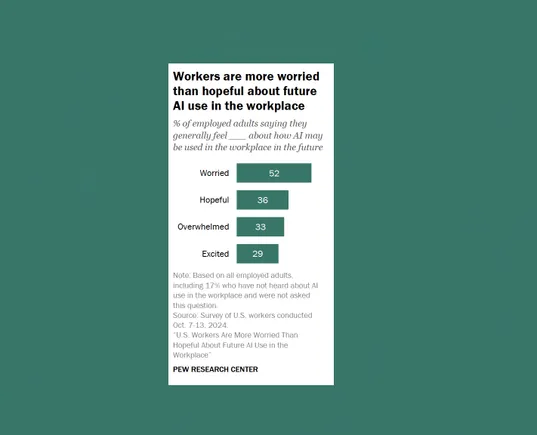
The Pew Research study paints a picture of a workforce divided on the promise and peril of AI. While some envision AI as a tool to enhance productivity and unlock new possibilities, a significant majority express concerns about its long-term consequences. 52% of respondents voiced apprehension about the future impact of AI in the workplace, while a substantial 32% believe AI will ultimately lead to fewer job opportunities. This unease is understandable, given the ongoing narrative of AI replacing human workers in various sectors, from customer service to data analysis. The allure of cost savings through automation is a powerful motivator for businesses, potentially exacerbating workers’ fears of being rendered obsolete.
The survey also highlights a disconnect between the perceived benefits and drawbacks of AI integration. While a mere 6% of respondents believe AI will lead to more job opportunities, a larger proportion (31%) anticipate no significant change in employment prospects. This uncertainty underscores the complex and evolving nature of the AI revolution, where the potential for job creation through new AI-related roles is juxtaposed against the risk of displacement in existing professions. The study further reveals that lower-income workers feel particularly vulnerable to AI-driven job losses, as their tasks are often more easily automated. This disparity raises concerns about the potential for AI to exacerbate existing inequalities in the labor market.
The generational divide in AI adoption and perception is another key finding of the Pew Research study. Younger workers, particularly those aged 18-29, are significantly more likely to be using AI chatbots and other AI tools in their work. This trend is mirrored by higher adoption rates among those with higher education levels, suggesting a correlation between technological literacy and AI utilization. As these "AI natives" enter the workforce, their comfort and familiarity with these technologies will likely shape the future of work. However, a crucial question remains: will AI empower these younger workers to achieve greater efficiency and innovation, or will it erode essential skills and knowledge traditionally acquired through experience?
One of the most significant concerns surrounding the rise of AI in the workplace is its potential to diminish the value of human expertise. While tools like ChatGPT can readily provide answers and solutions, they often lack the nuanced understanding and contextual awareness that comes from years of experience. This raises the specter of a workforce that is proficient in using AI tools but lacking in the deeper knowledge and critical thinking skills necessary to solve complex problems and adapt to unforeseen challenges. Paradoxically, the widespread availability of AI-generated information may ultimately increase the value of genuine human expertise, as businesses seek individuals who can critically evaluate AI outputs, identify potential biases and errors, and refine these outputs into actionable insights.
The Pew Research study offers a timely snapshot of public sentiment at a critical juncture in the evolution of AI. As AI continues to reshape the workplace, understanding the anxieties and expectations of workers is crucial for navigating the challenges and opportunities this transformative technology presents. The findings suggest a need for proactive measures to address the concerns of those who fear job displacement, while simultaneously fostering the development of skills and knowledge that will be essential in an AI-driven future. The ultimate impact of AI on the workforce will depend not only on the technological advancements themselves but also on how we choose to integrate these technologies into our working lives. Addressing the ethical, societal, and economic implications of AI will be paramount in ensuring a future where AI empowers rather than displaces human potential.