








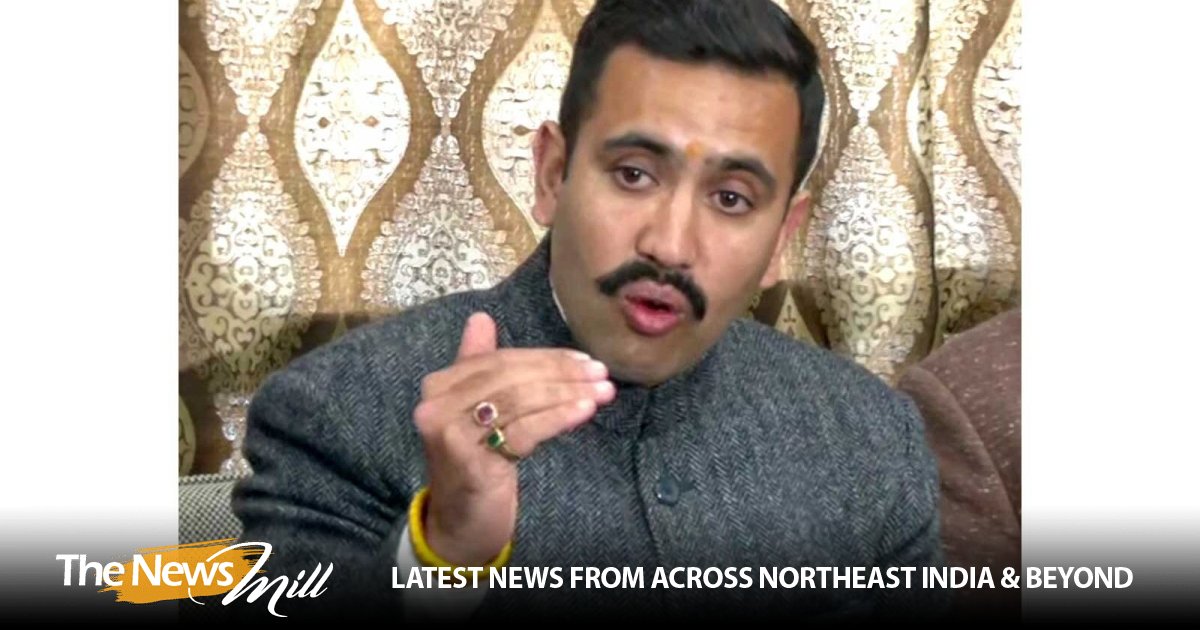
Shimla: PWD Minister Vikramaditya Singh Slams BJP’s “Theatre of Disruption,” Demands Constructive Opposition for Public Good
In a strongly worded rebuttal that underscored the escalating political tensions in the hill state, Himachal Pradesh Public Works Department (PWD) Minister Vikramaditya Singh launched a scathing attack on the Bharatiya Janata Party (BJP) for what he termed as its “irresponsible and obstructive conduct” during the ongoing Monsoon Session of the State Legislative Assembly. Speaking to the media in Shimla on Tuesday, the fourth day of the session, the Minister accused the Opposition of prioritizing political grandstanding over substantive legislative debate, criticizing their repeated disruptions, theatrical walkouts, and the introduction of “new props” into the assembly chamber as a substitute for addressing the pressing issues faced by the common citizens of Himachal Pradesh. The Minister’s remarks come against a backdrop of palpable friction between the ruling Congress party and the BJP opposition, which has intensified since the session commenced, forcing multiple adjournments and preventing the house from transacting significant official business on several occasions. He lamented that while the state grappled with infrastructural challenges, a fragile economic recovery, and the aftermath of recent natural calamities, the elected representatives of the principal opposition party seemed more focused on creating media soundbites than on contributing meaningfully to policy formulation or scrutinizing the government’s development agenda. The Minister emphasized that democracy thrives on a healthy and constructive Opposition, not on one that seeks to paralyze the legislature, and asserted that the current tactics being employed by the BJP are a disservice to the millions of voters who elected them to represent their interests. He warned that such relentless obstructionism would ultimately erode public trust in the institution of the assembly itself and hamper the state’s progress at a critical juncture.
Delving deeper into the political duel, Vikramaditya Singh, who also serves as a key strategist for the ruling Congress party in the region, sought to expose the perceived vulnerabilities and strategic confusion within the BJP’s state unit, alleging that the opposition’s disruptive behavior stems from an inability to effectively counter the government’s arguments on the floor of the house. “The BJP is under immense pressure because they have no substantive issues to raise. They cannot counter the Congress government’s strong arguments, and therefore they resort to walkouts and drama,” Singh asserted. He challenged the Opposition to address the state’s fiscal health and developmental needs directly, stating that their frequent protests are merely a veil for their failure to fulfill their role as a constructive watchdogs. In a significant counterpoint regarding centre-state relations, the Minister addressed the BJP’s protests over alleged state neglect, turning the tables by reiterating the Congress government’s unwavering right to vocally protest against the “injustice” meted out to Himachal Pradesh by the central government. He clarified that while the BJP has every right to protest against the state government if they so choose, the Congress party equally possesses the full democratic right to raise its voice against the Union government for the financial and administrative discrimination faced by the state. “If they have the right to protest against us, we also have the full right to raise our voice against the injustice being done to Himachal Pradesh by the Centre,” he declared, referencing long-standing state grievances such as the pending debt relief, the special status demands, and the alleged withholding of central funds. This exchange underscored a deeper political narrative: the state Congress is resolute in positioning itself as the sole guardian of Himachal’s interests against what it perceives as a hostile, non-cooperative central dispensation, while simultaneously painting the BJP’s state unit as an impotent and confused entity that merely follows Delhi’s diktat. He suggested that the opposition’s loud protests are disconnected from the ground realities and are driven by personal vendettas rather than public welfare, condemning their lack of fresh ideas for solving the state’s unemployment and infrastructure deficits.
On the critical issue of employment generation and government recruitment, a top priority for the electorate in Himachal Pradesh, Minister Vikramaditya Singh presented a robust defense of the Congress government’s track record, contrasting it with the alleged stagnation during the previous BJP regime. He highlighted the significant strides made in filling up critical vacancies across various departments, refuting claims that the government has been lagging in providing jobs to the youth. Specifically, he pointed to the successful recruitment of approximately 1,300 to 1,500 constables within the police department, a process that had been initiated and streamlined to ensure transparency and merit. Furthermore, he detailed the hiring of “Van Mitras” in the Forest Department, crucial for environmental protection and rural employment, and stated that the Education Department has witnessed record-breaking recruitments of teachers and other staff, aimed at strengthening the public schooling system. He also mentioned the recruitment of doctors and medical staff to bolster the healthcare infrastructure in rural and remote areas. In responding to the BJP’s criticism regarding the practice of outsourcing employees, Singh offered a shrewd political response, pointing out that the outsourcing system is not a novel creation of the current administration but a legacy inherited from the previous BJP government, which regularly employed outsourced staff across various departments to cut costs. However, he acknowledged that the practice requires significant reform and announced that the state government, under the leadership of Chief Minister Sukhvinder Singh Sukhu, is actively reviewing the issue. He clarified that the government is sensitive to the plight of outsourced workers and is formulating a comprehensive policy to protect their interests, especially in light of observations made by the Himachal Pradesh High Court and the Supreme Court regarding the regularization of long-serving contract workers. He assured that the final policy will strike a balance between administrative flexibility and the welfare of the employees, ensuring that they receive fair wages and job security, thereby seeking to convert a potential political liability into an opportunity to showcase the ruling party’s commitment to social justice.
Turning his attention to the public works portfolio, which is directly under his charge, the PWD Minister detailed the challenges and future roadmap for road infrastructure development in the state, acknowledging public dissatisfaction over the slow pace of road surfacing works. Addressing the issue of delays in tarring and metalling, Singh provided a candid explanation rooted in global economic pressures, stating that the sharp escalation in construction material costs had severely constrained the department’s ability to execute projects within the previously allocated budgets. “Our hands were tied because prices had doubled. This was partly a Centre-related issue and partly an international issue, including the conflict in the Middle East which impacted global fuel and bitumen prices,” he explained, highlighting the cascading effect of geopolitical tensions on local infrastructure. He informed the media that despite these fiscal hurdles, the state government had successfully incorporated the escalated costs into its reworked planning and has set a massive, ambitious target to complete the metalling and tarring of 800 kilometers of roads across the state. To facilitate this, a substantial budget outlay of approximately Rs 120 to 130 crore has been earmarked to ensure the swift completion of these critical works. Singh asserted that the department is ready to move and will commence these operations immediately after the monsoon season concludes, ensuring that the heavy rains currently battering the state do not compromise the quality of the road works. “The tarring work will begin within the next month after the monsoon ends,” he stated firmly, promising that the state government is committed to improving connectivity in the remotest corners of the state, which is vital for agriculture, horticulture, tourism, and access to essential services. He reassured the public that the financial arrangements have been made and that the administrative bottlenecks have been cleared to expedite the projects, urging patience from the local population while emphasizing that the upcoming months will witness a massive surge in road development activity.
Addressing the immediate crisis of the ongoing monsoon season, which has wreaked havoc across the state’s vulnerable mountainous terrain, Minister Vikramaditya Singh provided an exhaustive update on the PWD’s disaster response and management capabilities. He reported that the state is experiencing daily road closures due to flash floods, landslides, and subsidence, with the number of affected roads fluctuating drastically between 100 to 300 per day depending on the intensity of the rainfall in various districts. He detailed the department’s proactive strategy, stating that machinery and workforce have been deployed pre-emptively at vulnerable locations to ensure rapid clearance and restoration of connectivity. He assured the public that, despite the severe weather, there have been no major instances where emergency services—such as ambulances, fire tenders, or essential supply vehicles—were unable to reach the affected areas for extended periods. “If we receive information about any such situation, immediate action is taken,” Singh emphasized, highlighting the round-the-clock coordination maintained by the department engineers with district administrations and disaster management authorities. The Minister acknowledged that while the level of destruction this year has been severe, primarily due to cloudburst incidents and unprecedented rainfall, the department is working continuously to clear debris and ensure that major arterial roads remain open for traffic, even if via temporary diversions. He noted that the priority remains the safety of human life, and therefore, some roads have been temporarily closed in high-risk zones to prevent accidents. He also appealed to the public to cooperate with the department, avoid unnecessary travel to landslide-prone areas, and adhere to safety advisories. The government, he insisted, is fully committed to restoring normalcy and mitigating the impact of the monsoon on daily life, vowing that the period following the rains will be utilized not only for re-carpeting but also for repairing the extensive damage caused to the state’s road network and retaining walls.
Concluding his comprehensive interaction with the media, Minister Vikramaditya Singh delivered a broader message on the future of democratic discourse in Himachal Pradesh, calling for a shift away from the politics of disruption and towards a governance-focused narrative. He criticized the BJP’s internal dynamics, alleging that the opposition party is currently engaged in a “battle for political space and existence” where individual leaders are trying to outdo each other by raising a cacophony of disconnected issues. “One leader wants to raise one issue, another wants to raise something else, and in trying to outdo each other, they bring up issues in the Assembly that have little connection with the people of Himachal Pradesh,” he observed, dismissing their concerns as devoid of ideological consistency or public relevance. This, he argued, was a clear sign of a demoralized opposition that has failed to digest its electoral defeat and is looking for trumped-up charges to destabilize the democratically elected government. He reiterated the Congress government’s openness to healthy debate, asserting that it has nothing to hide on any matter, whether it pertains to corruption charges (which he dismissed as baseless), employment, or infrastructure. However, he warned that the government would not tolerate the house being reduced to a farce. The Minister framed the current session as a litmus test for the BJP: will they choose to be a constructive partner in the state’s development journey, or will they continue on their path of undermining democratic institutions? He concluded by affirming that under Chief Minister Sukhu’s leadership, the government remains steadfast in fulfilling its promises to the people—from providing financial relief to women and farmers to ensuring transparent recruitment—and that no amount of opposition propaganda or walkouts will derail the government’s mandate to serve the state effectively. The coming weeks, he suggested, will reveal whether the BJP chooses to mend its ways, as the public is watching closely and will ultimately judge the political players based on their contribution to the welfare of Himachal pradesh.


