







Kremlin’s Latest POW Narrative Exposed as Projection as Evidence of Russian Torture Mounts
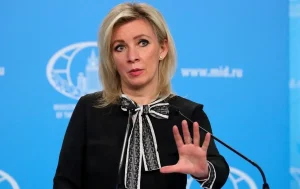
Russia has launched yet another coordinated disinformation offensive on the issue of prisoners of war, this time seeking to convince domestic and international audiences that Ukrainian soldiers held in Russia are treated better than Russian soldiers held in Ukraine. The Center for Countering Disinformation, a key body of Ukraine’s National Security and Defense Council, issued an urgent warning on Telegram, saying the Kremlin’s latest talking points are designed to distort verifiable facts, undermine Ukraine’s international standing, and distract from Russia’s own systematic abuses. The immediate catalyst was a statement by Yulia Lantratova, Russia’s so-called human rights commissioner, who claimed without offering any evidence that Ukraine operates facilities where Russian prisoners of war are confined and that Red Cross representatives are denied access. Lantratova also alleged that Russian servicemen are held in “torture chambers” for prolonged periods before their official registration as prisoners. Ukrainian officials and independent monitors immediately rejected these claims as fabrications. The Center stressed that the narrative is part of an information war in which Moscow repeatedly accuses its enemy of crimes that Russia itself has committed on a vast scale. This tactic, often called projection, is intended to create a false equivalence and obscure the overwhelming evidence of Russian atrocities. Lantratova’s statement, made with no names, dates, locations, or supporting documentation, fits a well-established pattern of Kremlin communications that prefer emotion and outrage over fact. It also comes at a moment when international attention is increasingly focused on the fate of tens of thousands of Ukrainian prisoners, civilians, and disappeared persons. By flooding the information space with baseless accusations, the Kremlin hopes to make it harder for the public to distinguish between victim and aggressor, between documented reality and state-sponsored fantasy.
The Center for Countering Disinformation responded by reiterating a point that has been made many times since the full-scale invasion began: Ukraine’s treatment of Russian prisoners of war is continuously monitored by independent international and human rights organizations. These organizations are allowed to document conditions, interview detainees, and verify compliance with international humanitarian law. Ukraine has repeatedly stated its commitment to the Third Geneva Convention and has worked with the International Committee of the Red Cross to facilitate visits and communication with families. While no detention system is perfect, especially during a brutal war, Ukraine’s approach is based on law, transparency, and accountability. The Center emphasized that Lantratova’s allegations are not merely baseless; they are deliberately timed to coincide with new waves of evidence about Russian crimes. By claiming that Ukraine keeps Russian soldiers in secret torture chambers, Moscow is trying to shift attention away from its own network of prisons, filtration camps, and unofficial places of detention where thousands of Ukrainian civilians and prisoners of war have disappeared. The Center also noted that Russian claims about Red Cross access are particularly cynical. International organizations have repeatedly documented that Russia has failed to provide the International Committee of the Red Cross with full and meaningful access to Ukrainian prisoners of war, in direct violation of the Geneva Conventions. In contrast, Ukraine has invited monitors into facilities, responded to concerns, and demonstrated a willingness to correct problems when they arise. The latest Russian disinformation campaign, therefore, is not only false but an inversion of the truth. It projects onto Ukraine the very behavior that Russia has made a deliberate policy: secret detention, torture, denial of access, and the dehumanization of captives. The goal is not to inform but to confuse, not to protect human rights but to shield Russia from accountability.
The actual documented evidence paints a far darker reality than anything Lantratova described. The United Nations and international human rights organizations have repeatedly documented the systematic torture and mistreatment of Ukrainian prisoners of war held by Russia. One of the most chilling recent disclosures came from Bohdan Okhrimenko, head of the Secretariat of the Coordination Headquarters for the Treatment of Prisoners of War. He reported that Russia handed over to Ukraine the bodies of 375 Ukrainian prisoners of war, and the bodies displayed unmistakable signs of torture, physical exhaustion, and the absence of proper medical care. These are not isolated cases. Survivors released in prisoner exchanges have testified to beatings, electric shocks, stress positions, starvation, forced labor, denial of medical treatment, and threats of execution. Many Ukrainian prisoners of war have been held in Russian prisons alongside common criminals, while others have been subjected to staged interrogations designed to coerce false confessions for propaganda purposes. The UN Human Rights Monitoring Mission in Ukraine has documented severe abuses in places of detention under the effective control of the Russian Federation, including arbitrary detention, enforced disappearances, and torture that in some cases amounted to war crimes. The bodies returned to Ukraine are physical evidence of a policy of cruelty that appears intended to punish Ukrainian soldiers for defending their country. Russia’s response to these findings has been denial and obstruction. Instead of allowing independent investigation, Moscow has generated new narratives accusing Ukraine of the very crimes it is committing. This tactic has become a signature of the Kremlin’s approach to the war. Every returned body, every survivor testimony, and every forensic report makes it harder for Russia to maintain the fiction that it treats prisoners humanely. Therefore, the Kremlin must attack the credibility of the evidence itself, and the most effective way to do that is to invent an alternative reality in which Ukraine is the torturer and Russia is the victim.
The latest Kremlin narrative is not an isolated incident but a continuation of a broader information warfare strategy that has been central to Russia’s invasion. Since 2014, and especially since February 2022, the Center for Countering Disinformation and independent fact-checkers have catalogued hundreds of false claims emanating from Russian officials, state media, and social media bots. These include the absurd claim that Ukraine is not a real country, that the Ukrainian government is controlled by Nazis, that Russian missiles intentionally target civilians only to blame Kyiv, and that Ukrainian refugees are dangerous. The prisoner-of-war issue has become a particularly important battlefield in this information war because it exposes the human cost of Russia’s aggression and the cruelty of its occupation. As international reports of Russian atrocities continue to grow, the Kremlin needs to create a counter-story that casts Russia as humane and Ukraine as barbaric. Lantratova’s comments are perfectly tailored for this purpose: they play to Russian domestic audiences that have been fed a diet of state propaganda, and they attempt to confuse Western audiences who may not be familiar with the documented record. The Center for Countering Disinformation stressed that these fakes are designed to divert attention from Russia’s systematic violations of international humanitarian law against Ukrainian servicemen in captivity. Every new accusation, no matter how transparently false, serves the goal of muddying the waters, exhausting journalists, and making it harder for the truth to break through. The cumulative effect, if unchecked, is to create a warped reality in which victims and perpetrators are interchangeable. This is not merely a public relations problem; it has real consequences for the ability of courts, tribunals, and international organizations to establish accountability. When lies are repeated often enough, they can undermine confidence in factual reporting and give cover to those who wish to avoid legal responsibility. That is why Ukraine’s institutions are so determined to document and expose each new Russian fabrication as it appears.
International law is unambiguous on the treatment of prisoners of war. The Third Geneva Convention requires that all prisoners of war be treated humanely at all times, without any adverse distinction based on race, nationality, religion, or political opinion. It prohibits violence, intimidation, insults, and public curiosity. Prisoners must receive adequate food, clothing, housing, and medical care, and they must be protected from acts of violence or retaliation. The detaining power must register all prisoners and allow the International Committee of the Red Cross to visit them, interview them in private, and provide relief. Russia is a signatory to the Geneva Conventions, and its officials are bound by these obligations. Yet the evidence gathered by Ukrainian authorities, United Nations investigators, and international organizations shows that Russia has systematically violated nearly every one of these provisions. Torture is a grave breach of the Geneva Conventions and constitutes a war crime. When committed as part of a widespread or systematic attack against a civilian population, it can also be a crime against humanity. The International Criminal Court has already issued arrest warrants for Russian officials over crimes related to the deportation of Ukrainian children, and its investigation into the broader situation in Ukraine is ongoing. Ukraine, by contrast, has taken visible steps to comply with international law, including publishing protocols for the treatment of prisoners of war, cooperating with the International Committee of the Red Cross, and prosecuting those responsible for mistreatment. This stark contrast is precisely why Moscow is so determined to blur the lines. If the international community accepts the false narrative of equivalency, it risks undermining the legal accountability that victims deserve. The Kremlin knows that its own record cannot survive scrutiny, so it tries to destroy the very concept of objective truth. But the evidence of torture, starvation, and murder cannot be erased by a Telegram post or a state-television interview. It exists in the bodies of the dead, the scars of the survivors, and the testimony of those who have endured Russian captivity.
Ultimately, the battle over the treatment of prisoners is a battle for truth and justice. The bodies of 375 Ukrainian prisoners returned with signs of torture are not rhetorical devices; they are human beings whose lives were taken in violation of every rule of civilized warfare. Their families, and the families of tens of thousands of others still unaccounted for, deserve the truth and they deserve justice. Russia’s disinformation campaigns are an attempt to deny them that justice by manufacturing confusion and false equivalency. The international community must respond with clarity and resolve. Governments and international organizations should publicly refute Kremlin lies, support independent media and fact-checkers, and press Russia for full access to all places of detention. They should also strengthen mechanisms for documenting every case of abuse, including forensic examination of returned bodies and survivor testimony. The Center for Countering Disinformation has called on partners to rely on verified evidence rather than unsubstantiated statements from Russian officials. That is a simple and powerful demand. As the war continues, the truth is often the first casualty. But it can be defended. Every time a survivor speaks, every time a body is examined, every time an international monitor records what they see, the lie becomes harder to sustain. The Kremlin wants the world to look away. The evidence says otherwise. It is the duty of journalists, human rights organizations, governments, and citizens to keep looking, to keep documenting, and to hold the perpetrators accountable. Only then can the suffering of Ukrainian prisoners of war be honored and the foundations of international humanitarian law be preserved for future generations.


