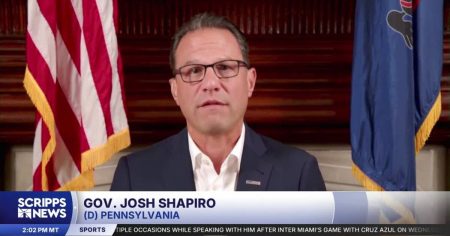



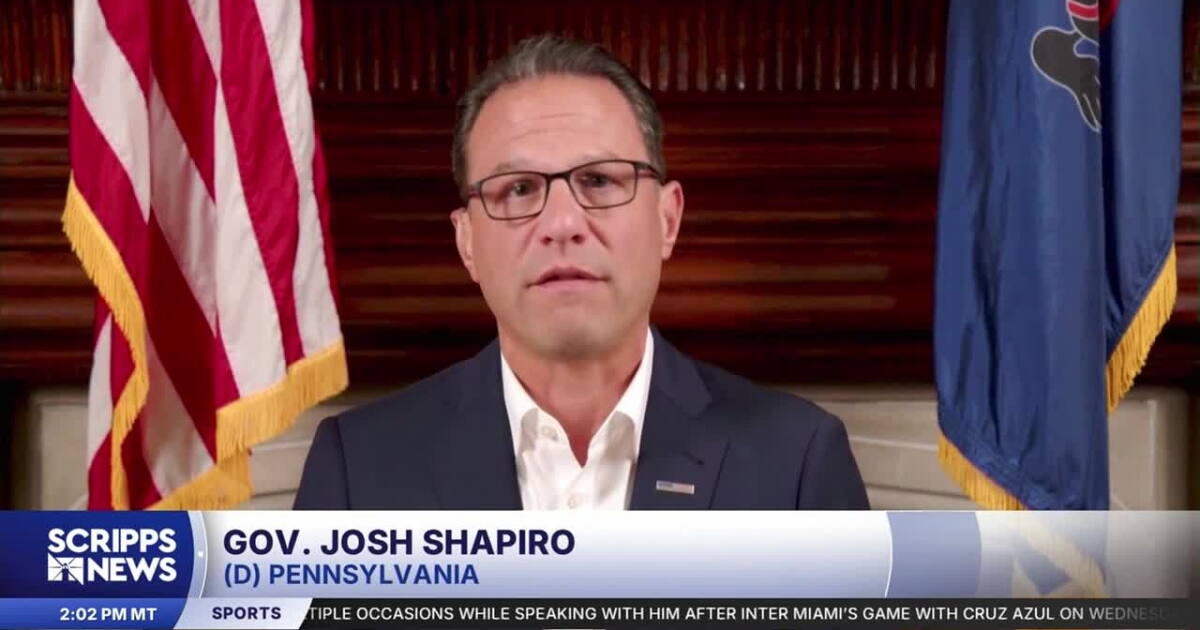
Gov. Josh Shapiro accused Health and Human Services Secretary Robert F. Kennedy Jr. of spreading vaccine misinformation as Pennsylvania confirmed its first measles deaths in decades, a development that has quickly become a national flashpoint in the fight over vaccines. The announcement, made by the Pennsylvania Department of Health, marked the first time in a generation that the state has lost residents to a disease that was declared eliminated in the United States in 2000. Shapiro, a Democrat, did not mince words in assigning blame. He said the deaths were entirely preventable and that Kennedy’s long history of questioning vaccine safety, combined with his leadership of the country’s top health agency, had helped create an environment in which parents in some communities feel safe skipping the measles, mumps and rubella vaccine. During a public appearance, Shapiro accused the federal health secretary of undermining the very public-health infrastructure that is supposed to stop outbreaks before they begin. He described the deaths as a tragedy caused not only by a highly contagious virus but also by a persistent wave of misinformation that has eroded trust in proven science. The governor’s comments were among the sharpest from any state leader since Kennedy took office, and they illuminated the growing tension between states trying to contain outbreaks and a federal administration that has sent mixed messages about vaccination. Health officials did not immediately provide all details about the victims, saying only that the fatalities were connected to an ongoing measles outbreak in the state. The deaths, however, are a stark reminder that measles can be deadly even in a developed country with clean water, good hospitals and an effective vaccine. The Centers for Disease Control and Prevention has long warned that measles can lead to severe complications, and the Pennsylvania fatalities have now made that warning concrete. As the news spread, pediatricians and local health departments braced for an increase in inquiries about the MMR shot. While federal leaders debated policy, state workers began the painstaking work of tracing every possible exposure and isolating infected patients. The outbreak has become a test of whether public health can survive the skepticism that now surrounds it.
The Pennsylvania Department of Health confirmed the deaths without releasing the names or ages of the deceased, citing privacy regulations and an ongoing epidemiological investigation. The deaths are believed to be the first in the state from measles in several decades, putting Pennsylvania in the unwelcome company of Texas and New Mexico, which also saw fatal measles cases earlier this year. The outbreak is centered in an area where vaccination rates have fallen below the threshold needed to protect the community, leaving vulnerable people exposed. State officials are working with hospitals, pediatric clinics and schools to identify anyone who came into contact with the infected patients. Because measles can be spread by coughing, sneezing or even breathing the same air, each confirmed case can lead to dozens of possible exposures in waiting rooms, schools and households. The disease is infectious from about four days before the rash appears until four days after, and some people who are exposed may not yet know they are infected. The state has advised anyone who has not received the full MMR series to contact their health-care provider immediately and, if exposed, to receive the vaccine within 72 hours for maximum protection. Health officials have also asked residents to watch for the symptoms of measles, starting with fever, cough, runny nose and red eyes, followed by a rash that typically begins on the face. The deaths are an alarming sign that the outbreak is not merely a statistical inconvenience but a real threat to life. Children under five, adults over twenty, pregnant women and people with weakened immune systems are at highest risk of severe illness. In some cases, measles causes pneumonia, which is the most common fatal complication; in others, it causes encephalitis, or swelling of the brain, which can result in permanent neurological damage or death. Even survivors may face long-term health impacts, because measles impairs the immune system’s memory, leaving the body more vulnerable to other infections for months afterward. The state’s response has been supported by the CDC, which continues to recommend the MMR vaccine as the most effective way to prevent measles and its complications. For now, the priority is controlling the outbreak and preventing another death. Public-health nurses have been deployed to affected neighborhoods, with vaccination clinics offered at schools and community centers. The investigation is likely to expand in the coming days, as officials attempt to verify vaccination status and identify households where children may have missed their shots. The Pennsylvania deaths are a tragedy, but they may also accelerate efforts to raise vaccination rates locally and nationally.
Governor Shapiro’s accusation against Robert F. Kennedy Jr. has intensified an already fierce debate about the direction of federal health policy. Kennedy has long been one of the nation’s most prominent vaccine skeptics, and his confirmation as health secretary gave those views an official platform. He has argued that vaccine mandates infringe on personal freedom, called for more research into vaccine risks and, during the recent measles outbreaks, emphasized nutrition and vitamin A rather than vaccination. His statements have delighted anti-vaccine activists and alarmed mainstream medical organizations. The American Academy of Pediatrics, the American Medical Association and the CDC all continue to recommend the MMR vaccine, but public-health experts say the consistency of that message is being undercut by the highest-ranking health official in the country. Shapiro said that Kennedy is spreading vaccine misinformation and that the failure of federal leadership to endorse vaccination clearly has contributed to the conditions that allowed the outbreak to become fatal. He pointed to falling immunization rates in Pennsylvania and nationwide, which have been driven partly by misinformation on social media and partly by religious and philosophical exemption laws. The governor’s remarks were not made in a vacuum; they follow months of increasing concern among state health directors who feel abandoned by the federal government’s communications on vaccines. Some have complained that HHS has discouraged the CDC from issuing strong pro-vaccine statements, while others have pointed out that Kennedy has avoided making a direct, simple plea for parents to vaccinate their children. During the Texas outbreak, Kennedy traveled to the area and promoted treatments such as vitamin A, but he rarely encouraged vaccination at the same time. Critics believe this sends a dangerous signal: that measles can be treated with supplements and therefore vaccines are optional. Shapiro does not share that view. He has said that the only reliable way to stop measles is to prevent it through vaccination, and he has urged community and religious leaders in Pennsylvania to use every tool at their disposal to counter false claims. The political implications are significant. Shapiro is a prominent Democrat who has been mentioned as a future presidential candidate, and his attack on Kennedy could make vaccine policy a major issue in upcoming elections. It could also pressure other governors to take public stands one way or the other. In states with conservative legislatures, there is a movement to expand vaccine exemptions; in states led by Democrats, there is growing support for strengthening school vaccination requirements. The outbreak and deaths in Pennsylvania cut through the abstract policy differences and present a clear moral question: whether the government has an obligation to protect vulnerable people who cannot be vaccinated, even if that means pushing back against misinformation. Shapiro’s answer is yes, and he has made Kennedy the leading symbol of the problem. The confrontation is not merely political theater; it has consequences for how millions of parents view the vaccine. When a governor and a federal cabinet secretary clash in public, the resulting news coverage can either reinforce skepticism or prompt families to call their pediatricians. The first reports from hospitals suggest that the Pennsylvania deaths have at least temporarily caused some undecided parents to seek vaccination. Whether that effect lasts will depend on how the national conversation proceeds over the next few weeks.
Measles occupies a special place in public-health history because of its extraordinary contagiousness and the devastation it caused before vaccines. The virus can live in the air for up to two hours after an infected person leaves a room, and a single infectious patient can spread the disease to as many as 9 out of 10 susceptible people nearby. The early symptoms look like a cold or flu: fever, cough, runny nose and conjunctivitis. Then comes the rash, a red blotchy eruption that starts on the face and spreads downward. The rash is the sign that the disease has taken hold, but the virus has already been moving through the body for days. Most infected people recover after a week or two, but measles does not always behave benignly. One in five may be hospitalized, according to the CDC. Pneumonia is the most common serious complication and the leading cause of death. Encephalitis occurs in about 1 of every 1,000 cases and can cause convulsions, deafness, intellectual disability or brain damage. In addition, the virus temporarily erases the immune system’s memory of previous infections, leaving a child who survives measles more vulnerable to other pathogens for months or even years. The death rate is typically cited as 1 to 3 deaths per 1,000 infected children, but the rate is higher in infants, malnourished children and immunocompromised patients. Before the measles vaccine was introduced in 1963, an estimated 3 to 4 million people in the United States were infected every year, about 48,000 were hospitalized, and 400 to 500 died. The disease was declared eliminated in the United States in 2000 after a successful national vaccination program. That historic achievement was not permanent. Measles continued to circulate in other countries, and every year travelers brought it back to the United States. Normally, high vaccination coverage prevented it from spreading. But when vaccination coverage falls below the 95 percent herd-immunity threshold, the virus can establish itself in undervaccinated neighborhoods and spread rapidly. The MMR vaccine is remarkably effective. One dose is about 93 percent effective at preventing measles; two doses are about 97 percent effective. Side effects are usually mild, such as soreness, a low-grade fever or a temporary rash. Severe allergic reactions are extremely rare, and the overwhelming weight of scientific evidence rejects the claim that the vaccine causes autism. The decision to vaccinate is therefore more than a personal health choice. It is a communal act that protects infants too young to be vaccinated, children with cancer, organ transplant patients and people with chronic diseases who cannot safely receive live vaccines. When vaccination rates are high, measles cannot easily find susceptible hosts and the chain of transmission is broken. When rates are low, the virus finds the gaps. Pennsylvania is now learning that lesson the hard way. The first measles deaths in decades in the state should remove any doubt that the disease is a serious threat. Vaccine misinformation, no matter how articulate or well funded, cannot change the biology of the virus. It only changes the behavior of the people who fall for it, and that is exactly what happened before this outbreak.
The Pennsylvania fatalities come at the end of a long and turbulent year for measles control in the United States. Earlier in 2025, a major outbreak in Texas, concentrated in the South Plains region and neighboring counties, spread to more than a thousand confirmed cases and caused the first measles death in the United States in a decade. New Mexico, Oklahoma and other states reported additional cases, and the national total reached levels not seen since 2019. The outbreaks have had common features: they began in communities with comparatively high numbers of unvaccinated children, many of whom attend private or religious schools or are home-schooled, and they were amplified by misinformation that spread rapidly through social media. The CDC warned for months that the crisis was not over, and Pennsylvania’s experience now confirms that no region is safe if vaccination rates dip. The fall in vaccination coverage has been underway for years. National surveys showed that the percentage of kindergarteners with the required measles-mumps-rubella vaccine declined steadily from the mid-2010s through the pandemic, and that the percentage of children entering school with vaccine exemptions rose to record highs. Some states now have pockets where fewer than 80 percent of kindergarteners have the MMR vaccine. The pandemic deepened the problem by disrupting pediatric visits and by fueling an anti-vaccine movement that conflated the political debates around COVID-19 vaccines with routine childhood vaccines. Public-health experts have worked to counter this trend, but they have been hampered by budget cuts, by the politicization of public health and, notably, by the mixed messaging coming from federal leadership. More recently, the federal response under Secretary Kennedy has focused on treatment and individual choice rather than on mass vaccination. Kennedy has questioned the authority of the FDA, suggested that the CDC is corrupted by its relationship with vaccine makers, and urged Americans to focus on nutrition and vitamin A. He has not explicitly told parents not to vaccinate, but his emphasis on risks and personal choice has been interpreted by many skeptics as a justification for delay or refusal. State health officials, including those in Pennsylvania, have had to step into the gap, issuing their own pleas for vaccination and explaining the real risks of measles. Local doctors have become de facto public-health communicators, spending longer appointments convincing concerned parents that the MMR vaccine is safe. The political battle has also shifted to state legislatures. Lawmakers in several states have introduced bills to weaken school vaccine mandates, arguing that informed consent should allow parents to opt out for philosophical reasons. Other states have moved in the opposite direction, seeking to close loopholes and make it easier for children to receive vaccinations. The Pennsylvania deaths are likely to give momentum to the pro-vaccination side in the short term, but they could also embolden anti-mandate advocates, who may argue that the state’s response is overreaching. In the end, the death toll is not just a number. It is a signal that the social contract that once protected American children from measles has weakened. Rebuilding it will require more than a single news cycle or a single governor’s statement. It will require sustained leadership from both major parties, a renewed investment in public health and a collective decision to reject misinformation in favor of science.
Public-health experts agree that the immediate response is clear: everyone in Pennsylvania and across the country who is not vaccinated against measles should get the MMR vaccine as soon as possible. For children, the standard schedule remains two doses, first at 12 to 15 months and second at 4 to 6 years. In an outbreak, infants as young as 6 months can receive an early dose, though they will still need the recommended doses later. Adults, especially those who grew up after vaccination became routine, are generally protected, but those who are uncertain should ask their doctor about a blood test to check immunity. Unvaccinated people who have been exposed to measles may prevent infection by receiving the MMR vaccine within 72 hours; in some circumstances, immune globulin may be given within six days. Hospitals are also being reminded to isolate suspected measles patients immediately to prevent transmission in emergency departments. The Pennsylvania outbreak is a reminder that public-health emergencies do not obey political timelines. While officials debate responsibility, the virus is still moving. The state health department continues to count contacts and to make vaccination available in the areas most affected. For Governor Shapiro, the moment calls for both compassion and candor. He has promised to honor the grief of the families who lost loved ones, but he has not softened his criticism of the federal health leadership. He says the deaths were not an act of God but a preventable outcome of choices, policies and messages. He has made it clear that he will not stand by while misleading information is spread by people in positions of authority. The tragedy has also created an opportunity. Parents who were hesitant may now be motivated to ask questions and seek facts from their pediatricians. The media, for its part, has a responsibility to avoid amplifying false claims and to report clearly on what the evidence shows. Vaccine misinformation is not just an online nuisance; it is a lethal force when it meets an infectious disease. The measles deaths in Pennsylvania are the latest proof. As the country watches, the question is whether the lesson will be learned before more families bury more children. The science has not changed; the vaccine works. What remains to be seen is whether enough people will choose to use it, and whether their leaders will tell them the truth.