




Ukraine Urges Global Crackdown on Russian Cultural Centers, Calling Them Tools of Disinformation and Espionage
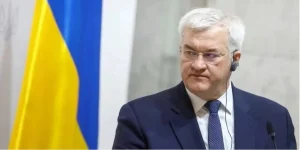
Ukraine has formally urged governments around the world to restrict or shut down Russian state-run cultural centers, with Foreign Minister Andrii Sybiha accusing the network of being used for disinformation, destabilization, and espionage. Speaking on Sept. 19, Sybiha singled out Rossotrudnichestvo, the Russian government agency that operates the so-called Russian Houses abroad, saying Moscow uses cultural and humanitarian institutions as part of a broader campaign to influence public opinion outside Russia. “The cognitive domain of modern warfare must not be underestimated,” Sybiha said, arguing that Russia is waging a global battle for public opinion through a network of organizations and communications channels. His statement signals a significant escalation in Ukraine’s diplomatic strategy, moving beyond formal protests and sanctions onto the battlefield of cultural diplomacy itself. Kyiv has long argued that Russian cultural centers function not simply as venues for language classes or art exhibitions, but as operational hubs where propaganda narratives are shaped, sympathetic local elites are cultivated, and intelligence officers are able to operate under diplomatic cover. The new appeal, addressed to foreign governments, is framed as an urgent national security matter and a request for concrete administrative action rather than a symbolic political condemnation. Sybiha emphasized that the issue is not isolated to Europe, noting that Russian Houses continue to operate in at least seven European countries, with an even larger network across Africa, Asia, and South America. “Our shared European home is not the place for ‘Russian houses’ promoting war propaganda,” he said. The foreign minister’s remarks carry particular weight given that more than two and a half years have passed since Russia launched its full-scale invasion of Ukraine, and Western governments are still debating how aggressively to sever the remaining connective tissue between Russian state institutions and the outside world. By focusing on cultural infrastructure, Ukraine is attempting to fill a gap in the current sanctions architecture, which has targeted Russian banks, energy companies, oligarchs, and military officials, but has not yet systematically dismantled Moscow’s high-profile public diplomacy apparatus. The outcome of Kyiv’s request is likely to depend on each country’s legal frameworks, diplomatic calculations, and tolerance for Russian pressure. Some nations may resist closing cultural centers on principle, arguing that such measures infringe on cultural freedom and collective rights. Others, however, may see this as an opportunity to send a clear message that no Russian state institution is exempt from scrutiny while the war in Ukraine continues to kill thousands and destabilize the broader European security order.
The central target of Ukraine’s effort is Rossotrudnichestvo, a federal agency subordinate to Russia’s Ministry of Foreign Affairs. Although it presents itself as a humanitarian and cultural body, Western intelligence officials and independent analysts have long described its network of Russian Houses and Russian Centers of Science and Culture as an extension of the Kremlin’s influence apparatus. Under the guise of promoting Russian language, literature, and educational exchanges, these institutions have been accused of spreading pro-Kremlin narratives, collecting political intelligence, and serving as coordination points for so-called compatriot networks. Following the 2014 annexation of Crimea and the subsequent war in eastern Ukraine, European security services increasingly began to monitor Rossotrudnichestvo activities, but the agency was not placed under European Union sanctions until 2022, after Russia’s full-scale invasion made such a step unavoidable. Since then, the agency has continued to operate in many countries where legal action has not yet been taken, relying on local staff and revised programming to maintain at least a semblance of normal cultural activity. Ukraine’s appeal is intended to provide governments with the evidence and legal arguments needed to shut these operations down. According to Sybiha, Kyiv has contacted governments around the world and provided detailed arguments for restricting the centers’ activities or closing them altogether. He did not release the full contents of those submissions, but the public reasoning is clear: Russian cultural centers are not neutral spaces. They are instruments in a coordinated strategy of information warfare that seeks to weaken international support for Ukraine, justify Russian aggression, and undermine the resolve of democratic societies. The accusation is not limited to disinformation. Sybiha specifically used the word “espionage,” alleging that the cultural center network provides cover for Russian intelligence operations. This echoes concerns repeatedly raised by intelligence agencies in Poland, the Baltic states, and Northern Europe, where Russian diplomatic and cultural buildings have been linked to surveillance activities, sabotage planning, and the recruitment of agents. Even if individual centers do not directly participate in illicit operations, their very existence, from Ukraine’s perspective, lends legitimacy to a government that has shown a willingness to use mass violence against civilians and to weaponize energy, food, and information. The request to close them represents a broader attempt to empty Russian public diplomacy of its credibility and to force foreign governments to choose between engaging with Russian propaganda and standing squarely with Ukraine in a conflict that has fundamentally reshaped European security.
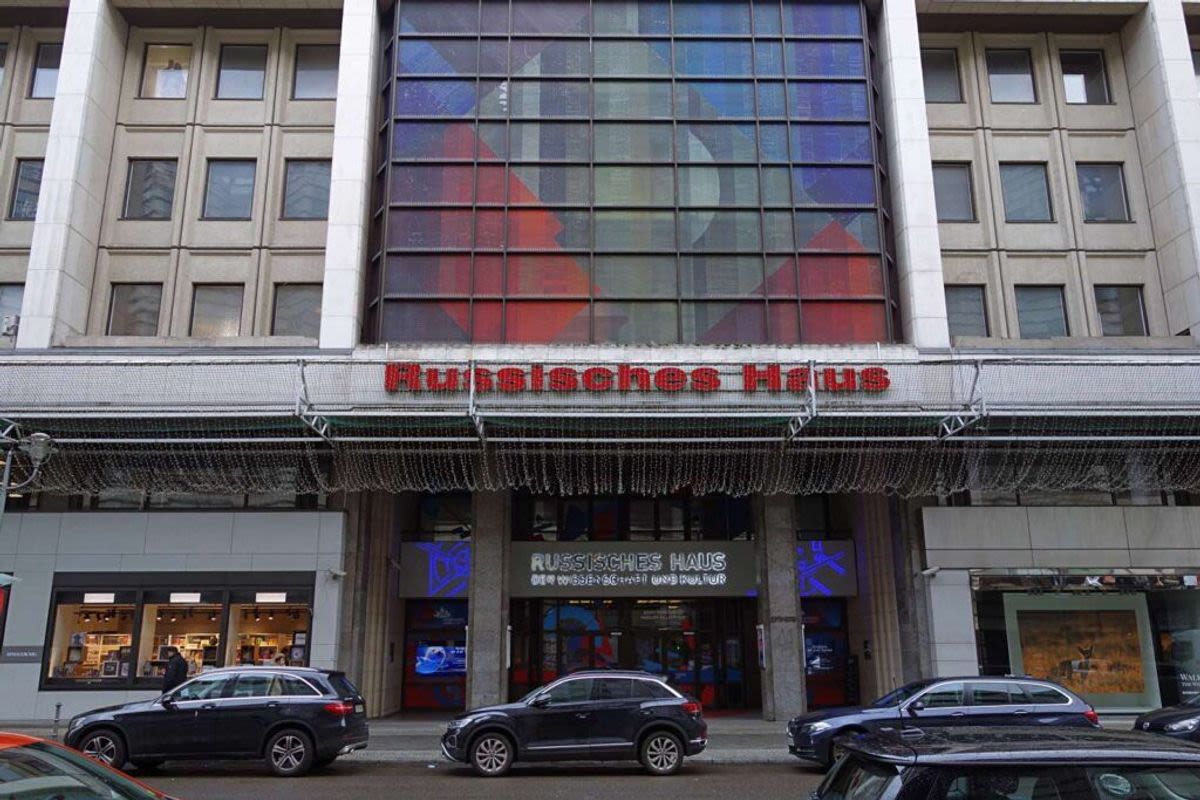
Germany has already become the most important test case for this new diplomatic campaign. In August, an attempted explosive-drone attack at Leipzig/Halle Airport caused alarm across Europe, and Berlin quickly traced responsibility to Russia. The German government formally blamed Moscow for the incident on Sept. 1, citing findings from its intelligence services, partner agencies, and criminal investigations. In response, Berlin ordered the closure of Russia’s remaining consulate-general in Bonn and terminated the agreement governing the Russian House in Berlin, the capital’s main venue for Russian cultural and political events. The Berlin center is operated by Rossotrudnichestvo, and its status as a cultural institute was protected by a bilateral intergovernmental agreement that was originally meant to ensure broad opportunities for cultural exchange. Germany’s decision to dissolve that agreement is a dramatic departure from previous policy. For decades, Germany hosted a substantial Russian cultural presence, reflecting the two countries’ deep historical, economic, and human ties. The rupture is therefore not only legal and administrative; it is symbolic of the wider breakdown of normal relations between Europe’s largest economy and Russia. In practical terms, the closure has been swift and severe. German authorities dismissed the center’s local staff and ordered personnel sent from Russia to leave the country, sharply curtailing its operations. The agreement that formed the legal basis for the center is formally due to expire in mid-2027, but Germany’s unilateral action has effectively rendered that timeline irrelevant. Beyond the cultural center, Berlin also announced plans to seek additional sanctions against Moscow, tighten entry restrictions for Russian citizens, and increase pressure on Russia’s so-called shadow fleet, a network of aging tankers used to transport Russian oil in violation of price caps and sanctions regimes. The German response was intended to show that attacks on critical infrastructure will not be tolerated, regardless of whether they succeed at causing physical damage. Even an attempted attack by an explosive-laden drone was enough to trigger a cascade of retaliatory measures, including the dismantling of one of Russia’s most prominent cultural outposts in Europe. Germany’s actions have been closely watched by other governments that are weighing similar decisions. If a country as cautious and legally meticulous as Germany is willing to terminate a bilateral cultural agreement with Russia, others may find it easier to follow suit. The German case also demonstrates that cultural centers can be closed without triggering further diplomatic collapse, even when Russia responds with reciprocal measures.
Moscow, for its part, has denied responsibility for the attempted drone attack and rejected German accusations as baseless attempts to demonize Russia. Rather than accepting the closure quietly, the Kremlin retaliated by ordering the closure of the German Consulate-General in St. Petersburg and the Goethe-Institut’s cultural centers in Russia. The Goethe-Institut is Germany’s most respected cultural organization, with a long history in Russia dating back to the Cold War and even earlier traditions of German-Russian educational exchange. Shutting these centers is a significant blow to the small remaining network of German cultural presence in Russia, and it underscores how quickly cultural diplomacy has become a weapon in the broader geopolitical confrontation. The tit-for-tat escalations reflect a much wider and more dangerous trend: European governments are increasingly worried by what they describe as Russian hybrid operations, a broad category of hostile actions that fall short of overt military attack but are designed to intimidate, disrupt, and destabilize. These operations include sabotage of railways and energy infrastructure, cyberattacks against government institutions, drone incursions near military bases and civilian airports, GPS jamming that endangers commercial aviation, the spread of disinformation in communities across Europe, and covert attempts to influence political debate through carefully laundered funding and manipulated social media narratives. In the year since the October 2023 Hamas attacks on Israel, for example, authorities in several European countries have investigated Russian-linked networks accused of using inflammatory content and artificial intelligence to exploit migration issues and deepen social divisions. Intelligence officials have repeatedly warned that Russian agents treat Europe as a single battlefield, and that cultural centers can provide a convenient cover for collecting information and maintaining communication with sympathizers. The Leipzig/Halle incident, however small and unsuccessful, was a turning point because it brought the threat of physical attack into the everyday lives of ordinary continental Europeans. The airport, located in eastern Germany, serves as a major cargo and passenger hub, and an explosive drone attack there could have caused catastrophic consequences if it had succeeded. By reacting so decisively, Berlin sent a signal that Russian hybrid activity, even in its experimental and preliminary stages, will provoke severe consequences. That signal is now being amplified by Ukraine’s global campaign to close Russian cultural centers, which aims to convince other governments that acting after a crisis is less effective than acting before it.
NATO has responded to the Leipzig incident with unusual clarity. Secretary General Mark Rutte described the attack as a Russian hybrid act and said the alliance stood in full solidarity with Germany. While NATO’s official statement did not provide new details about the intelligence behind the accusation, the alliance has separately said that Russia is conducting a wider campaign of hybrid activity against its members, involving critical infrastructure sabotage, cyber operations, disinformation, and malign political influence. This assessment has become central to NATO’s planning. The alliance has established a new coordination cell for undersea cable security, expanded intelligence sharing on sabotage networks, and increased military patrols around sensitive infrastructure. But cultural centers are a more heretic target. They are protected by diplomatic and cultural agreements, often staffed by local civilians, and possess a veneer of peaceful purpose that makes them difficult to challenge in political terms. Ukraine’s willingness to attack that veneer directly is a calculated decision. Sybiha’s message is that allowing Russian Houses to continue operating is not a neutral choice but a form of complicity in Russian influence operations. He warned that, even as some countries are finally taking action, Russia is expanding the network to other regions. Rossotrudnichestvo announced earlier in September that it plans to establish eleven additional Russian Houses abroad, including eight in African countries. This expansion is consistent with Russia’s broader pivot toward Africa, where the Kremlin has sought to rebuild relationships abandoned after the Soviet collapse, offering military assistance, private military contractors, grain exports, and nuclear technology in exchange for political support and access to natural resources. In several African countries, Russian cultural centers are among the few official Russian institutions present, making them especially important as tools of soft power. The plans to open new centers in Africa also indicate that Moscow is adapting to its isolation in Europe by retreating to territories where Western legal and political pressure is weaker. Ukraine has already attempted to respond, using its embassies and bilateral relationships to warn African governments about the risks of allowing Rossotrudnichestvo to establish new footholds. But the outcome is uncertain. Many African governments have adopted a neutral or nonaligned stance toward the war in Ukraine, and some view Russia’s offer of cooperation as an alternative to Western dominance. Closing Russian cultural centers in those countries would require a political commitment that may not yet exist.
The broader significance of Ukraine’s diplomatic offensive lies in its recognition that the future of the war is not being decided only on the front line. Ukraine understands that public opinion in Europe, North America, and the Global South shapes the flow of military aid, economic support, and political legitimacy. Russia, too, understands this, and has invested heavily in a global network of information agencies, think tank fronts, media outlets, and cultural institutions. By asking governments to close Russian Houses, Ukraine is attempting to dismantle the physical infrastructure of that influence apparatus before it can be expanded further. The request is likely to provoke legal debates, not least because many countries have ratified international agreements that protect cultural exchange and must be careful not to undermine those principles for political reasons. But the events of the past two years have already shown that exceptional circumstances can justify exceptional measures. Russia’s invasion of Ukraine has led to the expulsion of hundreds of alleged Russian intelligence officers, the closure of television networks, and the seizure of luxury properties linked to Kremlin officials. Adding cultural centers to that list may seem like a dramatic step, but in many ways it is a natural continuation of a process that began in February 2022. The German decision to close the Russian House in Berlin will likely serve as a legal and political reference point for other governments. If more European countries follow Germany’s example, Russia’s cultural diplomacy could become hollowed out across the continent, leaving only a few neutral venues and online platforms as remnants of a once impressive imperial network. In Africa, Asia, and Latin America, however, the battle will be harder. Russia is actively investing in those regions, crafting narratives that portray itself as an anti-colonial power and Ukraine as a Western proxy. The expansion of Rossotrudnichestvo into Africa is meant to lock in those narratives with permanent institutions. Whether Ukraine can persuade governments to reject that offer before the centers open remains to be seen. For now, Kyiv is demanding a choice: countries may host Russian cultural centers and accept the political, intelligence, and propaganda risks that come with them, or they may stand on the side of those who believe that Russian culture and Russian aggression cannot be separated as long as the war continues. The request places a heavy burden on governments that have long treated culture as an apolitical arena. But Ukraine’s message is simple: in the era of modern warfare, there are no truly neutral spaces.