


Burnham unveils new UK centre to fight Russian disinformation and AI deepfakes
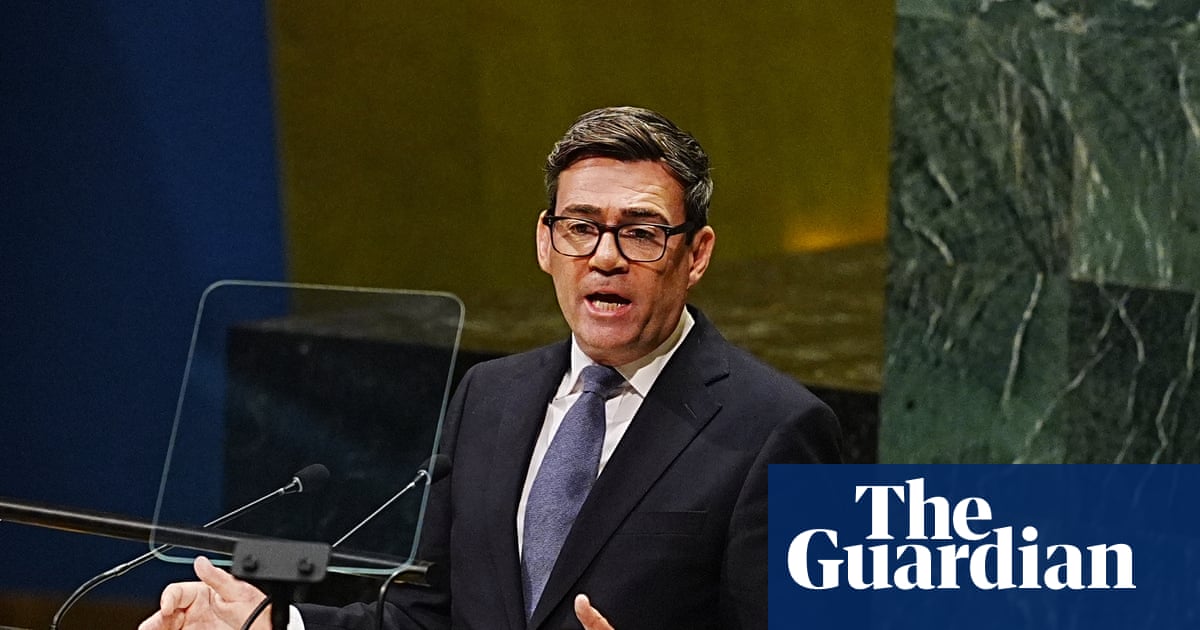
LONDON — Prime Minister Andy Burnham has announced the creation of a new National Centre for Information Defence, a dedicated cross-government body intended to protect the United Kingdom from disinformation, deepfakes and other forms of information warfare waged by hostile foreign powers, above all Russia. In a speech to the United Nations General Assembly in New York on Tuesday night, Burnham said the centre would “detect, attribute and disrupt” information attacks and would bring together intelligence agencies, law enforcement and social media companies in a co-ordinated effort to defend British interests. The prime minister warned that the UK had “tiptoed around” the threat for too long and had given too much ground to those who wanted to run a “negative, corrosive narrative” about life in Britain, one that bore no resemblance to reality. He described the campaigns as “insidious,” saying they reach into people’s homes and “twist what they feel about their own country and community – creating a narrative of decline, stoking division and sowing despair.” The new body, he added, would be tasked with making sure the UK has the defensive capability necessary to combat information warfare and with strengthening the ability of communities to identify and challenge false claims before they take root. It would also work to prevent a “distorted and untrue” story about Britain from gaining traction at home or abroad. Burnham said the country would have to enter the next decade “eyes wide open” about the scale of the challenge, and that faced with this kind of information warfare, “security starts in every home.” The centre is expected to focus heavily on the threat posed by AI-generated content, including realistic deepfake videos and fabricated news articles, which security chiefs believe will multiply the danger of state-backed manipulation in the coming years.
The prime minister’s announcement marks one of the most significant responses yet by a Western government to the growing use of artificial intelligence in hybrid warfare, and it signals a shift from reactive rebuttals to a more proactive, whole-of-society defence. Under the plans, the centre will draw on the expertise of Britain’s intelligence agencies and its cybersecurity bodies, working alongside police and regulatory authorities to expose foreign interference operations, remove malicious content and, where possible, take action against those responsible. It will also partner with social media companies to identify and suppress bot networks, fake accounts and coordinated campaigns that have been used to amplify far-right narratives and stoke divisions in British society. At the same time, Burnham said the centre would help build national resilience by supporting local institutions, universities, the media and civil society groups in detecting disinformation. He stressed that the goal was not simply to counter individual false stories but to address the broader ecosystem of manipulation, including forged branding of trusted British organisations, fabricated newspaper articles and fake websites designed to look like official sources. The prime minister said the UK had allowed hostile states to define the national story for too long, and that the new architecture would help Britain stand up more proudly for its values and the rule of law. He also suggested that Britain’s experience of being targeted by information attacks could be shared with allies, and that the UK was ready to help other democracies protect their elections and institutions from Russian interference. The speech was intended to send a clear message, both at home and abroad, that the era of treating disinformation as a secondary concern was over.
Burnham’s speech came after a public clash with the United States over how to deal with Moscow, with former US president Donald Trump claiming that the rhetoric of previous UK governments, including Keir Starmer’s administration, had been “too tough” towards Russia and that London “needs to be a little bit careful.” Trump made the remarks during a press conference at the UN alongside Ukraine’s president, Volodymyr Zelenskyy, in which he appeared to question the UK’s approach to the Kremlin. Downing Street quickly pushed back, saying that every UK prime minister, up to and including Burnham, had been consistent in the view that Russia’s threats, whether hybrid attacks or rhetoric, were “egregious and unacceptable.” The prime minister’s official spokesperson said the UK was united with its allies on the importance of defending itself, and that Russian aggression would not deter Britain from supporting Ukraine. The exchange underscored the delicate balance Burnham is trying to strike: maintaining the transatlantic alliance while taking a firm line against Moscow. His UN speech was partly designed to reassure European allies and other democratic partners that Britain would not soften its stance simply because of pressure from Washington. By placing the new National Centre for Information Defence at the centre of his vision, Burnham sought to demonstrate that Britain was prepared to act unilaterally and collectively against information threats, rather than waiting for consensus from other powers. He also made clear that the threat was not abstract; it was already affecting British elections, public discourse and social cohesion, and it would only get worse as artificial intelligence became more sophisticated and accessible.
In his speech, Burnham singled out Russia as the most active and dangerous perpetrator of information warfare, accusing the Kremlin of spending around £1.3bn each year on manipulating information. He said Russian agencies had “used every means at their disposal to spread lies and disinformation and prey on people’s fears,” including bots, fake websites and falsified newspaper articles. He also revealed that Russian operatives had forged the branding of 28 British organisations, including universities and the BBC, in an attempt to make their falsehoods appear credible. The prime minister accused Russia of amplifying far-right narratives and of seeking to interfere in the 2019 general election, and he said there was evidence that Moscow had tried to stoke tensions and unrest in the wake of horrific events. “The idea that anyone would try to use such things to their advantage is just repulsive – but it is what they do,” Burnham said. His remarks were among the most detailed and explicit public assessments of Russian tactics ever delivered by a serving British prime minister, and they amounted to a direct accusation that the Kremlin has waged a sustained and aggressive campaign against the UK. The focus on Russia will also shape the work of the new centre, which is expected to prioritise threats from Moscow while remaining alert to similar activities by other hostile states. Burnham said the UK could no longer afford to underestimate the danger, and that the new centre would put the country on a war footing against those seeking to attack its democracy. He also linked the fight against disinformation to broader national security, arguing that cyber-attacks on British companies and institutions were part of the same pattern of aggression.
Burnham also warned that certain groups of British people were particularly vulnerable to disinformation and deepfakes, especially those who felt their own lives were not improving. He suggested that people struggling with the cost of living, and young people not in education, employment or training, were more likely to be influenced by hostile narratives that blamed society or government for their problems. “If you’re struggling with the cost of living and your life is not improving – or if you’re a young person not in employment, education or training – then you are going to be much more vulnerable to this kind of influence,” he said. The prime minister argued that inequality weakened the country’s resilience to information warfare, and that the fight against disinformation could not be separated from the fight against poverty, homelessness and lack of opportunity. He said part of the challenge was to “lift our people up and create the opportunities they need,” adding that when inequalities grew too wide, societies were at greater risk. He promised to work to make life more affordable and to put in place the architecture needed to “stem this poisonous tide.” The emphasis on social conditions represented a notable broadening of the debate, moving beyond the technical details of content moderation and election security to the underlying economic and cultural vulnerabilities that make individuals receptive to false narratives. By framing the issue in this way, Burnham appeared to be arguing that national security policy and domestic social policy were inseparable. He also sought to reassure the public that the new centre would not be a tool of censorship, but rather an effort to empower citizens to think critically and to protect the democratic space from those who would exploit it.
The prime minister said the UK planned to share its experience of being on the receiving end of information attacks with other countries, and he revealed that Britain had already supported Moldova, for example, in protecting its elections from Russian interference. “As more elections approach across Europe, more nations are grappling with these issues – some for the first time. So we’re ready to share our understanding of how these actors work, and how we can respond – because this is vital for our collective security and resilience,” he said. The announcement was welcomed by Emily Thornberry, the chair of the foreign affairs select committee, who said the creation of the new centre was the major recommendation of the committee’s March 2026 report on disinformation diplomacy. “For too long, the approach of successive governments to disinformation has been disjointed and without organisation, allowing states like Russia to amplify lies about this country, to sow division and stoke tensions. This new National Centre for Information Defence is an opportunity to finally take on this very serious threat,” Thornberry said. Her endorsement underlined the cross-party consensus that had been building around the need for a more structured and co-ordinated response. The centre is expected to begin operations in the coming months, with an initial focus on mapping the full scale of foreign interference, identifying the most damaging campaigns and strengthening partnerships with allied nations. While sceptics will question whether a new bureaucracy can truly counter the anonymous and evolving tactics of state-backed operators, Burnham’s supporters argue that the centre represents a necessary and long-overdue step. The prime minister, for his part, made clear that he would not allow the UK to go into the next decade as it had gone into the last, with too little understanding and too little preparation. “No more,” he said. “We are going to face the new decade in a different way – with our eyes wide open. We are going to be much prouder in standing up for our values and the rule of law.”