


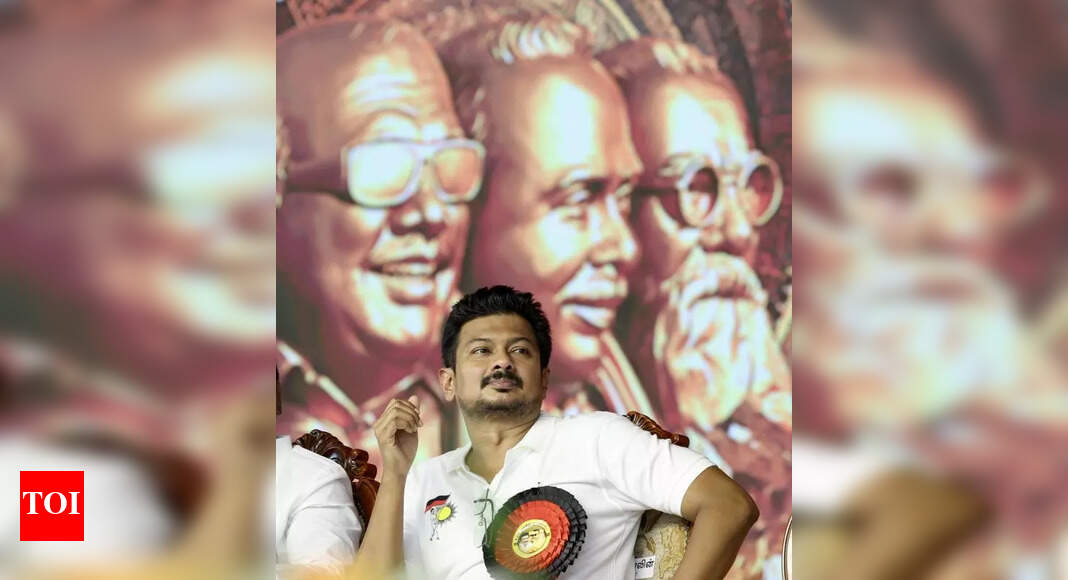
Udhayanidhi Stalin Accuses BJP, Right-Wing Groups of Spreading Disinformation and Hate Speech
CHENNAI – Tamil Nadu Deputy Chief Minister Udhayanidhi Stalin launched a scathing attack on the Bharatiya Janata Party (BJP) and right-wing organizations, accusing them of systematically disseminating disinformation and hate speech through social media platforms. Speaking at the closing ceremony of a three-day social media awareness program for National Service Scheme (NSS) students in Chennai, Stalin emphasized the deliberate and malicious nature of these campaigns, designed to sow discord and manipulate public opinion.
Stalin distinguished between misinformation, which is spread unintentionally, and disinformation, which is propagated with malicious intent. He argued that while both can be harmful, disinformation poses a graver threat due to its calculated nature. He further alleged that these disinformation campaigns are frequently accompanied by hate speech targeting minority communities, exacerbating societal divisions and fostering an environment of distrust.
The Deputy Chief Minister shared a personal anecdote to illustrate the dangers of manipulated narratives. He recounted an incident from three years prior where his remarks on equality were deliberately misconstrued and spread as advocating for genocide. This distortion, he claimed, led to two religious figures placing a bounty on his head. While they later apologized, Stalin refused to accept it, highlighting the severity of the false accusations and the potential for real-world consequences stemming from online distortions.
Stalin’s condemnation of online disinformation and hate speech comes amidst growing concerns about the proliferation of fake news and its impact on democratic processes. The rise of social media has created an environment where information, both accurate and fabricated, spreads rapidly, often making it difficult for the average citizen to discern truth from falsehood. Experts warn that this vulnerability can be exploited by malicious actors to manipulate public opinion, incite violence, and undermine trust in institutions.
This is not the first time the ruling Dravida Munnetra Kazhagam (DMK) party in Tamil Nadu has clashed with the BJP and right-wing groups over online narratives. The two parties have frequently engaged in heated exchanges on social media, accusing each other of spreading propaganda and misinformation. The DMK has been particularly critical of what it perceives as attempts to impose a Hindutva ideology on the state, while the BJP has accused the DMK of engaging in appeasement politics and neglecting the interests of the Hindu majority.
The issue of online disinformation and hate speech is a complex one, with no easy solutions. Governments around the world are grappling with how to regulate online content without infringing on freedom of speech. While some argue for stricter regulations and greater oversight of social media platforms, others express concerns about censorship and the potential for abuse of power. Finding a balance between protecting free speech and combating harmful content remains a significant challenge. Stalin’s remarks highlight the urgency of addressing this issue and the need for greater media literacy and critical thinking skills among citizens to navigate the increasingly complex online landscape.