






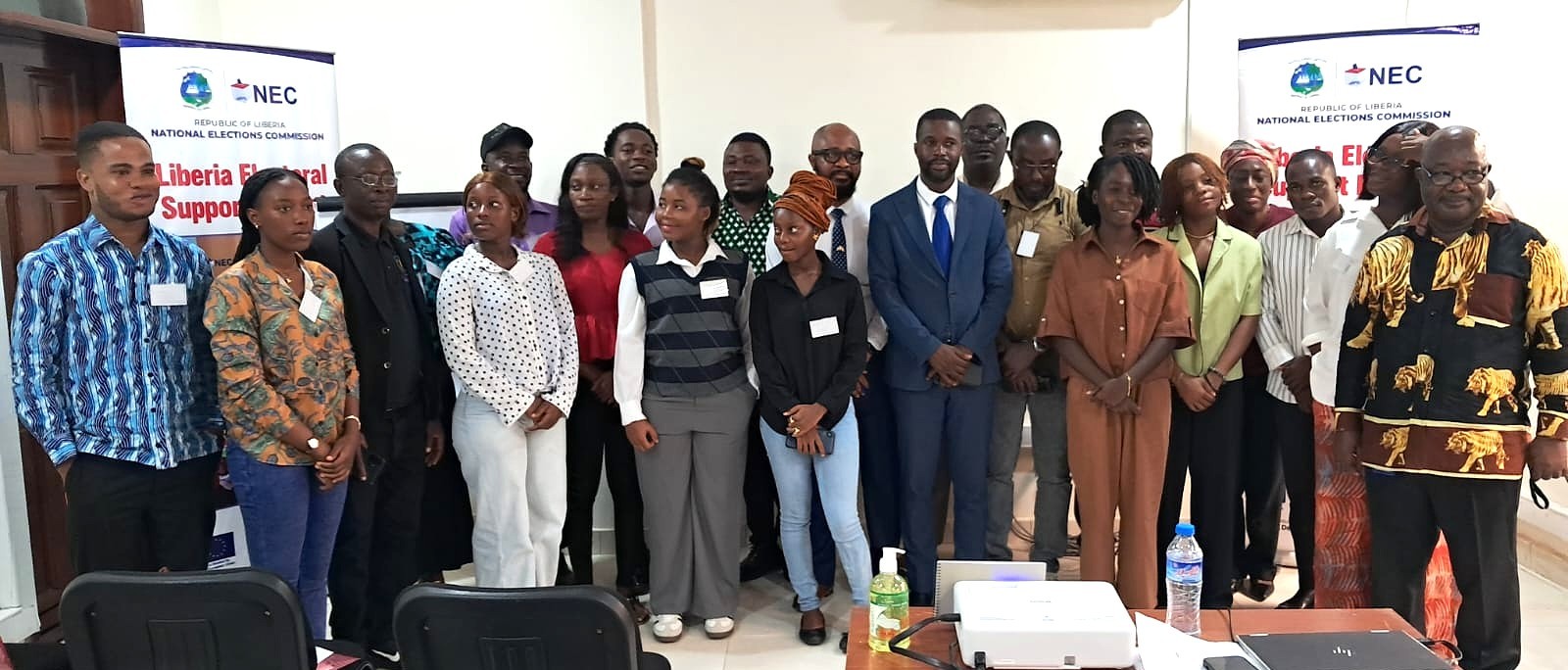
MONROVIA, Liberia, August 14, 2026 – In a decisive move to safeguard the integrity of Liberia’s democratic processes in the digital age, a dynamic cohort of eighteen young Liberians has successfully completed an intensive training program dedicated to media and information literacy (MIL). The diverse group, comprising student journalists, representatives from various political parties, youth-led organizations, and civil society activists, convened on August 12 at the headquarters of the National Elections Commission (NEC) in Monrovia. The overarching objective of this high-stakes workshop was to equip these emerging leaders with the critical skills needed to identify, analyze, and counter the pervasive threats of misinformation and disinformation that have increasingly plagued electoral landscapes across the West African subregion. Over the course of the day-long session, participants delved into the nuanced mechanics of digital manipulation, learning to critically evaluate the veracity of online content, verify sources, and understand the psychological and social mechanisms that allow false narratives to spread virally. The initiative represents a proactive effort to cultivate a generation of discerning digital citizens who can navigate the complex online ecosystem responsibly, ensuring that digital platforms are used not as weapons of division, but as tools for promoting transparent, peaceful, and credible democratic participation. This training comes at a critical juncture as Liberia prepares for its future electoral activities, where the battle for public perception is increasingly fought in the digital realm.
The training marked the second edition of the “Media and Information Literacy for Democracy: Strengthening Youth Participation through Information Literacy” workshop, a collaborative initiative designed to build a resilient information ecosystem. The program is meticulously implemented by the United Nations Development Programme (UNDP) through its Liberia Electoral Support Project (LESP), a comprehensive framework intended to bolster the nation’s electoral cycles. This ambitious endeavor is executed in close partnership with the National Elections Commission (NEC), the Press Union of Liberia (PUL), and the grassroots-focused organization Local Voices Liberia. The financial backing for this critical democratic investment is generously provided by a consortium of international partners, including the European Union, Ireland, and Sweden, reflecting the global community’s stake in the stability and democratic health of Liberia. The collaboration underscores a shared recognition that electoral integrity is no longer solely determined by physical ballot security, but by the mental fortitude of voters to withstand an onslaught of digital deception. By bringing together the NEC’s institutional authority, the PUL’s journalistic expertise, and the community reach of Local Voices, the workshop aims to create a holistic shield against the rising tide of disinformation. The participation of political party representatives alongside civil society actors is particularly strategic, fostering an environment of cross-partisan dialogue and shared commitment to the rule of law and fair play, signaling a departure from divisive politics toward a unified defense of democratic norms.
During the opening ceremony, key figures underscored the existential importance of media literacy for Liberia’s future, setting an urgent tone for the deliberations. Roosevelt Zayzay, the Project Officer for the Liberia Electoral Support Project, articulated the profound vision behind the initiative, framing it as a strategic investment in the nation’s democratic resilience. “It is an investment in a new generation of informed digital citizens who will champion truth, promote peaceful civic engagement, and strengthen the resilience of Liberia’s democracy,” Zayzay declared to the assembled participants. He diligently urged the young attendees to transcend the confines of the seminar room, charging them to act as multipliers by taking the acquired knowledge back to their respective schools, universities, grassroots organizations, and sprawling online networks. Echoing this sentiment from an institutional perspective, Beatrice Jlopleh, the Deputy Director of Communications for the National Elections Commission, delivered a stark warning about the impending electoral period. Jlopleh stressed the critical importance of using digital platforms responsibly, cautioning that while the youth are highly active online, such engagement makes them vulnerable to exploitation. “Use these platforms positively to impact your generation,” she admonished. “Elections are ahead, and while young people are active online, it is important not to allow others to misuse you.” Her remarks served as a potent reminder that political actors often deploy sophisticated tactics to weaponize naive youth as unwitting agents of misinformation, turning them into pawns in dangerous propaganda campaigns that can incite violence or undermine public confidence in electoral results.
The discourse was further elevated by Julius Kanubah, the President of the Press Union of Liberia, who situated the issue of media literacy firmly within the broader context of national security and democratic backsliding. Kanubah forcefully articulated that empowering citizens with the ability to discern fact from fiction is a fundamental bulwark in protecting the very essence of democracy. He highlighted that Liberian youth are not merely passive consumers of technology but are active creators, innovators, and the potential future leaders whose digital fluency can be harnessed to positively influence governance and national development. However, Kanubah also acknowledged the dark side of this digital revolution, calling for a vigorous and sustained confrontation with the systemic ills of misinformation, disinformation, cyberbullying, and online harassment. He emphasized that these digital offences often disproportionately target vulnerable voices, thereby silencing dissent and skewing public discourse. Crucially, Kanubah issued a compelling appeal for inclusivity within Liberia’s digital transformation agenda. He implored stakeholders to ensure that the significant barriers to digital access and literacy do not exacerbate existing inequalities, demanding that deliberate efforts be made to include rural youth, women, and persons with disabilities in these vital capacity-building initiatives. His call for intersectionality highlights a growing concern that if left unchecked, the digital divide could create a two-tiered citizenship where only the urban and elite are equipped to participate meaningfully in the digital public square, leaving marginalized groups even more susceptible to manipulation.
Beyond the high-level remarks from dignitaries, the workshop itself was strategically interactive and participatory, designed to ensure that theoretical knowledge was translated into practical skills which participants could deploy immediately. Among the eager learners was Sarahlyn Suntay, a promising student at the Peter Quaqua School of Journalism, who expressed a profound desire to strengthen her understanding of media literacy, cyberbullying, and the ethical obligations of responsible internet use. She recognized that accurate reporting in the digital age requires rigorous efforts to debunk viral falsehoods. Similarly, Raymond C. Myers, representing Youth Aid Liberia, articulated his intent to deepen his knowledge of digital ecosystems and apply the lessons learned to foster a culture of responsible online engagement among his peers as the nation braces for future electoral contests. To achieve these goals, the facilitators guided participants through an examination of the influential role that both traditional and digital media play in shaping civic participation. The curriculum extensively covered the nuanced threats posed by misleading content, drawing clear distinctions between misinformation (spread without malicious intent) and disinformation (deliberately crafted to deceive). Participants engaged in dynamic practical exercises, immersive group discussions, and analyzed real-world case studies adapted from credible educational frameworks. The materials were carefully sourced from the UNDP’s comprehensive Youth Civic and Political Participation Curriculum alongside UNESCO’s innovative “Journey through the MILtiverse” toolkit—a specialized resource designed to allow young people to explore the media landscape through interactive storytelling and problem-solving scenarios, thereby making the learning process both engaging and deeply effective.
Looking ahead, the significance of this training extends far beyond the immediate participants, representing a critical building block in a long-term strategy to fortify Liberia’s democratic institutions against manipulation. This workshop constitutes the second phase in a carefully structured three-part series meticulously crafted to develop a robust network of young digital ambassadors capable of promoting peaceful dialogue, bolstering electoral integrity, and supporting the nation’s democratic resilience on a nationwide scale. The catalyzing force behind this initiative, the Liberia Electoral Support Project, is comprised of a consortium of international bodies. Managed by the UNDP, the project is implemented in strategic partnership with UN Women and the Netherlands Institute for Multiparty Democracy (NIMD), all operating in close collaboration with the NEC and sustained by the generous financial support of the European Union, Ireland, and Sweden. This comprehensive support framework ensures that the training of these eighteen youths is not an isolated event but a sustainable movement. By empowering these young leaders with the cognitive tools to deconstruct propaganda, the project is effectively building a human firewall against the divisive forces that threaten to destabilize the nation during heated political contests. The investment in these eighteen individuals is therefore an investment in the future of Liberia itself—a commitment to ensure that the nation’s sovereignty is not undermined by external or internal actors seeking to manipulate the truth, and that the democratic will of the people is expressed freely, informed by facts, and protected from the corrosive influence of digital deception. As Liberia counts down to its next elections, these newly minted digital ambassadors stand ready to champion a new standard of integrity and responsibility in the public sphere.


