








Paragraph 1: The Escalating Threat of Disinformation in Philippine Democracy
As the Philippines hurtles toward another critical electoral cycle, the specter of organized disinformation looms larger than ever, casting a long and dangerous shadow over the integrity of the democratic process. With national elections now less than two years away, the digital landscape—already saturated with troll farms, coordinated inauthentic behavior, and weaponized narratives—is set to become a veritable battleground for public perception. The problem is not merely the existence of false information; it is the sophisticated, industrialized nature of its production and dissemination. Malicious actors have perfected the art of exploiting algorithmic amplification, social media echo chambers, and deep-seated societal divisions to manipulate public opinion, suppress dissent, and erode trust in established institutions. The experience of previous election cycles has demonstrated that disinformation is not a random byproduct of the internet but a calculated tool wielded by political operatives and their patrons to shape outcomes, often at the expense of factual reporting and informed voter choice. This has led to a palpable sense of fatigue among journalists, civil society groups, and ordinary citizens who find themselves drowning in a sea of fabricated news, manipulated videos, and maliciously edited content. The upcoming election, therefore, is not just a test of political platforms, but a test of the nation’s resilience against a psychological warfare campaign designed to fracture the public sphere. Recognizing this imminent danger, various sectors of society have clamored for legislative intervention, arguing that the state must take a more proactive stance to safeguard electoral integrity. Yet, as the pressure on lawmakers intensifies, so too does the risk of overcorrecting in a manner that could fundamentally undermine the constitutional guarantees of free expression and press freedom, creating a dual crisis where the remedy might be as dangerous as the disease itself.
Paragraph 2: The Congressional Awakening: A Double-Edged Sword
Amidst this troubling backdrop, there is a glimmer of recognition from the Philippine legislature, which appears finally poised to act on the longstanding calls to address the blight of disinformation. The “good news,” as highlighted by Rappler columnist John Nery, is that Congress is no longer ignoring the issue; the legislative mill has begun to churn out proposals aimed at combatting the information disorder plaguing the nation. This newfound political will is a testament to the tireless advocacy of investigative journalists, academic researchers, and grassroots organizers who have spent years documenting the devastating impact of fake news on Filipino society. For the first time in years, there is a tangible possibility that a legal framework could be established to penalize the deliberate spread of falsehoods. However, the optimism accompanying this legislative awakening is severely tempered by the actual substance of the proposed measures. The “terrible, horrible, no good, very bad news” lies in the drafting of these pending bills, particularly House Bill 9465, which have been described by experts and media advocates as dangerously flawed, overbroad, and fundamentally atrocious. The apparent urgency to pass something has created a permissive environment for poorly constructed legislation that conflates illegal content, harmful content, and merely unwelcome speech. Instead of targeting the sophisticated networks and financing structures that enable large-scale disinformation campaigns, these bills often focus on criminalizing the individual act of sharing false information, which carries a chilling effect on critical discourse and satire. The legislative process, rather than being a deliberative body weighing the delicate balance between security and liberty, appears to be rushing toward a punitive approach that threatens to vest immense discretionary power in the state to police truth—a concept that is almost impossible to define in legal terms without veering into authoritarian censorship.
Paragraph 3: The Perils of House Bill 9465 and the Chilling Effect on Free Speech
The core of the problem, exemplified by House Bill 9465, lies in its vague definitions and sweeping criminal penalties, which legal experts and journalist groups have universally condemned. The bill, framed as an anti-false content measure, relies on terms like “false information” or “dishonest content” without establishing clear parameters for what constitutes deliberate intent versus mere error, opinion, or satire. This inherent ambiguity effectively criminalizes the messy and dynamic nature of public discourse. Under such a law, a citizen sharing a dubious meme, a journalist publishing a breaking story that later requires correction, or a critic making a hyperbolic political comment could all potentially be subjected to imprisonment or heavy fines. The legislation fails to recognize that the marketplace of ideas, absent government intervention, historically operates on a correction mechanism where falsehoods are eventually debunked. By shifting the burden of proof onto the individual speaker and threatening punitive consequences, the bill creates a profound chilling effect—not just on the purveyors of disinformation, but on every Filipino who dares to speak out against the government. Furthermore, the enforcement of such vague laws is highly susceptible to selective prosecution. In a political landscape where the incumbent administration possesses immense power and influence over the justice system, a law like HB 9465 could be weaponized to harass dissenters, opposition politicians, and unfriendly media outlets, effectively silencing them under the guise of protecting the public. The danger is not abstract; similar laws in other jurisdictions have been exploited by autocratic leaders to bury legitimate criticism under a mountain of legal harassment. Thus, the proposed “solution” risks dooming the Philippine democracy to a state of pervasive self-censorship, where fear of prosecution replaces rigorous fact-checking and public accountability.
Paragraph 4: The Voices of Authority: Paraan and Fallorina on the Frontlines
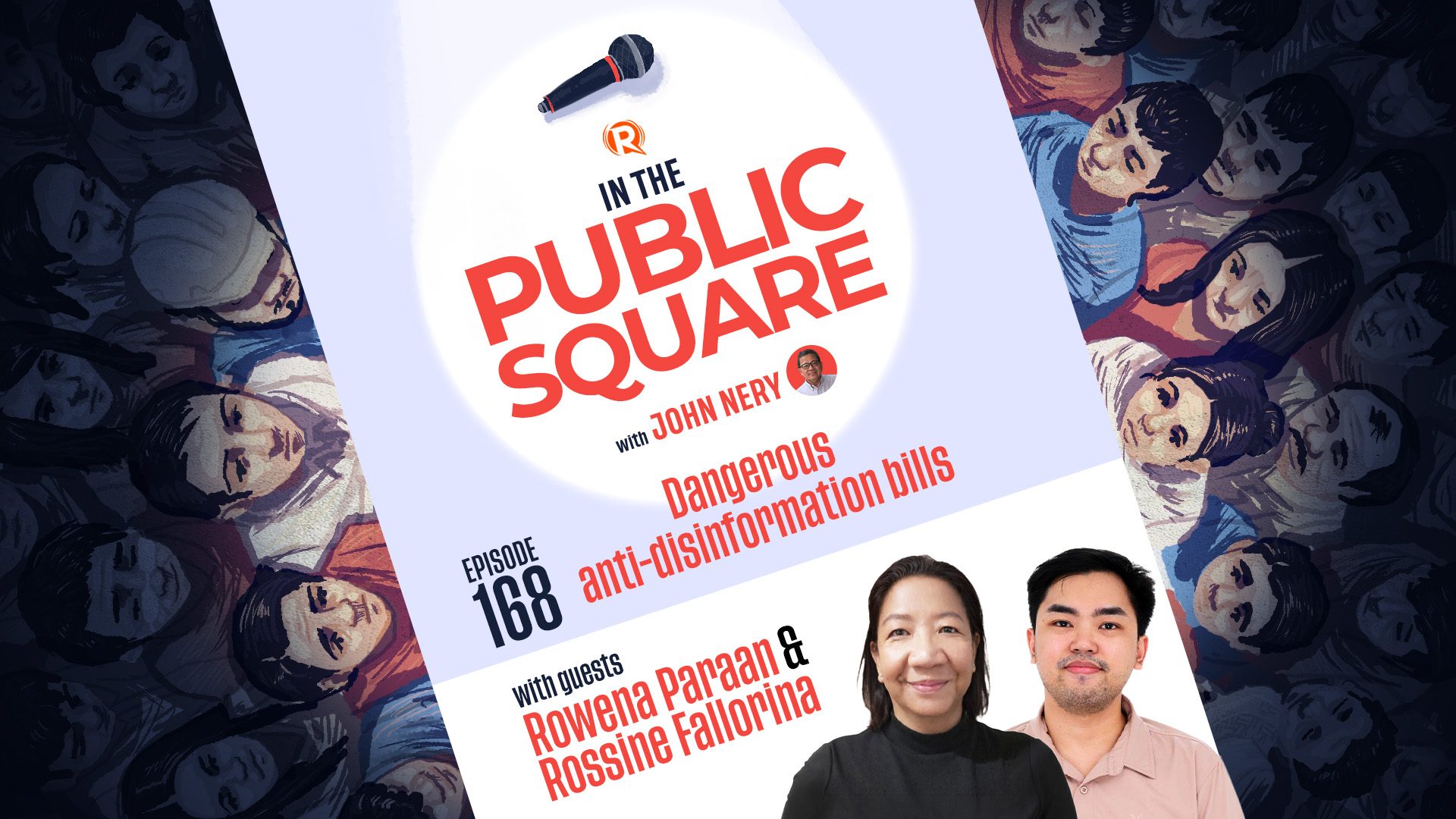
It is precisely this imminent danger that prompted journalist Rowena Paraan of the Movement for Media Safety PH and training director of the Philippine Center for Investigative Journalism, alongside Rossine Fallorina, managing director of Sigla Research Center, to join forces with John Nery to dissect the implications of these congressional initiatives. Their involvement brings a critical façade of empirical evidence and on-the-ground experience to the conversation. Paraan has spent her career defending media practitioners under siege, documenting the systematic attacks—both physical and digital—that plague investigative reporters in the Philippines. Her perspective highlights the irony that a bill intended to protect society from falsehoods would actually create a graver risk for the very individuals tasked with uncovering the truth. If journalists fear that their work could be retrospectively adjudicated as “false” by a court, they will inevitably self-censor investigative pieces that challenge powerful interests. On the other hand, Fallorina’s background with Sigla Research Center provides the data-driven analytical lens needed to understand how disinformation is engineered and spread. Her research likely underscores the fact that the drivers of disinformation are not confused citizens sharing posts, but coordinated networks funded by political machinery. By focusing legal penalties on individual users, the bills entirely miss the systemic issues—platform opacity, algorithm transparency, and the economic profitability of virality. Together, Paraan and Fallorina represent a coalition of newsroom veterans and academic researchers who recently issued a powerful joint statement cautioning against the pending bills. Their collective warning is clear: the fight for a clean information space requires structural reforms in platform governance and media literacy, not the blunt instrument of criminal law that will inevitably be turned against the most vulnerable voices in society.
Paragraph 5: Rejecting Censorship in Favor of Structural Resilience and Digital Literacy
If punitive legislation is the wrong path, what then is the appropriate course of action to mitigate the scourge of disinformation? The panelists advocate for a shift away from prosecutorial approaches toward a multi-stakeholder strategy that fortifies the public’s cognitive defenses and forces accountability from the digital platforms that currently serve as distribution systems for malevolent content. Instead of state-driven fact-checking bodies, which are inherently susceptible to political capture, the emphasis must be on empowering independent media ecosystems and supporting non-governmental fact-checking organizations that operate with editorial autonomy. Furthermore, the onus must be placed squarely on the tech giants—Meta, Google, and X (formerly Twitter)—to expose their recommendation algorithms to independent audit and to enforce transparent content moderation policies that do not violate due process. The structural incentives that reward viral sensationalism must be dismantled, or at the very least regulated through mechanisms like data transparency requirements. Simultaneously, a massive, sustained investment in media and information literacy campaigns is urgently needed. Revolutions in civic education curricula are necessary to help Filipino citizens—particularly the youth—recognize the hallmarks of disinformation, verify sources, and understand the difference between bias, opinion, and fact. This resilience-based approach is arduous, slow, and requires significant funding, which makes it less appealing to politicians seeking quick legislative victories. However, it is the only strategy that preserves the constitutionally protected right to speak and disagree. The panelists’ argument forces a crucial question to the forefront: is the belief in democratic pluralism strong enough to tolerate the temporary existence of false speech in exchange for enduring liberty, or will the state’s impulse to control the narrative become a permanent and dangerous fixture of Philippine governance?
Paragraph 6: A Critical Discourse Awaits: In the Public Square
This intense ideological collision between those demanding swift legal action and those warning against catastrophic overreach will be thoroughly examined in the upcoming episode of “In the Public Square,” airing on Rappler this Wednesday, August 26, at 8 PM. Host John Nery promises a nuanced conversation that digs deeper than the headlines, unpacking the legal minutiae of House Bill 9465 while contextualizing it within the broader global push for algorithmic accountability and platform regulation. The episode seeks to serve as a crucial public service, equipping citizens with the contextual understanding necessary to critically evaluate the proposals emerging from their leaders. By bringing together the seasoned journalistic grit of Paraan and the analytical rigor of Fallorina, the program aims to expose the fault lines in the current legislative approach and to advocate for a more principled, rights-respecting alternative. The fundamental takeaway from the discussion is a call to vigilance. As the 2025 elections draw near, disinformation will inevitably intensify, and the temptation to enforce silence will grow concurrently. The public must be wary of those who cloak censorship in the language of protection. The upcoming dialogue is not merely an academic exercise; it is a urgent briefing for a citizenry on the brink of a major democratic test. It challenges Filipinos to demand that their lawmakers resist the allure of authoritarian quick fixes and instead commit to the difficult, decentralized work of building an informed electorate. In doing so, the episode reinforces the notion that in a democracy, the antidote to bad speech is not the suppression of speech, but more and better speech, fortified by truth and empowered by robust legal protections. The future of Philippine democracy may very well hinge on whether its people aggressively oppose these well-intentioned but deeply flawed legislative initiatives.


