


India Delivers Decisive Blow to Terrorism with Operation Sindhoor, Pakistan Resorts to Disinformation Campaign
In a swift and decisive operation codenamed Operation Sindhoor, India’s armed forces launched precision strikes against nine key terrorist bases nestled within Pakistan and Pakistan-occupied Kashmir (PoK). This operation, aimed at dismantling terrorist infrastructure and neutralizing threats emanating from these regions, marked a significant escalation in India’s counter-terrorism efforts. The targets, meticulously selected based on intelligence inputs, were successfully neutralized, dealing a severe blow to terrorist organizations operating across the border. While the full extent of the damage inflicted remains undisclosed, initial reports suggest a substantial disruption of terrorist networks and capabilities.
Pakistan, reeling from the unexpected and impactful nature of Operation Sindhoor, immediately embarked on an aggressive disinformation campaign aimed at mitigating the reputational damage and projecting a false narrative of strength and retaliation. Leveraging the pervasive reach of social media, Pakistani authorities and state-affiliated media outlets disseminated a barrage of fabricated claims, attempting to portray India as the aggressor and downplay the success of the operation. These disinformation efforts represent a desperate attempt to control the narrative and deflect international scrutiny from Pakistan’s continued harboring of terrorist groups.
Within hours of the successful completion of Operation Sindhoor, a wave of misinformation flooded social media platforms, primarily originating from accounts linked to the Pakistani military’s media wing, the Inter-Services Public Relations (ISPR). Among the most prominent falsehoods propagated were claims of Pakistani missile strikes on fifteen Indian locations, the destruction of the Srinagar Air Base by the Pakistani Air Force, and the complete annihilation of an Indian Army brigade headquarters. These claims, devoid of any verifiable evidence, were amplified through a network of coordinated accounts and amplified by mainstream media outlets within Pakistan.
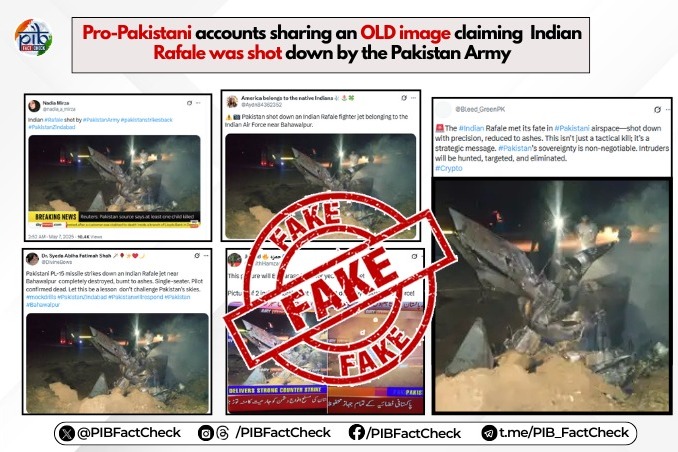
The Indian government, through its official fact-checking unit, the Press Information Bureau (PIB) Fact Check, actively countered the spread of misinformation. PIB systematically debunked the fabricated claims circulating online, providing evidence-based rebuttals and exposing the manipulated content. For instance, a viral video purporting to show the Srinagar Air Base under attack was debunked by PIB, revealing its origins as footage from a 2024 religious clash in Khyber Pakhtunkhwa, Pakistan. Similarly, claims regarding the destruction of an Indian Army brigade headquarters were categorically dismissed as fabricated.
Pakistan’s disinformation campaign extended beyond fabricated claims to include the dissemination of manipulated visuals. Photos and video clips, either digitally altered, taken out of context from past events, or entirely unrelated to the current situation, were circulated to create a false impression of retaliatory strikes. Despite the lack of credible evidence, these manipulated visuals were widely broadcast by mainstream media outlets within Pakistan, further fueling the disinformation campaign and misleading the public. This coordinated effort to manipulate public perception highlights the extent to which Pakistan is willing to go to obscure the truth and project an image of strength.
The Indian government has appealed to its citizens and media organizations to exercise caution and rely solely on official government sources for accurate information. This appeal underscores the critical need for media literacy and responsible information consumption in the face of orchestrated disinformation campaigns. International analysts observing the situation have noted that Pakistan’s resort to fabricated propaganda, in the wake of a successful Indian counter-terrorism operation, further undermines its credibility on the global stage. This desperate attempt to control the narrative not only exposes Pakistan’s vulnerability but also reinforces concerns about its continued support for terrorist organizations operating within its borders. The incident serves as a stark reminder of the challenges posed by disinformation in the modern information landscape and the importance of critical thinking and fact-checking in navigating the complexities of international relations. As tensions escalate, it remains crucial for the international community to uphold the principles of truth and transparency and hold accountable those who engage in the spread of disinformation. The long-term implications of Pakistan’s actions remain to be seen, but the immediate fallout underscores the fragility of regional stability and the urgent need for de-escalation and a commitment to verifiable facts.