


Here is a comprehensive summary of the provided analysis, structured as a six-paragraph news article.
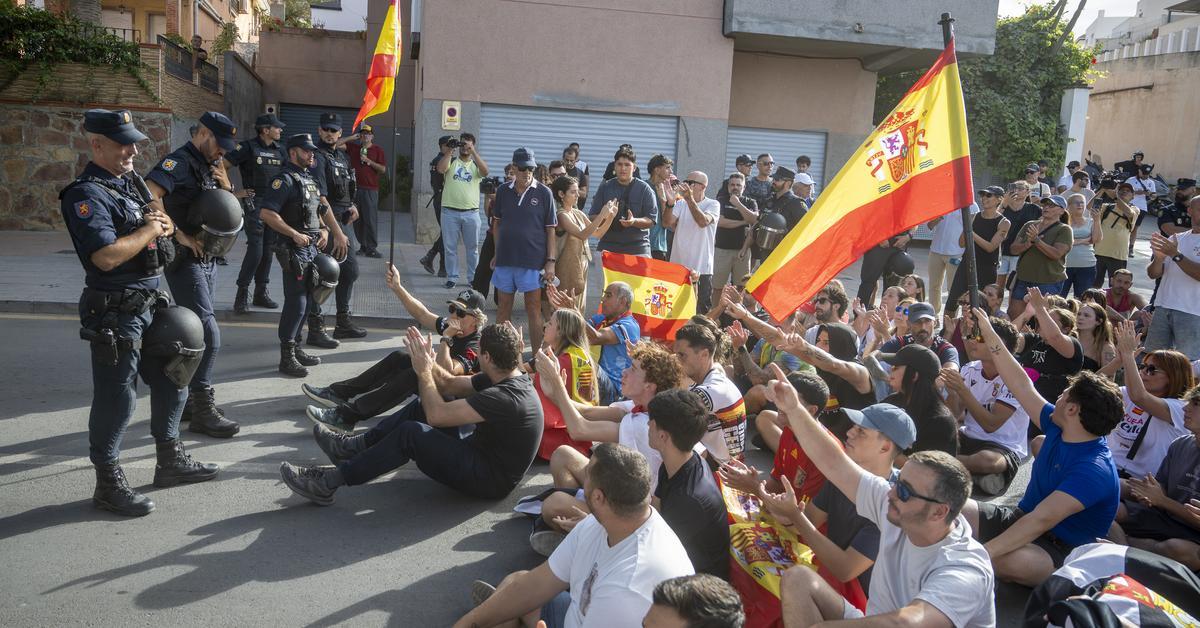
Tensions erupted in the Spanish enclave of Ceuta this week as mobile phone footage captured young Spanish residents waving national flags and physically blocking the passage of humanitarian aid trucks operated by the Red Cross. In a parallel escalation, the same crowds reportedly stormed a makeshift migrant camp located on Benítez beach, setting fire to the scant belongings of those sheltering there. These scenes of nationalist anger have gone viral, exposing a deeply volatile situation that pits local citizens against migrants during a period of intense migratory pressure. The attacks mark a dangerous breakdown of civil order, turning what should be neutral humanitarian distribution points into flashpoints of violent confrontation and placing the Red Cross operations directly in the crossfire of public rage.
The political reaction within Ceuta has sought to reframe the narrative of blame and victimhood. Javier Celay, a deputy for the conservative Popular Party (PP) in the city, publicly issued a call for calm while simultaneously defending the actions of the protesters. In his remarks, Celay argued that the true victims of this crisis are the Spanish residents, not the migrants who entered the territory irregularly. He directly challenged the prevailing media narrative that depicts sub-Saharan migrants as the aggrieved party, asserting that the images show a community defending itself against “invaders.” According to his framing, while violence is inherently unacceptable, the moral weight of the situation rests with the perceived invasion, thereby repositioning the residents’ hostile actions as a justified, albeit extreme, reaction.
Commentators analyzing the events have placed significant blame on the Spanish government, characterizing its management of the influx as erratic and disastrous. The initial handling of the migration surge has been labeled a humanitarian failure that quickly morphed into a social and political catastrophe for the enclave. This administrative chaos created a power vacuum, allowing xenophobic and confrontational elements to dominate the streets without adequate state response or de-escalation. The central government’s inconsistency, critics argue, not only failed to resolve the immediate humanitarian needs but also legitimized a hostile atmosphere, setting the stage for the violent clashes witnessed against the humanitarian aid convoys and the migrant camp.
The digital battlefield has proven just as crucial as the physical one in shaping public perception. Data cited in the analysis reveals that approximately 40% of the conversation on the social media platform X (formerly Twitter) regarding the Ceuta events was generated in English, actively promoting a narrative centered on a “security collapse” and a “civilizational threat” to Europe. This coordinated online framing reached a massive global audience, significantly amplified by posts from tech billionaire Elon Musk. Musk’s contributions relating to the Ceuta crisis reportedly accrued over 724 million impressions within an 11-day period, effectively injecting international conspiracy theories and far-right rhetoric directly into a localized border conflict, thereby radicalizing the discourse beyond the control of Spanish authorities.
Geopolitical actors are also significantly pulling the strings behind the scenes. The analysis highlights Russia’s ongoing efforts to exploit fractures within the European Union, using the Ceuta situation to disseminate disinformation and drive a wedge between member states. Simultaneously, the shifting dynamics of transatlantic diplomacy are exposed, with Washington now being considered a principal partner of Morocco. In this new alignment, Morocco is purportedly leveraging the persistent pressure on the enclaves of Ceuta and Melilla to blackmail the Spanish government and the broader European Union. By weaponizing migration as a coercive tool, Rabat aims to extract political and economic concessions, effectively turning the crisis on Spain’s southern border into a bargaining chip in a larger game of international power politics.
Ultimately, the situation in Ceuta must be viewed as the intersection of multiple, compounding crises. The global far-right, acting in a coordinated manner across borders, sees these events as ammunition in their campaign to dismantle the European Union and undermine its foundational values of tolerance and the rule of law. The Spanish government, caught between erratic internal policy, the machinations of foreign disinformation campaigns on X, and the coercive threats from its southern neighbor, appears paralyzed and reactive. While the immediate physical violence may have subsided, the fused elements of local anger, manipulated social media algorithms, and great-power rivalry suggest that the Ceuta flashpoint is a grim preview of the hybrid warfare tactics being deployed to destabilize the EU’s southern frontier.