


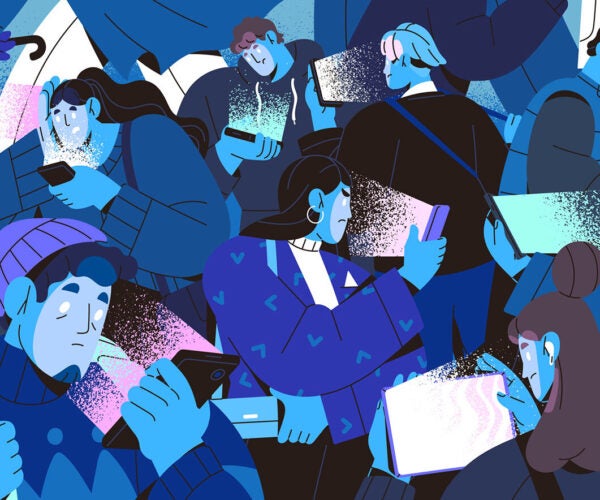
Biased News: A More Insidious Threat Than Fake News on Social Media
The proliferation of misinformation on social media platforms has become a significant concern in the digital age. While fake news, fabricated stories presented as genuine articles, has garnered considerable attention, a more insidious threat lurks within the digital landscape: biased news. Biased news, unlike outright fabrications, often contains a kernel of truth, but presents it through a distorted lens, promoting a specific agenda or viewpoint. This subtle manipulation can be far more dangerous than easily debunked fake news, as it subtly shapes public perception and reinforces pre-existing biases, often without the reader realizing they are being manipulated.
The insidious nature of biased news stems from its ability to exploit cognitive biases, the mental shortcuts our brains use to process information efficiently. Confirmation bias, the tendency to favor information that confirms pre-existing beliefs, plays a crucial role in the effectiveness of biased news. When individuals encounter news that aligns with their worldview, they are more likely to accept it uncritically, reinforcing their existing biases. This can lead to the formation of echo chambers, where individuals are primarily exposed to information that reinforces their perspective, further polarizing public discourse and hindering productive dialogue.
The difficulty in identifying biased news lies in its subtle presentation. Unlike fake news, which often contains easily verifiable falsehoods, biased news often uses selective reporting, omitting crucial details or presenting information out of context to create a misleading narrative. This subtle manipulation can be challenging to detect, especially for individuals who lack media literacy skills or the time to critically evaluate the information they consume. The sheer volume of information available online further exacerbates this challenge, making it difficult to discern credible sources from biased outlets.
The consequences of consuming biased news extend beyond individual beliefs and can have profound societal impacts. By reinforcing pre-existing biases and fostering polarization, biased news can erode trust in institutions, create societal divisions, and hinder constructive dialogue on critical issues. This can lead to political gridlock, social unrest, and even violence as individuals become entrenched in their own echo chambers and view opposing viewpoints as inherently threatening.
Combating the spread of biased news requires a multi-pronged approach. Media literacy education is crucial, equipping individuals with the critical thinking skills necessary to evaluate information objectively and identify bias. Social media platforms also have a responsibility to implement measures to combat the spread of biased news, such as fact-checking initiatives, promoting credible sources, and limiting the reach of biased outlets. Individuals can also contribute by diversifying their news sources, seeking out different perspectives, and critically evaluating the information they consume before sharing it online.
In conclusion, while fake news poses a considerable threat to the integrity of information online, the subtle manipulation of biased news presents a more insidious danger. By exploiting cognitive biases and subtly shaping public perception, biased news can reinforce pre-existing beliefs, foster polarization, and erode trust in institutions. Combating this threat requires a collective effort, involving media literacy education, responsible social media practices, and individual efforts to critically evaluate information and seek out diverse perspectives. Only through such collective action can we ensure a more informed and less polarized public discourse in the digital age.