








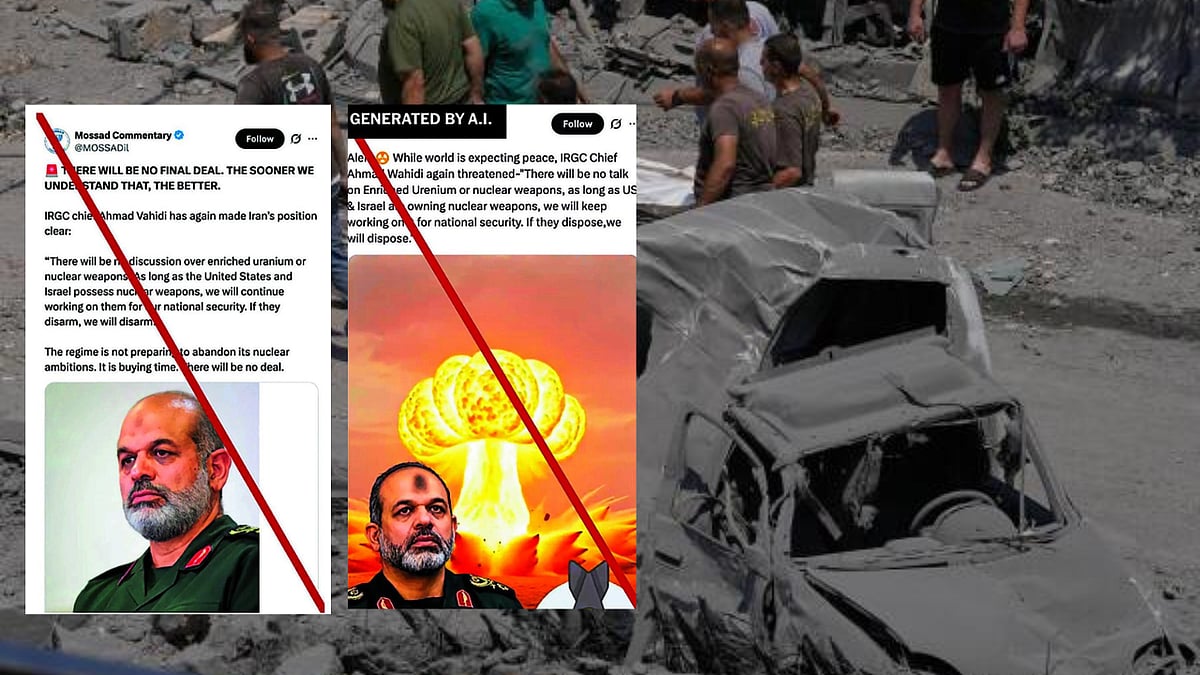
On Sunday, 16 August 2026, the spokesman for Iran’s foreign ministry, Esmail Baghaei, launched a sharp verbal attack against an unspecified “fake post” that he said was circulating against the Islamic Republic. Baghaei called the post “an example of the flood of lies against the Islamic republic” and, without offering any evidence, laid the blame squarely at Israel’s door. The remarks, as quoted in a brief report last updated at 22:42 Indian Standard Time, did not identify what the post was about, where it appeared, or why Mr. Baghaei concluded that Israel was behind it. However, the language and the timing fit a well-established pattern: Iran and Israel have long been locked in a covert and overt confrontation, and “fake news” has become a familiar weapon in that struggle. The absence of documentation did not prevent the statement from being presented as a definitive accusation. In diplomatic terms, to blame another country for a social-media post without producing evidence is a remarkable step, particularly for a foreign ministry spokesman. It suggests not only that the Iranian government considers the post damaging enough to warrant a public response, but also that it sees political value in framing the episode as a foreign conspiracy. For observers, the incident raises immediate questions: What exactly was the post? How did it come to the attention of Iranian officials? And why was Israel singled out? The report provides no answers. What is clear is that the Iranian foreign ministry has chosen to turn a potentially minor online event into a matter of official diplomatic complaint, signaling that disinformation is now at the center of a confrontation that stretches from cyberspace to the physical battlefield.
To understand the weight of Baghaei’s accusation, one must recall the longer history of Iranian-Israeli antagonism. Since the Islamic Revolution of 1979, Iran has refused to recognize Israel and has supported armed groups hostile to it, including Hamas and Hezbollah. Israel, in turn, has accused Iran of seeking nuclear weapons, a charge Tehran denies, and has carried out attacks on Iranian nuclear scientists, facilities, and military assets inside Iran and Syria. Over the years, both countries have used media manipulation, hacking, and targeted disinformation to advance their strategic interests. Israeli military and intelligence agencies have been accused of launching psychological operations aimed at destabilizing the Iranian government. Iran has likewise accused Israel of waging a “media war” designed to sow division among Iranians and to portray the Islamic Republic as an aggressive and irrational actor. In this context, a “fake post” blamed on Israel is not an exotic anomaly but rather a routine skirmish. The phrase “flood of lies” may sound like hyperbole, but for Iranian officials it describes a perceived campaign of false narratives about everything from Iran’s nuclear program to its economic troubles, its treatment of women, the Syrian civil war and the Gaza conflict. Each incident, real or imagined, is folded into a larger story of external hostility. That is why Baghaei’s statement did not need to cite specifics: for his intended audience, the very idea that Israel would spread lies is a self-evident truth. Yet for anyone outside that audience, the lack of detail is troubling. A public accusation made without evidence may be accepted by sympathizers and dismissed by skeptics, but it does little to establish facts or to foster accountability. Indeed, it risks turning every false post into a diplomatic incident and every incident into a political rallying cry.
Baghaei’s phrase “an example of the flood of lies” is worth parsing. It is not merely a complaint about a single post; it asserts that the post is part of a coordinated, sustained campaign. The word “flood” evokes images of overwhelming force, suggesting that the Iranian government sees itself under a siege of falsehood. By blaming Israel, Baghaei is activating a familiar narrative that Israel has endless capabilities in cyberwarfare and propaganda, and that it uses those capabilities to destabilize Iran from within. The absence of evidence, however, means that the accusation functions primarily as rhetoric. It seeks to delegitimize the content of the post before even addressing its accuracy. It also attempts to inoculate Iranian audiences against the post’s potential influence: if Israel is behind it, then nothing in it can be trusted. This is a classic technique in information warfare. One does not rebut an argument; one poisons the source. For foreign observers, this approach complicates the task of assessing the truth of the original claim. Since the original post is not described in the report, readers cannot judge whether it contains real information or misinformation. The Iranian spokesman has effectively asked the public to trust his characterization over the post itself. In many ways, this is the very nature of modern propaganda—both the post and Baghaei’s criticism are unverifiable from the available information. That uncertainty is perhaps the most dangerous element. A public that cannot distinguish between fake and official narratives becomes vulnerable to both. The foreign ministry’s decision to elevate a “fake post” to a matter of national importance also suggests that Iran is sensitive to any content that might expose contradictions in its domestic policies or reveal embarrassing details about its regional operations. The more fiercely an official denies something, the more curiosity it often generates.
The broader Middle East is already a laboratory for disinformation. Governments, militias, and outside powers have used social media platforms to spread fabricated images, false claims of military victories, and manipulated videos. In recent years, fact-checkers have documented hundreds of examples of fake photographs from Syria, Yemen, and Gaza that were recycled in different crises to make political points. Israel and Iran have been particularly active. Israel has openly acknowledged using psychological operations in some conflicts, while Iranian state media regularly broadcast stories accusing Israel and the United States of fomenting unrest. The fake post condemned by Baghaei may be part of this pattern, but without details it is impossible to place it precisely. Still, the incident highlights a central problem in the digital age: attribution is very difficult. A post can be created anonymously, amplified by bots, and shared by unsuspecting users before anyone knows who made it. Even when investigators trace an account to a specific IP address, proving that a state actor was responsible is another matter. Twitter, Telegram, Instagram, and other platforms do not routinely preserve provenance for every post. In this environment, a government can easily blame a hostile state without fear of being disproven. Iran has done this before, and Israel has also been accused of engaging in false flag operations. The result is an arms race in which the first casualty is the public’s ability to know what is true. Baghaei’s words, while dramatic, are also a reminder that official voices can be just as unreliable as anonymous accounts. The label “fake post” may be accurate, or it may be a convenient way to dismiss an inconvenient truth. Iran’s press laws restrict coverage of certain topics, so state media may avoid repeating the post’s content, making it even harder for ordinary Iranians to assess the controversy.
No Israeli response was cited in the report. Israeli officials typically dismiss Iranian accusations as baseless and often point to Iran’s own record of spreading disinformation. There was no indication in the brief report that the United Nations or any major government had commented on the incident, and the fallout is likely to remain limited for now. Without a credible request for an investigation, the accusation will probably remain another rhetorical exchange. However, the incident could have consequences for regional diplomacy. If Iran uses the “fake post” as a justification for new measures—such as stricter internet censorship, further restrictions on social media, or even punitive actions against journalists—then the allegations become more than words. Iranian state bodies have previously cited enemy “media invasion” to tighten cyber boundaries. A new wave of paranoia could further isolate Iranians from outside information at a time when many are already struggling with economic hardship. Domestically, Baghaei’s statement may serve to rally loyalists and distract from pressing issues like unemployment and inflation. Externally, it may be seen as another sign that Tehran is unwilling to engage in good-faith dialogue. The fact that the report ends with a timestamp—22:42 IST—rather than any follow-up suggests that the story is still developing, but it may also be a one-day wonder. In the absence of evidence, independent analysts and journalists will find it difficult to do more than report the accusation. The real impact will depend on whether the “fake post” resurfaces, whether Israel responds, and whether Iranian officials produce any proof. Until then, the episode is best understood as a small but revealing moment in the ongoing information war between Iran and Israel.
In the end, the content of the “fake post” matters more than the accusation, but from the available report we cannot know what it said. Baghaei’s criticism, quoted by the foreign ministry, does not describe the post’s claims, platform, author, or reach. He simply condemns it and blames Israel. That is enough to make headlines, but not enough to make an informed judgment. A timestamp at 22:42 IST may suggest that the story is current, but it does not make the underlying claim verifiable. Perhaps the post was genuinely malicious—a fabricated image, a twisted quotation, or a hoax designed to inflame tensions. Perhaps it was a legitimate piece of information that officials preferred to label as fake. The Iranian foreign ministry has not shown its work. The most important lesson of this episode is that when officials accuse their enemies of lying without evidence, they ask the public to accept the conclusion on faith. That is a dangerous habit in any society, and especially dangerous in a region where propaganda has fuelled conflict for decades. To move beyond the fog, readers would need the original post, a date, a platform, and an independent analysis. Without those, the story must end in uncertainty. As the clock shows 22:42 IST on 16 August 2026, the only certain facts are that a spokesman has spoken, that he has blamed Israel, and that no evidence has been provided. The flood of lies—or allegations of lies—continues to rise.


