









Israel Braces for Cyberattacks, Disinformation, and Security Escalation as October Elections Approach, Officials Reveal Massive Operational Undertaking
With less than six weeks remaining before Israelis head to the polls on October 27, the country’s Central Elections Committee is mounting what officials describe as one of the most complex electoral operations in the nation’s history, according to a briefing held at the Knesset. Naomi Binyamini, a representative of the Central Elections Committee, detailed to reporters the full scope of the logistical, technological, and security measures now being put into place. The preparations extend far beyond the traditional challenges of running a national vote, encompassing an extraordinary expansion of personnel, thousands of tons of physical materials, and a sophisticated defense apparatus designed to counter an array of modern threats. Among the primary concerns outlined in the briefing were cyberattacks targeting the election infrastructure, coordinated disinformation campaigns, foreign influence operations, the malicious use of artificial intelligence to manipulate public opinion, and shock contingency plans for a major military or terrorist attack on Election Day itself. The scale of the undertaking is immense, and the margin for error is extraordinarily thin, as the committee seeks to protect the integrity of a democratic process involving millions of citizens under constantly evolving conditions of risk.
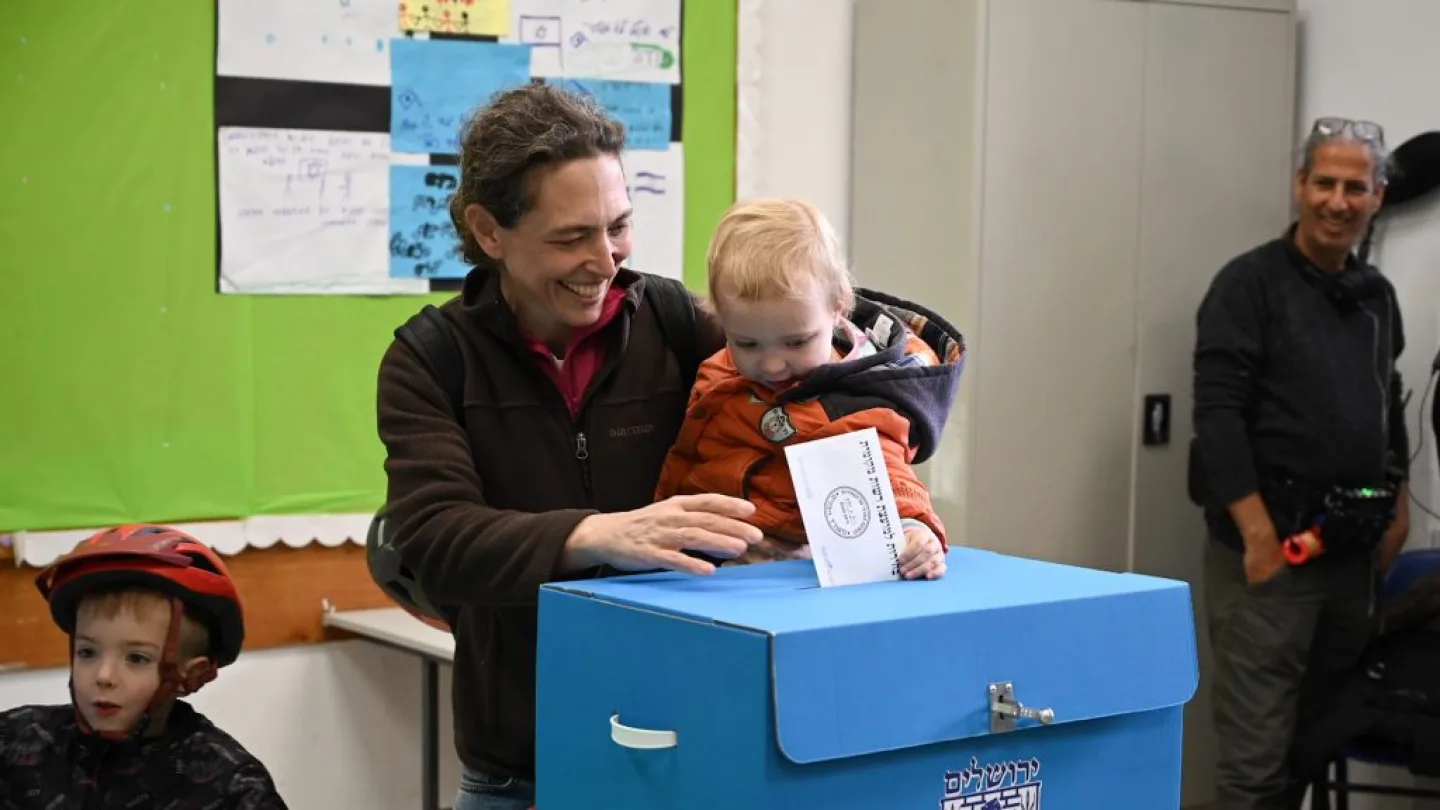
The sheer magnitude of the logistical effort required to host a national election in Israel was laid bare in the briefing, revealing a stunning transformation of the committee’s operational capacity. In peacetime, the Central Elections Committee typically functions with a modest staff of just 44 people. However, once an election is called, this skeleton crew initiates a massive recruitment drive that expands the workforce to approximately 1,500 additional employees during the preparation phase. On Election Day itself, the number of personnel involved in running the vote swells to nearly 100,000 individuals, a temporary army of state employees mobilized for a single, intensive day of civic activity. The physical requirements to support such a vast operation are staggering, with the committee ordering roughly 250 tons of ballot paper, 12 million voting envelopes, and approximately 18,000 ballot boxes. These materials are distributed across an intricate network of 12,525 standard polling stations and more than 6,000 special accessible polling stations, all operating under the authority of 20 regional election committees. Adding to the complexity, the committee is responsible for training about 52,000 election officials within a single month, a compressed and intense process designed to ensure that every polling station is staffed by workers who understand both the procedural rules and the emergency protocols that may be required on the day. This logistical juggernaut represents the mechanical heart of Israeli democracy, a system that must function flawlessly even under extraordinary stress.
Beyond the physical arrangements, the Central Elections Committee is focusing heavily on threats that emerge from the digital sphere, an area that has become a new frontier in the global battle for electoral integrity. Binyamini acknowledged to reporters that the committee is actively preparing for foreign influence operations, disinformation campaigns, and the use of artificial intelligence to manipulate voters, all of which have become prominent concerns in democratic elections worldwide. To address these risks, she confirmed the establishment of a dedicated monitoring team tasked with vigilant oversight of the information ecosystem. “There is a special team that monitors this matter and deals with it on an ongoing basis,” Binyamini said, adding that the team “checks and sees where there are attempts to improperly influence the opinion of the voters.” The committee is taking into account the possibility of direct influence and intervention by hostile foreign states, a threat that has been a growing concern in recent years given Israel’s geopolitical position. However, Binyamini highlighted that the handling of disinformation generated by rival domestic political campaigns remains a more complex and sensitive issue that is still under examination. The line between countering malicious interference and respecting free political speech is a delicate one, and the committee appears to be navigating this terrain with caution, focusing its immediate efforts on external actors while studying how to address internal disinformation threats without overstepping its mandate.
One of the most critical decisions revealed in the briefing concerns the choice to maintain paper ballots, a decision that runs counter to Israel’s status as a world leader in technological innovation. Binyamini explained that this choice is rooted in careful studies of cybersecurity risks, which have demonstrated that a cyberattack could have a far greater impact on an electronic voting system than on a traditional paper-based one. The fragility of digital voting infrastructure, which could be compromised at scale through a single successful intrusion, makes paper ballots a more resilient and verifiable option. Additionally, Binyamini noted that public trust in digital voting remains relatively low among Israeli citizens, reflecting a broader global skepticism. International experience, she pointed out, has shown that relatively few countries have fully adopted electronic voting, and many that have experimented with it have reverted to paper ballots owing to security and audit concerns. Nevertheless, the committee has not remained frozen in old methods, and it has introduced a number of technological safeguards to reinforce the integrity of the paper-based system. During the last election, an election-integrity inspector equipped with a dedicated camera was assigned to each polling station, providing live visual oversight of the voting process. Furthermore, a specialized application was deployed to enable the real-time reporting of any irregularities to the committee’s central command, creating a direct digital link between thousands of polling stations and a unified monitoring center, thereby combining the security of paper ballots with the power of modern communication technology.
The most serious contingency for which the committee is preparing involves the possibility of a major security attack on Election Day, a scenario that unfortunately cannot be dismissed in the current environment. Binyamini confirmed that the committee maintains a dedicated emergency team focused specifically on this risk, operating alongside the regular election machinery. Polling station workers receive detailed instructions on how to respond to rocket alerts and other emergencies, including how to maintain the integrity of the voting process during an attack and even how to handle the counting of ballots if a lockdown or evacuation is required. The training drills and safety protocols are designed to ensure that many different types of disruptions can be absorbed without fundamentally compromising the election. However, Binyamini was unequivocal about the limits of such preparations, stating that the decision on whether voting could proceed at all in the event of a broad attack would be made at a higher governmental level. “It will be impossible to hold elections when there is a major attack,” she said, offering a stark acknowledgment that some threats lie beyond the committee’s scope of control. This sobering statement underscores the delicate balance Israel must maintain, striving to hold a normal democratic process in a region defined by security volatility, while relying on higher authorities to make the final judgment calls in the event of a national emergency unfolding on voting day.
As the nation prepares for this monumental undertaking, approximately 6.8 million Israelis are eligible to cast their ballots in the October 27 election, a vote that will shape the political landscape of the country for years to come. The preparations described by the Central Elections Committee reflect a broader commitment to the resilience of democratic institutions, a commitment that is all the more significant given the wide array of threats that the country faces. From the recruitment of tens of thousands of temporary workers to the deployment of cyber-monitoring teams and the training exercises for rocket attacks, every detail of this operation is designed to preserve the fundamental principle that the will of the people must be expressed freely, securely, and credibly. The immense logistical mobilization, the careful weighing of digital versus physical voting methods, and the institutional acknowledgment of the dangers posed by foreign interference and artificial intelligence all point to a sober understanding that modern elections are a battleground for more than just votes; they are tests of a nation’s ability to govern itself in an era of technological vulnerability and geopolitical instability. Israel’s approach to these challenges, as outlined in the Knesset briefing, offers a comprehensive model of how a democracy can adapt its electoral machinery to meet the demands of a rapidly changing world, ensuring that even in the face of cyber threats, disinformation, and the unthinkable prospect of an attack on Election Day, the voice of the people will still be heard.


