









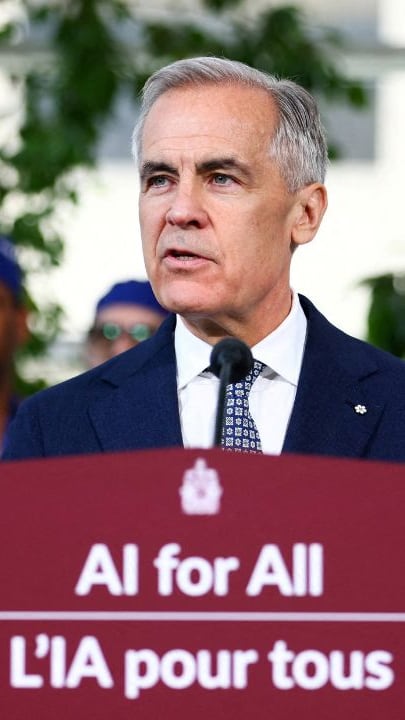
An AI-generated video of a prominent Canadian saying or doing something they never said or did once seemed like science fiction. Today, it can be produced by free apps in minutes serious.html deepfake — a synthetic image, video or audio clip in which a real person’s face, body or voice is digitally replaced or manipulated — has become one of the most alarming forms of online disinformation. But when a deepfake crosses the line from an obvious parody to a harmful lie, what does Canadian law actually say? The short answer, according to a CBC News fact-check, is that there is no single law in Canada that makes all deepfakes illegal. Instead, whether a deepfake breaks the law depends entirely on how it is made, what it depicts)Skip. If a deepfake is used to deceive someone into sending money, it is fraud. If it is used to ruin someone’s reputation, it may be defamation. If it is used to blackmail or harass a private citizen, it may lead to criminal harassment or extortion charges. If it depicts a minor in a sexualized way, it is child pornography. But if a deepfake is simply an obviously fake satirical video of a politician, it may be protected by freedom of expression. The law, in other words, treats deepfakes not as one distinct category of crime, but as a new weapon that can be used to commit old offences — and that patchwork approach leaves some dangerous gaps.
The most straightforward criminal cases are those where a deepfake is used to steal money or impersonate someone for gain. The Criminal Code has long prohibited fraud, identity theft and identity fraud. In a well-known scam, fraudsters use deepfake audio or video of a chief executive or a family member to trick a victim into authorizing a wire transfer or disclosing passwords. That is clearly fraud under section 380 of the Code. If the deepfake is used to impersonate a real person in order to obtain property, a service or an advantage, the impersonator can be charged with identity fraud or identity theft, which carry penalties of up to ten years and five years respectively. The same principle applies to digital identity verification: if someone uses a deepfake face to pass a facial recognition check at a bank or a government agency, they are falsely personating a real person, and the ordinary identity provisions can reach that conduct. Another criminal avenue is defamation. Although criminal defamation is rare, a deepfake that exposes a person to hatred, contempt or ridicule could in theory support a charge under the Criminal Code, and in practice it would almost certainly support a civil lawsuit. Harassment is also relevant: if a person repeatedly sends a victim a humiliating deepfake video or uses a deepfake to threaten, stalk or extort that person, the Criminal Code’s criminal harassment and extortion offenses may apply. In all of these cases, the fact that the image is fake does not excuse the criminal act; what matters is what the creator intended and how the victim was harmed. The CBC fact-check emphasizes, however, that these laws were not written with artificial intelligence in mind, so proving intent can be difficult, and not every malicious deepfake will fit neatly into an existing offense.
One of the most devastating uses of deepfake technology is the creation of non-consensual pornographic images — often called “deepfake porn” — in which a woman’s face is inserted into a sexual video without her knowledge. In Canada, the Criminal Code includes a provision specifically aimed at revenge porn: section 162.1, which makes it illegal to publish, transmit, sell, make available or advertise an intimate image of a person without their consent, knowing that the person did not consent to that publication. This offence covers photographs, film, videos and other visual recordings, and it applies when a person is depicted nude or partially nude, engaged in sexual activity, or in a sexualized situation, and where there was a reasonable expectation of privacy. A deepfake that places a recognizable person’s face onto a porn performer’s body is arguably an “intimate image” because the person is identifiable and is depicted in a sexual context. But this is where the law gets tricky. The definition of intimate image in the Criminal Code says the image must be a “recording” taken in circumstances that gave rise to a reasonable expectation of privacy. A deepfake is not a recording of the victim; it is an entirely fabricated image. Some legal experts argue that the wording is broad enough to cover digitally manipulated images because the person is being depicted as if they were in a private moment. Others argue that because no real recording of the victim ever occurred, the requirement of a reasonable expectation of privacy cannot be met, leaving a loophole. A court has not yet fully settled this question in relation to AI-generated content. What is clearer is child pornography. The Criminal Code’s child sexual abuse material provisions are much stricter and explicitly extend to visual representations, including computer-generated images, that show a person under 18 — or a person portrayed as under 18 — engaging in explicit sexual activity. A deepfake of a minor is therefore almost certainly prosecutable, and Canada has broadened its laws in recent years to cover both real and simulated images.
Deepfakes have also become a major concern in elections and democratic life. A convincing fake video of a party leader announcing a racist policy or admitting to corruption could appear online hours before a vote. Does Canadian election law stop this? Not directly. There is no federal rule that says a political deepfake is automatically illegal. However, the Canada Elections Act contains several provisions that can be used. It is an offence, for example, to make or publish a false statement about the character or conduct of a candidate or the leader of a political party with the intention of affecting the election’s outcome. If a deepfake is used to make a candidate appear to say or do something false and harmful, that false statement provision could apply. The Act also requires most election advertising to be authorized and to disclose who published it; an anonymous deepfake attack ad that is posted without a proper “authorized by” tag could violate those advertising rules. In addition, a deepfake that impersonates an election official or a candidate in a way that misleads voters about how, where or when to vote could be challenged under the Act’s provisions prohibiting impersonation and false information. The unfortunate reality, though, is that election law is designed around text and traditional advertising, not generative AI. By the time a deepfake goes viral and a complaint is filed, the election may already be over. The federal government has acknowledged the threat and has entered into voluntary agreements with social media platforms, but those agreements are not hard law. Criminal prosecutions during a campaign are unlikely, and the courts have repeatedly emphasized that political speech, even false or unpleasant speech, is protected under the Charter to a significant degree. That does not mean a politician cannot sue for defamation or a plaintiff cannot seek an injunction in civil court, but it means the legal response to political deepfakes is often too slow and too blunt to prevent the harm.
Outside the criminal law and election law, victims of deepfakes have civil remedies that may be more practical, though still imperfect. The most obvious is defamation. If a deepfake video causes a person to be shunned, ridiculed or harmed in their reputation, the victim can sue for damages in provincial court. In some provinces, such as British Columbia and Ontario, courts have also begun to recognize privacy-based torts, including intrusion upon seclusion and publication of private factsatedeb, which could cover the non-consensual creation and sharing of deepfakes. Quebec is especially strong in this area: the Civil Code of Quebec explicitly protects the right to privacy and dignity, and Quebec courts have granted injunctions and damages against people who post intimate or manipulated images without consent. For celebrities and public figures, there is also the tort of passing off or false endorsement. If a deepfake depicts a well-known singer or athlete promoting a product they never endorsed, that person may sue the creator, the advertiser or the platform for using their likeness for commercial gain without permission, arguing that consumers are likely to be deceived. Copyright law provides another angle. Many deepfakes are made by taking an existing video or photograph and altering it, which can infringe copyright in the original scene or productionIf the underlying material is owned by someone else, the copyright owner can seek to have the deepfake removed under the Copyright Act. Privacy law also applies in a broader sense. Under PIPEDA, Canada’s federal private-sector privacy law, a person’s image and voice are considered personal information. Organizations that collect, use or disclose personal information generally need consent, and the privacy commissioner has taken the position that creating a deepfake of someone without their consent is a problem. However, PIPEDA applies largely to commercial activity, not to individual persons sharing a meme from their basement, and complaints to the commissioner can take months or years to resolvechersb. The result is that a determined victim may have several legal tools available, but the burden is on the victim to pursue them one by one, and the remedies are often slow.
So, are deepfakes illegal in Canada? The accurate answer is both yes and no. A deepfake is not illegal in itself — there is no statute called the “Deepfake Act” that prohibits creating or sharing AI-generated media in general. But almost every harmful use of a deepfake can already be illegal under existing laws: fraud, identity theft, defamation, harassment, extortion, revenge porn, child pornography and election interference are all criminal or civil wrongs, whether they are committed with a forged document or a sophisticated AI video. The problem identified by the CBC fact-check is that the law has not adapted to the speed and scale of synthetic media. A malicious deepfake can be seen by millions before a court order is issued, and the people who make them are often anonymous or outside Canada. Meanwhile, broad criminal prohibitions on all deepfakes would raise serious free-expression concerns and risk catching satire, art and journalistic criticism in the same net. For that reason, legal experts and digital-rights groups have called for targeted reforms: updating the Criminal Code’s definition of intimate image to make clear it includes digitally generated or altered images; creating a distinct offence of non-consensual synthetic media; requiring online platforms to label or take down AI-generated content; and giving privacy regulators clearer powers to act against deepfake distribution. The federal government has introduced bills, such as the Artificial Intelligence and Data Act, that aim to regulate “high-impact” AI systems, but none has yet become a comprehensive, all-purpose response to deepfakes. For now, the practical rule is simple: if a deepfake is used to deceive, injure, harass or defraud someone, it is likely illegalWhat — or to cause them to lose money, the law can catch up. If it is merely a strange, funny or unflattering parody, it is probably protected. The fact check leaves Canadians with a warning: new technology has made it easier than ever to make anyone say or do anything, and the law is still trying to decide where the line between free speech and harm really lies.


