




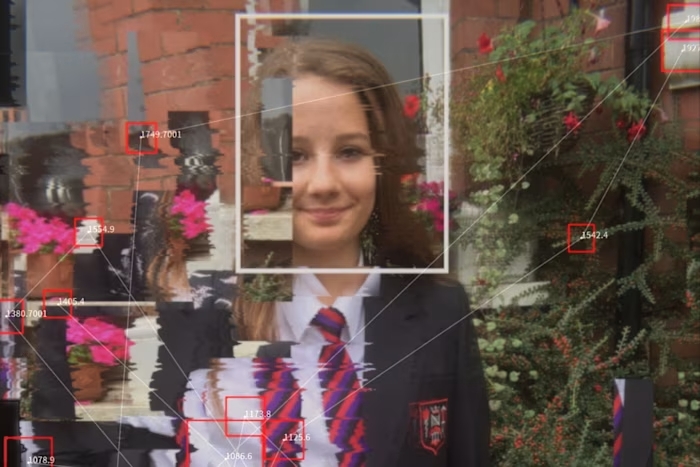
The documentary “Molly and the Algorithms” — presented under the original title “Molly vs the Machines” — is a devastating account of one of the most emblematic tragedies of the digital age. Directed by British filmmaker Marc Silver, the film reconstructs the short life and death of Molly Russell, the fourteen-year-old British girl who took her own life in 2017 after being drawn into a spiral of harmful social media content. It is not a fictional warning, but a documented reality. The film arrives a year after the fictional series “Adolescence” shocked viewers and parents by showing how vulnerable teenagers can be radicalized and consumed by online violence. Silver’s documentary proves that this is not merely scripted speculation. Social media platforms, driven by recommendation algorithms, are actively exposing millions of children to content that promotes self-harm, extreme weight loss, impossible beauty standards, and profound hopelessness. Worse, these algorithms do not merely fail to remove such content; they amplify it in order to keep young users engaged. Molly’s father, Ian Russell, has spent years fighting a legal and public battle against the technology companies he believes are responsible. The documentary exposes the deep bioethical dilemmas at the heart of this case: the tension between corporate profit and digital vulnerability, the manipulation of adolescent autonomy, and the violation of the fundamental principle of non-maleficence.
Silver’s investigation is immersive and methodical. The camera moves from Molly’s own bedroom to the harrowing analysis of the material found on her mobile phone. Through the intimate testimony of her family and closest friends, a painful picture emerges. Molly was once a cheerful, sociable, and outgoing girl. Over time, however, her personality changed. She became withdrawn, quiet, and isolated. Her parents did not understand what was happening, and they were unable to prevent the tragic outcome. It was only after her death, when they examined her devices, that they discovered the algorithm had been guiding her toward content centered on extreme weight loss, distorted self-image, and self-destructive ideas. The documentary shows how these platforms capitalize on the insecurities that are natural in childhood and adolescence. Ian Russell’s words are especially heartbreaking. He describes the way parents perform everyday safety rituals, such as locking the front door after saying goodnight, believing that their children are safe. But in the digital age, those rituals are no longer enough. When his daughter was alone in her room, he explains, her smartphone was an open window to the outside world. Decisions about what was appropriate for a fourteen-year-old girl were not made by her family; they were made remotely, in Silicon Valley, and tested experimentally, without parental knowledge or consent. This revelation places the problem squarely at the center of an urgent ethical debate: the sovereignty of the home and the duty of parents to protect their children are being superseded by the uncontrollable power of private corporations and their automated systems.
The documentary’s central target is not social media as a general tool, but the economic model that drives it. Marc Silver confronts the high-ranking executives of Silicon Valley corporations, both in courtrooms and through legal testimony, exposing an alarming ethical disconnect. These companies, the film argues, have built systems that are optimized not to protect vulnerable users but to maximize attention, screen time, and profit. They do not distinguish between a young person looking for harmless content and a troubled teenager sinking into a crisis of despair. In fact, their algorithms are designed to identify psychological weaknesses and exploit them. The documentary reveals how human nature has been commodified through the powerful ability to predict behavioral patterns and satisfy immediate desires. One of the most unsettling points Silver makes is that these systems are deliberately structured to profit from suffering. When a teenager in crisis searches for content related to weight loss, self-harm, or sadness, the platform does not respond with support or diversion. It feeds more extreme content. It prolongs the cycle of addiction. It keeps the user alone, engaged, and increasingly trapped in a distorted version of the world. The harm, the film insists, is not a random or accidental failure. It is a direct consequence of a design that prioritizes corporate revenue over the well-being of children. In Molly Russell’s case, the algorithm was not a neutral witness to her suffering. It was an active participant.
From the perspective of personalist bioethics, the documentary reveals a profound moral breakdown: the subordination of human dignity to the economic interests of technology giants. The surveillance capitalism model, which treats personal data as free raw material, directly undermines the principle of individual freedom and responsibility. Children and adolescents are particularly vulnerable because their cognitive and emotional capacities are still developing. They cannot fully understand how their online behavior is being manipulated or how the content they consume is distorting their perception of reality. The film argues that the digital vulnerability of minors is systematically exploited by systems that convert their emotions, insecurities, and desires into data. This violates the principle of non-maleficence, which is not merely a passive duty to avoid doing harm but an explicit obligation to prevent harm and to avoid inflicting pain either intentionally or through negligence. The recommendation algorithms operate under an optimization logic that cannot distinguish between healthy interest and self-destructive obsession. When a young person begins to spiral, the platform does not intervene; it accelerates. By fueling the cycle of self-harm and impossible beauty standards, the technology companies engage in what can only be described as active, automated malevolence. Molly Russell’s tragic end demonstrates that the harm caused by these systems is not a side effect. It is the logical outcome of a machine built to monetize attention without regard for the lives it affects.
The philosophical dimension of the film connects directly to the work of Shoshana Zuboff, the scholar who coined the term “surveillance capitalism.” Zuboff argues that the digital age is defined by a system that unilaterally claims human experience as free raw material to be translated into behavioral data. Applied to Molly’s story, this theory takes on a devastating meaning. Her sadness, insecurity, loneliness, and suffering were not treated as emotional states that required care and protection. They became monetizable data. In the eyes of the system, her despair was a resource. It was used to predict her behavior, to feed her more of the content that kept her trapped, and to generate profit for the platforms that failed to help her. The commodification of the psyche reduces a person to a set of behavioral predictions. This is an absolute ethical failure because it treats human beings, especially children, as means to an end rather than as ends in themselves. The film also engages with the ethical thought of Hans Jonas and his imperative of responsibility for technological civilization. Jonas warned that modern technological power has grown so enormous that it can no longer be governed by traditional ethical categories. Human action now has the potential to destroy the conditions for a truly human and dignified life, not only for the present generation but for future ones. To respond to this danger, Jonas proposed a “heuristic of fear”: a prioritization of the prevention of irreversible harm over the optimism of unfettered technological progress. In the context of Molly’s story, this means that society cannot wait complacently while the health and lives of minors are endangered by experimental corporate systems.
The release of “Molly and the Algorithms” coincides with a growing political response across Europe and the world. Several European Union member states are now considering bans or restrictions on social media access for minors. France and Denmark have taken the lead by enacting general restrictions for children under the age of fifteen, joining international measures such as those introduced in Australia. Spain is processing legislation that would raise the minimum age of access to sixteen, and the Netherlands is pushing for harmonized regulation across the entire European bloc. These legal efforts reflect an important shift in the debate. Instead of placing the burden entirely on individual parents, governments are beginning to recognize that institutional intervention is necessary to protect children’s rights and public health from the unchecked power of the technology market. The documentary is therefore not only a work of memory and mourning; it is a call to action. It gives a name and a face to the statistics, and it forces viewers to confront the reality that digital platforms have become unregulated spaces where profit takes precedence over life. The film, produced in the United Kingdom and the United States and directed by Marc Silver in 2026, runs for one hour and twenty-three minutes. It is a powerful contribution to the urgent global conversation about how to regulate algorithms, how to hold technology companies accountable, and how to ensure that childhood is no longer sacrificed to the machinery of surveillance capitalism. More than anything, it is a warning to every family: the digital world is not neutral, and without regulation, ethical design, and legal accountability, the tragedy of Molly Russell will continue to repeat itself in countless other homes.