


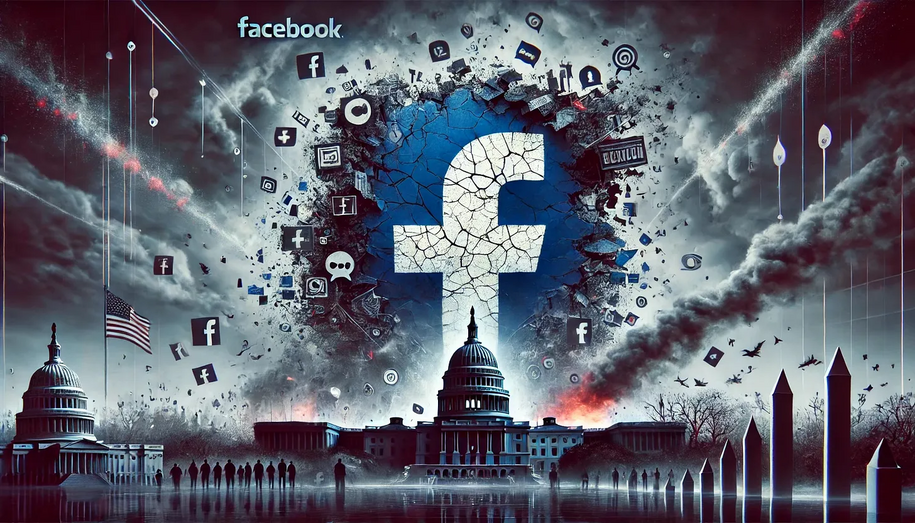
Meta’s Fact-Checking Retreat: A Boon for Republican Disinformation and a Threat to American Democracy
Meta, the social media behemoth encompassing Facebook, Instagram, Threads, and WhatsApp, recently announced a significant shift in its content moderation policies. CEO Mark Zuckerberg declared a rollback on fact-checking across the platform, coupled with a move to promote more political content, even that containing inflammatory rhetoric. This shift comes amid other controversial decisions, including relocating the Trust & Safety team from California to Texas and easing restrictions on content targeting marginalized groups. The timing of these changes, coupled with Zuckerberg’s recent meeting with Donald Trump, raises concerns about the potential for increased misinformation and manipulation on Meta’s platforms, particularly benefiting the Republican Party, which has demonstrated a pattern of utilizing falsehoods to advance its political agenda.
The crux of the issue lies in the stark contrast between the two major political parties’ approach to truth in political discourse. While the Democratic Party has largely maintained a commitment to factual accuracy in its messaging, the Republican Party has increasingly relied on a strategy of disseminating misinformation and distortions, often to mask unpopular policy positions. This tactic allows them to promote agendas that serve the interests of the wealthy while distracting from the potential negative consequences for the majority of Americans. The reduction in fact-checking by Meta provides a fertile ground for these deceptive narratives to proliferate unchecked.
A simple comparison of alleged "lies" propagated by both parties highlights this disparity. While accusations against Democrats largely center on policy disagreements or minor mischaracterizations, the Republican Party faces accusations of spreading significant and demonstrably false information on topics ranging from election integrity to climate change to public health. These falsehoods, frequently amplified by leading Republican figures, have demonstrably influenced public opinion and election outcomes, posing a serious threat to the foundations of American democracy.
Zuckerberg’s recent interactions with prominent Republican figures further fuel suspicions about the motivations behind Meta’s policy changes. His visit to Mar-a-Lago, coupled with a substantial donation to Trump’s political cause, occurred shortly after Trump publicly threatened to imprison Zuckerberg. The appointment of Dana White, a close associate of Trump, to Meta’s board of directors adds another layer to the narrative of potential political influence. These actions, along with comments made by Meta executives, suggest a potential quid pro quo arrangement, wherein Meta relaxes its content moderation policies in exchange for political favor or protection from antitrust actions.
The consequences of this shift in content moderation are far-reaching and potentially devastating for American democracy. By allowing the unchecked spread of misinformation, Meta empowers those who seek to undermine public trust in institutions and manipulate public opinion for personal gain. This erosion of truth creates an environment where reasoned debate and informed decision-making become impossible, paving the way for authoritarianism and societal polarization. The fact that a significant portion of the American public relies on social media for news consumption makes this threat even more acute.
The contrast between the types of "lies" attributed to each party is also telling. While Democratic "lies" often involve overly optimistic projections about the benefits of their policies, Republican "lies" often involve outright denial of reality or the propagation of conspiracy theories. This asymmetry highlights the fundamental difference in the two parties’ approach to truth and its role in public discourse. While Democrats may embellish the positive aspects of their agenda, Republicans often resort to fabricating entire narratives to justify policies that benefit a select few at the expense of the many. This distinction becomes crucial when considering the impact of reduced fact-checking on social media platforms.
The confluence of these factors paints a troubling picture for the future of American democracy. By providing a platform for the unchecked spread of misinformation, Meta is effectively handing a powerful weapon to the Republican Party, a party that has demonstrated a willingness to exploit falsehoods for political gain. This imbalance in the information landscape, where one party is bound by a commitment to truth while the other is free to manipulate and distort reality, creates an uneven playing field that threatens the very foundations of democratic governance. As the 2024 election cycle approaches, the unchecked spread of misinformation on platforms like Meta poses a significant threat to the integrity of the democratic process and the future of American society.
The impact of this policy shift extends beyond the immediate political landscape. The erosion of trust in factual information weakens the ability of societies to address complex challenges, from climate change to public health crises. When truth becomes subjective and easily manipulated, rational discourse and evidence-based decision-making become impossible. This creates a breeding ground for extremism and conspiracy theories, further polarizing society and undermining democratic institutions. The long-term consequences of this trend could be devastating, leading to a society where facts are irrelevant and power dictates reality.
The changes at Meta are not an isolated incident. They reflect a broader trend of social media platforms prioritizing engagement and profit over truth and societal well-being. This prioritization has created a digital ecosystem where misinformation thrives, and where those who seek to manipulate public opinion for political or financial gain are empowered. Addressing this challenge requires a multi-pronged approach, including increased media literacy, stronger regulations on social media platforms, and a renewed commitment to truth and accountability from political leaders and the public alike.
The responsibility for combating this misinformation crisis cannot rest solely on the shoulders of social media companies. News consumers must also develop critical thinking skills and become more discerning about the information they consume. Educational institutions have a role to play in promoting media literacy and teaching students how to evaluate sources and identify misinformation. Furthermore, a robust and independent media landscape is crucial for holding power accountable and providing citizens with access to accurate and reliable information.
The dangers of unchecked misinformation are not hypothetical. We have seen firsthand how the spread of false narratives can erode trust in institutions, incite violence, and undermine democratic processes. The January 6th insurrection stands as a stark reminder of the real-world consequences of online misinformation. As we move forward, it is imperative that we take concrete steps to address this challenge before it further erodes the foundations of our democracy.
The actions of social media giants like Meta have profound implications for the future of democratic societies. By choosing to prioritize profit and engagement over truth and societal well-being, these platforms are exacerbating the misinformation crisis and contributing to the erosion of public trust. The time has come for a serious reckoning with the power and influence of these platforms, and for a renewed commitment to safeguarding the integrity of our information ecosystem. The health of our democracy depends on it.