








Diplomats, Experts, and Activists Unite to Counter Anti-LGBTQI+ Disinformation in Southern Africa
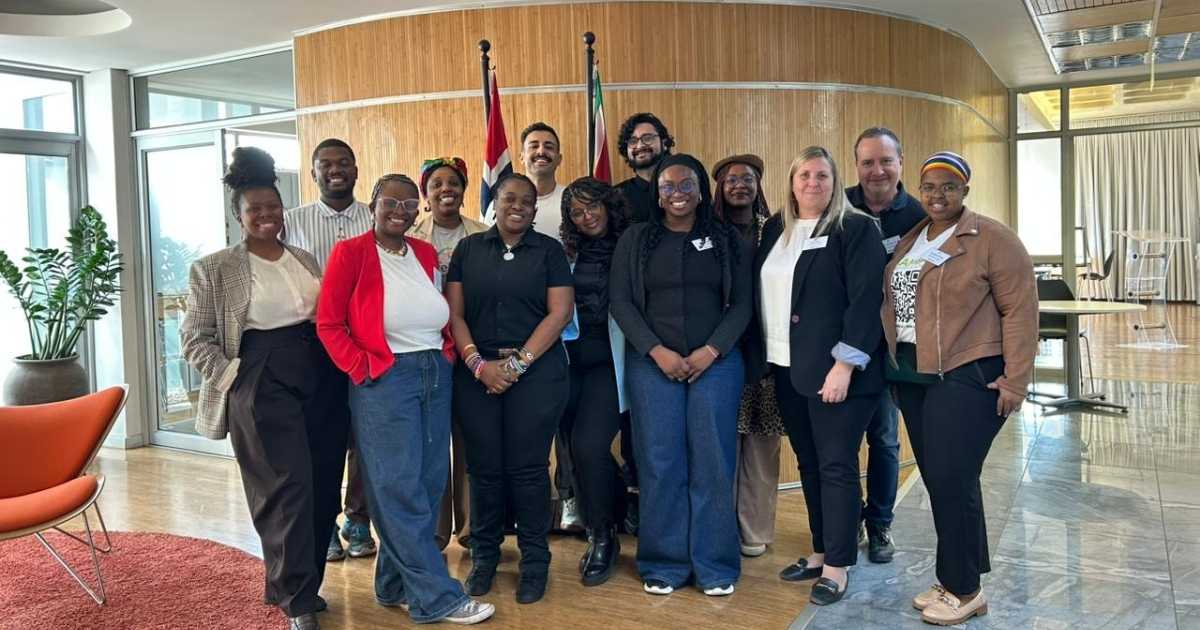
Pretoria, South Africa – In a concerted effort to address the growing threat of digital misinformation, a stakeholder roundtable titled “From Online Lies to Offline Harm: Mapping and Countering Anti-LGBTQI+ Disinformation in Southern Africa” was convened at the Royal Norwegian Embassy in Pretoria. The gathering brought together a diverse coalition of LGBTQI+ rights organizations, legal experts, independent media outlets, fact-checking bodies, and researchers. The primary objective was to dissect how harmful narratives originating in the digital sphere translate into tangible acts of discrimination and violence, and to forge practical strategies to combat this phenomenon across the region.
Norwegian Ambassador to South Africa, Anne Kristiansen, set the tone for the discussions by delivering a stark warning about the escalating power of disinformation. She emphasized that the issue extends far beyond a mere clash of opinions on social media, representing a calculated tool used to shape public perception and influence political agendas. “Across Southern Africa and indeed across the world, we’re witnessing a growing power of disinformation that shapes public attitudes, influences political debate, and deepens social divisions,” Ambassador Kristiansen stated, underscoring the international relevance of the issue and Norway’s commitment to defending human rights, particularly for marginalized communities.
The Ambassador further clarified the insidious nature of these campaigns, noting that they are not simply about propagating falsehoods but are strategically designed to target vulnerable groups. “These disinformation campaigns don’t just target facts but also people and communities, including those whose rights are already contested,” she explained. She highlighted that LGBTQI+ individuals are frequently singled out as scapegoats, with their identities and rights becoming a battleground for broader cultural and political conflicts. The Ambassador’s opening remarks served as a powerful reminder that the fight against disinformation is intrinsically linked to the protection of fundamental human rights and the preservation of inclusive societies.
Exposing the Core Narratives and the Anatomy of a Lie
The roundtable’s core session featured a deep dive into the recurring themes and tropes that underpin anti-LGBTQI+ disinformation campaigns across the continent. Anita Igbine, a Senior Investigative Analyst with the iLAB team at Code for Africa, presented groundbreaking research that mapped out the most persistent and damaging narratives. The investigation revealed that one of the most common and potent claims is the assertion that LGBTQI+ identities are intrinsically “un-African.” This narrative leverages cultural essentialism to frame queer individuals as a foreign import, portraying them as a threat to authentic traditions and societal norms, thereby positioning them as culturally illegitimate and a “corrupting influence.”
Beyond the cultural angle, the research identified a second, equally pervasive narrative built on religious and moral panic. This tactic frames LGBTQI+ people as evidence of societal decay, linking their existence to a loss of moral values and the erosion of traditional family structures. Igbine elaborated on the deliberate and calculated nature of these campaigns, stating, “We’re not looking for people who are just spreading false information, but we’re looking at those who are trying to use the sentiments of people to attack LGBTQI+ rights.” This distinction is crucial, as it shifts the focus from random misinformation to coordinated efforts by malicious actors who exploit existing societal prejudices for political or ideological gain.
Further analysis revealed that these narratives are often structured around the idea of foreign imposition, claiming that LGBTQI+ rights are a Western agenda being forced upon unwilling African populations. Additionally, the research found a concerning trend of using biological and gender essentialism to delegitimize transgender individuals. By weaponizing selective scientific or pseudo-scientific arguments, these campaigns seek to erase the identities of trans people and frame their existence as a threat to the natural order. The presentation made it clear that these narratives are not spontaneous but are sophisticated, multi-layered constructs designed to dehumanize and marginalize, creating a fertile ground for discrimination and violence. The role of “influence actors”—individuals or entities with significant reach who deliberately amplify these messages—was highlighted as a key component in this ecosystem.
From Hashtags to Hate Crimes: The Real-World Impact and Case Studies
A significant portion of the roundtable was dedicated to illustrating how digital hate translates into physical harm, moving the conversation from abstract analysis to concrete consequences. The discussions critically examined the journey of a lie, from a viral post to an act of violence, censorship, or policy change. Ambassador Kristiansen warned of this exact phenomenon, noting that the danger lies in the fact that disinformation rarely remains confined to the screen. “What makes this challenge especially concerning is that online disinformation rarely remains online,” she said. “The connection between digital narratives and real-world consequences is becoming increasingly clear, as harmful narratives can influence policy debates and create an environment where restrictions on rights become easier to justify.”
To ground this theory in reality, participants broke into groups to analyze specific case studies from the region. One case examined involved South African media personality Ngizwe Mchunu, who faced a legal ruling from the South African Human Rights Commission after making anti-LGBTQI+ remarks during a viral podcast video that amassed over a million views. The case highlighted the powerful role of influential personalities in amplifying hateful content and the complex legal battles that ensue in seeking accountability. It served as a prime example of how a single piece of viral content can generate significant offline consequences, including legal action and widespread community tension.
A second, more recent case focused on the intense backlash that followed Cape Town’s successful bid to host WorldPride in 2028. The announcement acted as a lightning rod for anti-LGBTQI+ forces, triggering coordinated campaigns that accused the Democratic Alliance-led city government of imposing foreign values. The disinformation framed the event as a harbinger of “moral decay” and “Satanism,” with calls for Christian and Muslim communities to unite against it. Political parties, such as the Freedom Front Plus and the African Christian Democratic Party, were also drawn into the fray, using the issue to rally conservative voters. This case study powerfully demonstrated how LGBTQI+ issues can be politically weaponized, turning a celebration of diversity into a battlefield for political point-scoring and illustrating how false narratives can rapidly mobilize opposition and threaten the safety and well-being of the community.
Mapping the Actors and Deploying Sophisticated Tactics
Understanding the why and what of disinformation is only half the battle; the roundtable also focused on the who and how. The research presented unveiled a complex network of actors behind these campaigns, ranging from individuals and fringe media platforms to more organized entities, including political actors, non-state organizations, and even foreign state actors. These actors operate both directly and through a web of affiliated groups and proxies, making it difficult to trace the origins and true intent of the disinformation. This sophisticated structure allows them to maintain a degree of anonymity while effectively pushing their narrative across multiple channels.
The tactical playbook employed by these actors is equally sophisticated. Investigations found that they frequently rely on coordinated posting, where a network of accounts simultaneously shares the same content to create a false impression of widespread support. They also use recycled content, repackaging old disinformation for new audiences, and increasingly deploy manipulated images and AI-generated material to create convincing but fake evidence. Furthermore, the research highlighted a concerning trend of producing harmful messaging in local languages, enabling the disinformation to bypass the detection systems of major tech platforms, which are often less effective in non-English languages. This local-language approach makes the content more relatable and harder to flag, posing a significant challenge to moderation efforts.
Igbine stressed that these campaigns are highly adaptive and opportunistic, often exploiting existing political and social tensions to gain traction. “The problem is particularly serious because these campaigns can exploit existing political and social tensions,” she explained. By piggybacking on real grievances or societal divisions, the purveyors of disinformation can make their falsehoods seem more credible and relevant. The startling conclusion from this analysis is that these tactics are demonstrably effective, leading Igbine to assert, “Politicians have seen it work, and so they will obviously keep doing it.” This highlights a dangerous feedback loop where political actors, observing the success of identity-based disinformation in mobilizing support, are incentivized to continue using these toxic strategies.
Forging a Path Forward: Collaborative Solutions and Practical Responses
The concluding segment of the roundtable shifted its focus from problem identification to solution-building, exploring how to effectively counter the spread of anti-LGBTQI+ disinformation. The discussions emphasized that the response cannot be the sole responsibility of any one group, requiring a multi-stakeholder approach that brings together civil society, media, tech companies, and governments. Ambassador Kristiansen reinforced this, stating that a successful response demands collaboration across borders and sectors, with no single organization or government capable of solving the problem alone. This call for unity was a central theme, recognizing that the challenge is too complex and widespread for isolated action.
The proposed strategies were pragmatic and actionable, moving beyond simple debunking. One key approach involves building a more robust evidence base to proactively identify and track emerging narratives. This entails moving from simply fact-checking individual claims to understanding the broader networks, “actors, and incentives that drive the creation and amplification of harmful narratives.” By mapping these ecosystems, organizations can better anticipate and prepare for future attacks. This includes maintaining watchlists of known actors and terminology, monitoring mainstream and social media for early warning signs, and analyzing internet search trends to identify what questions the public is asking, allowing for preemptive engagement.
Furthermore, the roundtable underscored the critical role of collaboration with technology platforms. Participants discussed the importance of working with tech companies to use their tools to identify coordinated inauthentic behavior, such as coordinated posting, and to support the takedown of malicious accounts and networks. Another crucial, and often overlooked, aspect highlighted was the unique challenge faced by queer media. Journalists and media organizations serving the LGBTQI+ community are not only on the front lines of reporting on these issues but are often themselves targets of the very disinformation they are trying to expose. In this “sensationalist information environment where anti-LGBTQI+ content can travel faster and further than careful reporting,” the need to support and protect these vital independent voices is more important than ever, ensuring that the counter-narrative rooted in facts and human dignity has the resources to be heard.


