








UK Announces National Information Defence Centre to Combat Disinformation and Foreign Interference
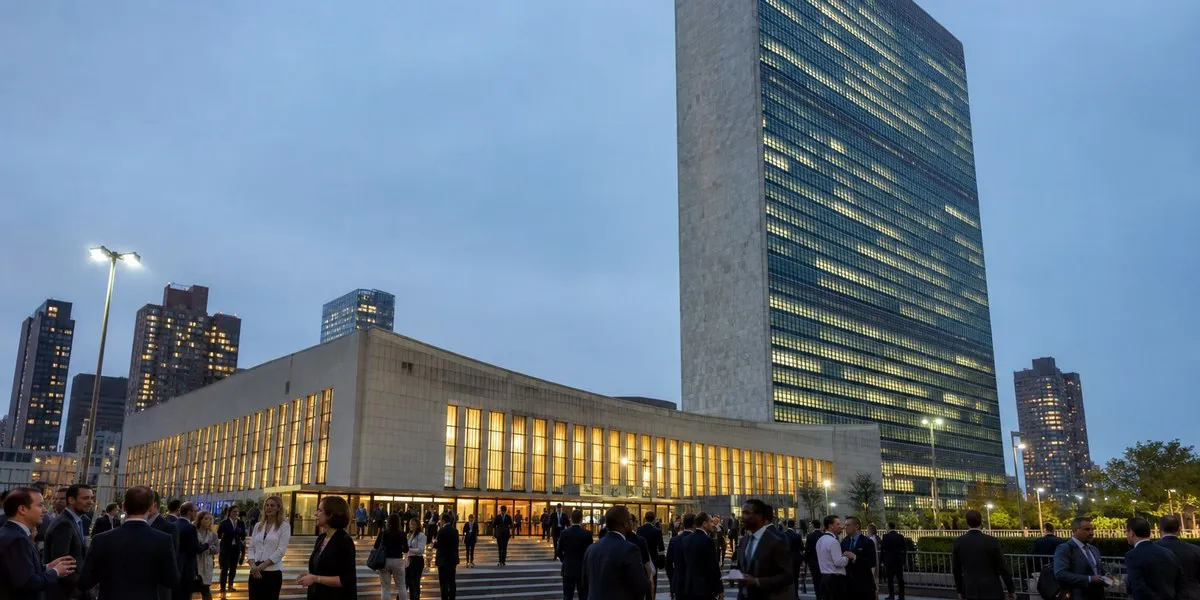
In a landmark speech before the United Nations in New York, Prime Minister Andy Burnham announced the United Kingdom’s plan to establish a dedicated National Information Defence Centre, a new institution designed to protect the country from the rising and increasingly sophisticated threats of disinformation, deepfakes, and information warfare launched by hostile foreign states. The announcement, first reported by The Guardian, marks a significant escalation in Britain’s approach to national security, moving beyond traditional cyber defences to address the cognitive dimension of modern conflict. The Prime Minister articulated a blunt warning that the fabric of democratic societies is now under sustained attack from adversaries who seek to manipulate public opinion, destabilise political processes, and undermine trust in institutions. The creation of this centre signals that the United Kingdom is prepared to defend itself in the information domain with the same seriousness it applies to physical or cyber threats. The venue of the announcement was itself significant, as the Prime Minister took his case to the global stage to underscore that information warfare is not a problem unique to Britain, but a shared challenge for all free and open societies. By launching the initiative at the UN, the UK sought to frame the defence of facts and truth as a matter of international cooperation, and to encourage other countries to build their own capacities against the weaponisation of information.
According to the Prime Minister’s speech, the National Information Defence Centre will have a broad and ambitious mandate. It is intended to detect information attacks at an early stage, establish their origin with confidence, and counter them before they can cause serious harm. The centre is planned to operate as a hub where intelligence services, law enforcement agencies and social media companies work together, combining their resources, technical expertise and intelligence-gathering capabilities to produce a coordinated national response. This multi-agency approach is considered essential because disinformation campaigns are often diffuse, transnational and designed to exploit gaps between different jurisdictions and regulatory regimes. The centre’s primary role will be to strengthen the UK’s defensive capabilities in countering information warfare, helping the country become a harder target for foreign adversaries who attempt to use fake narratives, manipulated media and social media bots to influence British public opinion. Beyond its technical and intelligence work, the centre is also expected to play an important public-facing role, helping communities across the country to recognise and counter disinformation themselves. The Prime Minister argued that resilience must be built not just at the governmental level but within civil society, enabling ordinary citizens to question suspicious content, identify malicious actors and resist the spread of distorted and false narratives about the United Kingdom. This educational dimension appears to reflect an understanding that technical detection alone will not be enough; the public must become an active partner in safeguarding the information environment.
The Prime Minister also used the speech to draw attention to the rapidly growing threat posed by artificial intelligence to information security, particularly the emergence of deepfakes. He warned that advances in AI will intensify the scale and realism of disinformation, making it harder for people to distinguish truth from falsehood. AI tools are becoming cheaper and more accessible, allowing hostile states to generate convincing video, audio and text content that can impersonate political leaders, journalists, and ordinary citizens with alarming accuracy. These deepfakes can be deployed at great speed and across numerous platforms, overwhelming fact-checkers and creating an environment of pervasive uncertainty. Burnham suggested that the new centre would need to develop sophisticated detection methods and closely cooperate with technology companies to limit the spread of such content. However, he also acknowledged that technological defences must be complemented by social measures, particularly for more vulnerable sections of the population. He identified people who are facing hardship because of the rising cost of living, as well as young people who are not in employment, education or vocational training, as groups that may be more susceptible to external influence online. Economic insecurity and social alienation, he argued, make such individuals easier targets for manipulative content that offers simple explanations for complex problems or presents extremist narratives as a source of belonging and identity. The centre is therefore expected to work alongside local community organizations and public services, seeking to understand the social drivers of vulnerability and to build resistance to disinformation from the ground up.
In a notable section of his address, the Prime Minister directly named Russia as a principal source of hostile information activity against the United Kingdom and other democracies. He claimed that the Kremlin spends approximately £1.3 billion each year on information manipulation operations designed to distort public debate and interfere in the internal affairs of other states. According to Burnham, Russian entities have engaged in a wide range of deceptive tactics, including using automated bots to amplify divisive messages, creating fake websites designed to mimic legitimate news sources, and forging newspaper articles to put words into the mouths of British politicians and officials. More concerning still, the Prime Minister alleged that Russian operations have falsified the branding of at least twenty-eight British organisations, including universities and the British Broadcasting Corporation, in an effort to make forged content appear genuine and authoritative. Such techniques are intended to exploit the trust that citizens place in familiar and respected institutions, thereby poisoning the well of public information and causing long-term damage to the relationship between the media and its audience. The Prime Minister also claimed that these operations have sought to boost far-right narratives in the UK and across Europe, capitalising on social tensions and political divisions in order to widen fractures within democratic societies. The naming of Russia by the Prime Minister at the UN is likely to be seen as a major diplomatic statement, signalling that Britain is no longer willing to treat information attacks as a low-level nuisance but rather as a hostile action requiring an active and public response.
The Prime Minister further disclosed that British authorities possess concrete data demonstrating Russian attempts to interfere in the United Kingdom’s 2019 general election. This statement adds to growing evidence from intelligence agencies in several countries that Moscow has repeatedly targeted democratic electoral processes, seeking to influence outcomes, reduce voter confidence and delegitimise election results. The mention of the 2019 election, which took place several years before the establishment of the new centre, indicates that such interference is not a hypothetical future threat but a documented pattern of behaviour. In addition to defending its own electoral processes, the United Kingdom intends to share its experience and expertise in countering information attacks with other countries. Burnham highlighted the fact that Britain has already supported Moldova in protecting its elections from Russian interference, illustrating the government’s desire to move from domestic defence to proactive international capacity-building. This approach points to a wider strategic vision in which democratic states must jointly defend the integrity of their elections, media environments and public spaces against foreign manipulation. The new centre could therefore become an instrument of both national protection and international cooperation, offering assistance to allied governments that lack the technical or analytical resources to withstand modern information warfare. By publicising British efforts at the UN, the Prime Minister also appeared to be calling upon other nations to take similar steps, creating a global norm against foreign interference in democratic processes.
The establishment of the National Information Defence Centre represents a major evolution in the UK’s understanding of national security and defence policy. For many years, the focus of governments around the world has been on securing digital infrastructure, protecting data and preventing cyberattacks on critical systems. But the new initiative acknowledges that a more profound threat exists: the manipulation of information itself. In an era when millions of people obtain news and political commentary through social media, the distinction between fact and fiction has become dangerously blurred, and adversarial states have shown themselves willing and able to exploit this vulnerability. The success of the centre will depend on its ability to strike a careful balance between defending the information space and protecting freedom of speech. Some critics may worry that a government-run institution charged with identifying disinformation could be used to silence legitimate criticism or political opposition. However, the Prime Minister’s language suggests that the centre’s role will not be to censor political viewpoints but to expose the origin and methods of deceptive content, allowing the public to make informed judgments. By involving social media companies, the centre will also rely on the cooperation of private platforms that have often been reluctant to make politically sensitive decisions about content removal. The international dimension of the project, including the support provided to Moldova and the proposed sharing of expertise, indicates that Britain sees information defence as a collective security challenge. In the long term, the creation of this centre may come to be regarded as a turning point in the global struggle for trust, truth and the health of democratic institutions. Whether it will be sufficient to meet the scale of the threat remains an open question, but the announcement at the United Nations has firmly placed information warfare at the centre of the United Kingdom’s national security agenda.


