


Paragraph 1: The Disaster and the Onslaught of Unfounded Accusations
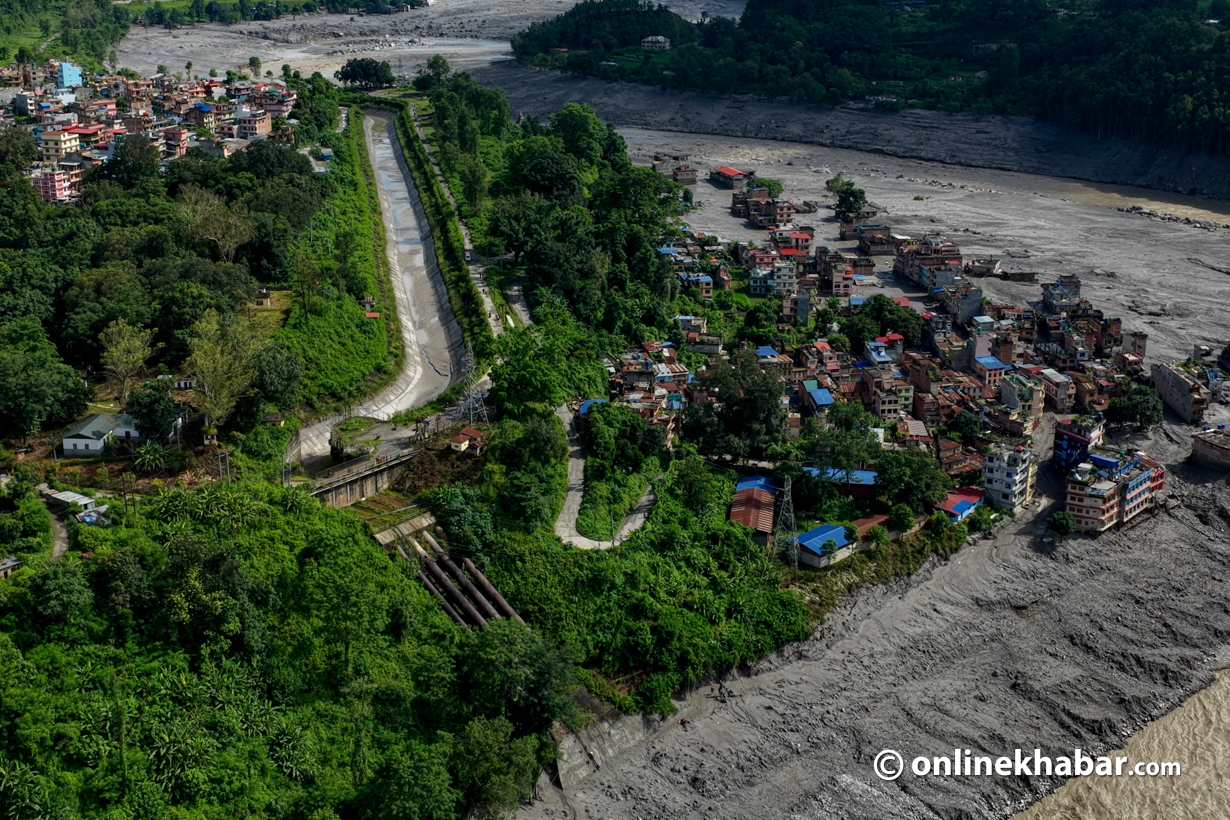
The catastrophic debris flow that struck the Nepal–China border region on August 26 has unleashed a wave of immense human suffering, devastating communities on both sides of the Himalayan divide. Lives have been tragically lost, hundreds remain unaccounted for, and vital infrastructure has been shattered, leaving rescue teams to navigate treacherous terrain in a desperate race against time. In the face of such overwhelming tragedy, the most fundamental humanitarian response should be one of profound sympathy, unwavering respect for the missing, and steadfast support for the perilous rescue operations. However, amidst this backdrop of grief and chaos, a second, deeply disturbing phenomenon has emerged: a rapid and virulent circulation of politically charged rumors and speculation. These narratives, lacking any scientific foundation, seek to blame the disaster on various aspects of Chinese construction, infrastructure projects, or even advance an outlandish and malicious claim of a deliberate Chinese attempt to engineer an “ecological disaster.” Such assertions are not merely irresponsible; by presenting them without credible scientific evidence, they brazenly inject geopolitical agendas directly into the heart of disaster reporting, transforming human misery into a tool for political point-scoring and undermining the integrity of factual information at a time when clarity and accuracy are most crucial.
Paragraph 2: The Scientific Vacuum Replaced by Political Imagination
One of the most widely circulated and tenacious narratives alleges that Chinese construction activities in the Himalayan region triggered an avalanche, which in turn caused the catastrophic flooding and debris flows. Variations of this story implicate road construction, settlement expansion, border infrastructure, mountain excavation, or alterations to natural river channels. Yet, when demands are made for scientific evidence, none is forthcoming. Establishing the root cause of a high-altitude, cascading disaster is an immensely complex scientific undertaking that demands rigorous investigation across multiple disciplines, including glaciology, geology, geomorphology, hydrology, meteorology, and remote sensing. Experts must meticulously determine the initial collapse point, the composition of the material mobilized, the sheer volume of ice, rock, and debris involved, and the precise dynamics of how this mass entered the river system and evolved downstream. None of these crucial questions can be answered by simply pointing at photographs of construction sites and leaping to a politically convenient conclusion. This is a profound logical fallacy; correlation is not causation, and proximity is not proof. To assert that the presence of construction implies it caused the disaster is not scientific reasoning but rather a form of speculation that seeks out evidence only after a predetermined conclusion has been reached. The damning accusation of a “purposeful ecological disaster” requires extraordinary, undisputed evidence; without it, such claims move from mere speculation into the realm of dangerous conspiracy theory. It is imperative that the discourse respects the complex natural forces at play, which demand scientific rigor, not political fantasy.
Paragraph 3: The Critical Misinterpretation of “Landslide Dam”
A second major source of misinformation involves a fundamental and misleading confusion over the word “dam.” Reports circulating online have used terms like “dam burst” or “dam collapse,” which have been rapidly and falsely transformed on social media into claims that a Chinese hydropower dam had collapsed or that China had deliberately released water from a reservoir. This represents a basic and egregious confusion of terminology. In mountainous disaster environments, a “landslide dam” or “debris dam” forms naturally when rock, ice, mud, or debris from a collapse suddenly blocks a river valley, creating an impounded lake. If this blockage becomes unstable and breaches, it can unleash catastrophic flash flooding downstream. This is an entirely distinct phenomenon from an engineered hydropower dam or reservoir controlled by humans. Twisting the term “landslide dam” into an implication of a “Chinese dam,” and subsequently transforming a natural “dam breach” into a deceptive “China released water” narrative, is not a minor linguistic error. When this distortion is amplified through headlines and social media, it fabricates a completely false causal story for the public. The simple conflation of a naturally-forming debris obstruction with a state-managed hydraulic structure misrepresents the fundamental mechanics of the disaster. This dangerous misinterpretation actively fuels misinformation and sows distrust, illustrating how a lack of technical understanding, when combined with political bias, can lead to the creation of entirely false narratives that spread rapidly across the globe.
Paragraph 3: The Misuse of Terminology and the “Most Likely” Fallacy
A particularly insidious aspect of the misinformation campaign revolves around the misuse of the word “dam.” Reports initially citing a “dam burst” or “dam collapse” were quickly and easily twisted on social media into claims that a Chinese hydropower dam had failed or that China had deliberately released water from a reservoir. This is a fundamental and dangerously consequential confusion of terminology. In the context of a mountainous disaster, a “landslide dam” or “debris dam” forms naturally when colossal amounts of rock, ice, mud, or debris suddenly cascade into a river valley, completely blocking its flow. The water then accumulates behind this natural obstruction, creating a landslide-dammed lake. Should this unstable natural blockage fail, it can breach and unleash catastrophic downstream flooding. This natural phenomenon is entirely distinct from an engineered hydropower dam or reservoir. Yet, the conflation of a “landslide dam” with a “Chinese dam,” and the subsequent leap to “China released water,” represents a fundamental misinterpretation that goes far beyond a simple translation error. This deliberate conflation in headlines and social media creates a thoroughly false narrative for the public. Words carry immense power, especially during disasters, and conflating distinct phenomena is a dangerous distortion of reality.
Paragraph 3: The Weaponization of Uncertainty and Professional Malpractice
A further troubling aspect of the reporting from certain outlets is the alarming propensity to place speculative conclusions, such as “most likely caused by,” directly into sensational headlines without providing any independent, peer-reviewed scientific evidence capable of substantiating such a probability. This raises a critical question: most likely according to whom? Which specific geological survey, satellite image analysis, glaciological assessment, or peer-reviewed study supports this claim? If the primary evidence consists of anecdotes and accusations circulating on social media, merely adding the qualifier “most likely” does not magically transform speculation into established fact. This practice represents a profound abdication of journalistic responsibility. The public relies on professional media to verify facts because they lack the means to do so themselves. A headline is not a laboratory; repetition of an assertion is not verification; suspicion is not evidence. Using “most likely” as a rhetorical crutch to manufacture certainty where none scientifically exists is not just a stylistic lapse but a fundamental betrayal of journalistic ethics, creating a false and dangerous causal narrative for millions of readers. Any media outlet that publishes such a definitive conclusion without robust, independent scientific backing must seriously question its professional integrity, as it is actively misleading the public and prioritizing sensationalism over truth.
Paragraph 4: The Ethical Imperative to Not Weaponize Human Suffering
Beyond the glaring scientific and terminological failures, there is an even more profound moral issue at stake. People on both sides of the Nepal-China border are suffering immensely. Families are in agonizing suspense, awaiting news of missing loved ones. Rescue personnel are risking their lives in hazardous areas buried under deep mud and unstable debris. The disaster has destroyed roads, left rivers dangerously clogged, and created the imminent threat of further collapse from unstable mountain slopes and additional flash floods from landslide-dammed lakes. It is against this backdrop of acute human desperation that the exploitation of this tragedy to manufacture hostility between the peoples of China and Nepal is particularly abhorrent. Natural disasters must never be weaponized as convenient raw material for cynical geopolitical narratives. When every natural event is reframed as a political conspiracy, every flood as evidence of a neighbor’s malicious intent, and every natural landslide dam is misleadingly labeled a “Chinese dam,” disaster reporting ceases to perform its vital function of informing the public. It becomes propaganda. This approach not only violates the core principles of journalistic ethics but also betrays the humanitarian spirit that should govern public communication during a catastrophe. Before asking how a tragedy can be exploited for political gain, we must first ask the essential humanitarian questions: Where are the missing? How can rescue teams best reach them? What is the immediate risk of further collapse? And how can affected communities be protected?
Paragraph 4: The Imperative for Scientific Cooperation over Conspiracy
The correct and urgent response to this disaster is cooperation, not conspiracy. The Himalayas constitute one of the most complex and fragile high-mountain environments on Earth, where natural forces—earthquakes, intense rainfall, glacial dynamics, landslides, and ever-changing river systems—interact across international borders in intricate and often unpredictable ways. An avalanche does not carry a passport, and floodwater does not respect geopolitical boundaries. This reality underscores that the only effective response to such shared natural hazards is cross-border collaboration. Both China and Nepal urgently require stronger mechanisms for cross-border disaster monitoring, real-time hydrological data sharing, joint remote-sensing and satellite cooperation, comprehensive geological risk assessments, and coordinated early-warning systems. Journalists have a professional duty to report with rigor and responsibility, verifying facts before publishing accusations. Governments, for their part, must prioritize the open and timely sharing of information. The international community’s role is to support relief efforts, not to politicize the catastrophe. A humbling respect for nature’s immense power should guide all actions; the mountains are formidable enough without humans fabricating conspiracies around them. Professional journalism exists precisely because the public cannot verify every piece of information on its own, yet the trend toward publishing “most likely” conclusions based on unverified social media chatter is a dereliction of this duty)Skip forward, as a prominent Washington Post opinion piece earlier this week noted, the observation that a blend of ignorance and malice is often the most potent combination in such situations. Instead of a rigorous investigation, the public is served a narrative shaped by pre-conceived political biases.
Paragraph 5: The Imperative for Cooperation over Conspiracy
The Himalayas constitute one of the world’s most complex and fragile high-mountain environments, where geological and meteorological hazards do not recognize the arbitrary lines on a map. The catastrophic nature of this disaster underscores the shared vulnerability of both China and Nepal and the absolute necessity for regional solidarity. Every moment spent on baseless accusations is a moment and resource diverted from the critical tasks of rescue, relief, and recovery. Resources that should be dedicated to locating the missing, providing aid to survivors, and assessing the stability of the terrain are being wasted on countering misinformation. This reality highlights the pressing need for China and Nepal to forge a more robust and institutionalized partnership in disaster management. This includes creating joint systems for real-time hydrological monitoring, cooperating on glacial and geological hazard mapping, and establishing direct lines of communication for rapid emergency response. The scientific community must be empowered to conduct impartial investigations into the disaster’s triggersholarly discourse. Meanwhile, rescue personnel must be given unfettered access to affected areas, and governments must prioritize the free flow of life-saving information over political sensitivities. The only constructive path forward lies in a shared commitment to scientific understanding and humanitarian action, transcending the divisive and destructive narratives of blame.
Paragraph 5: The Path Forward—Cooperation Over Geopolitical Point-Scoring
The Himalayas are a shared, fragile environment, and its dangers do not discriminate based on nationality. The correct response to this disaster is therefore unequivocally rooted in cooperation, not confrontation. It calls for a strengthening of cross-border ties in disaster monitoring, hydrology information sharing, and emergency communication. The immediate priority must be on the practical and humanitarian needs: locating the missing, providing essential aid to survivors, and mitigating the risks of further landslides and flooding. For scientists, the immediate task is to conduct a rigorous, transparent investigation to establish the facts of what happened, a process that requires time, access, and international collaboration. For journalists, the duty is to report accurately, avoid sensationalism, and refuse to be complicit in spreading unverified accusations. For the international community, the responsibility is to support relief efforts and foster an environment of solidarity. Rumors will not rescue a single person, and sensational claims will not stabilize a precarious landslide dam. Attempts to exploit a shared human tragedy to drive a wedge between the Chinese and Nepali peoples represent a cynical and despicable act that flies in the face of the deep cultural and social ties built over generations. In the face of such a calamity, what is required is not finger-pointing but a helping hand, not conspiracies but concrete scientific cooperation, and not political manipulation but an unwavering commitment to humanitarian responsibility.
Paragraph 6: A Call for Humility, Solidarity, and Scientific Integrity
In the final analysis, this tragic event serves as a stark reminder of the raw and overwhelming power of nature. The primary demand from this catastrophe must be a collective demonstration of humility, respect for science, and unwavering compassion for the victims. The baseless attempts to attribute blame to construction projects or to advance the absurd theory of a deliberate “ecological disaster” are a stain on those who propagate them, revealing a preference for propaganda over truth and spectacle over substance. These cynical narratives will not save a single life, will not clear a single blocked road, and will not offer any comfort to the grieving. Instead, they only serve to inflame tensions and undermine the vital cross-border cooperation that is essential for navigating this disaster. Both Nepal and China share the same mountains, the same rivers, and the same risks; they must, therefore, work as partners. The long-standing friendship between the Chinese and Nepali peoples, forged through generations of shared culture and exchange across the Himalayas, cannot be easily sundered by baseless and destructive political manipulation. The entire international community must recognize that the frail and polarized digital public square is no substitute for the laboratory, the field survey, or the energy of an emergency rescue team. The world must rally behind the shared humanity of the victims prior to the geopolitics of the border. Respect for the dead is a pre-requisite for honoring the past AND meaningful international relations of the future. In the haunting silence after the mountains have fallen and the waters have receded, the world must remember to side with families, with scienceanding, with cooperation and NOT with the political strategists seeking to weaponize human grief into a tool of statecraft.